Connect with us

Headlines

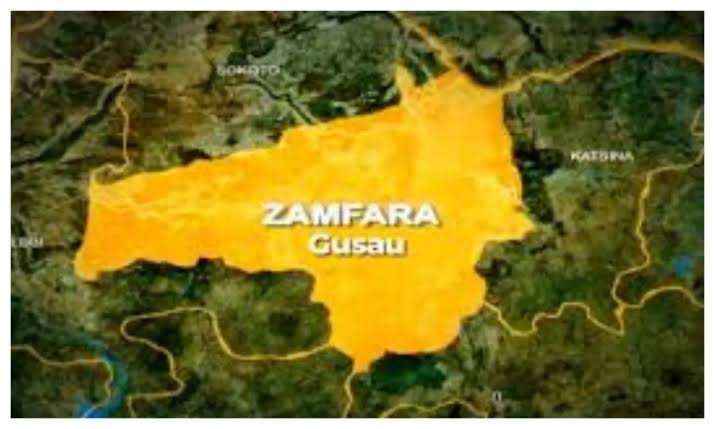
Situation Room Calls On President Tinubu To Suspend Release Of Allocation To Zamfara

Published

on

*demands immediate proclamation of emergency rule to forestall continuous use of security votes by Governor Lawal to feed bandits 

The Situation Room on Monitoring the War Against Banditry has urged President Bola Tinubu to immediately suspend federal allocations to Zamfara State and declare a state of emergency, accusing Governor Dauda Lawal of complicity in the state’s spiralling banditry crisis.

The group alleged that Lawal’s misuse of security votes is tantamount to “feeding bandits in Government House,” emboldening criminals and betraying the trust of Zamfara’s people.

The group’s fury was sparked by a viral video in which Governor Lawal admitted to knowing the precise locations of bandit leaders terrorising the state

Patriot Henry Abba, the group’s convener, at a press conference condemned this as a “shocking, heartbreaking, a betrayal of trust, a failure of leadership, and a dangerous signal to every Nigerian who still believes in the rule of law.”

He labelled Lawal’s words a “confession of complicity,” arguing that his failure to share this intelligence with security agencies has left Zamfara a “graveyard” synonymous with death, destruction, and broken dreams.

Abba described Zamfara’s suffering in vivid terms, with communities ravaged by abductions, killings, and displacement.

Despite receiving “₦3bn monthly in security votes,” Lawal’s claim of powerlessness was deemed “irresponsible on many levels” and a move that “demoralises our soldiers” and “insults the memory of those who have died defending our country.”

The group rejected efforts by Lawal’s loyalists to frame his remarks as a cry for help, with Abba asserting, “This is not a cry for help. It is a confession of complicity.

“It is an admission that he knows where the killers live, yet chooses to remain passive while his people bleed.”

Abba questioned why Lawal has not provided evidence of sharing these “known locations with the necessary or relevant security agencies that in turn, failed to act on the shared intelligence.”

The group further accused Lawal of allowing local government chairmen to operate from Gusau, alleging that “allocations meant for developing the grassroots through the local governments somewhat found their way into private pockets.”

Some suspect the governor’s video was a political stunt, with Abba noting a “fringe postulation” that Lawal’s “video theatrics were politics taken too far” to “demonise the government at the center” and mask his administration’s failure to govern Zamfara’s ungoverned spaces.

He called this a “confirmation that what we have in Zamfara state is a leadership that has lost its moral compass and raison d’être.”

The Situation Room urged President Tinubu to halt Zamfara’s federal allocations pending a “full investigation” into Lawal’s handling of security funds and intelligence.

They demanded a joint probe by the EFCC, DSS, and the National Security Adviser to determine “whether public funds have been misused or diverted,” alongside a National Assembly hearing to hold the governor accountable.

The group also pressed for “protection for whistleblowers and victims who may have been silenced or ignored” and urged “strong consideration of the declaration of a state of emergency in Zamfara State” if Lawal is found to have enabled criminal networks

Continue Reading
Click to comment

Leave a Reply

Your email address will not be published. Required fields are marked *

Headlines

SSCE Fee Hike: Government Must Balance Cost Recovery with Access to Education

Published

on

SSCE Fee Hike: Government Must Balance Cost Recovery with Access to Education By Comrade Yekini Lukmon R. Afolabi  Telephone: 07065313924 Email: yklukmon@gmail.com 
The decision by the Federal Government to approve an 82 per cent increase in the registration fees for the West African Senior School Certificate Examination (WAEC) and the National Examinations Council (NECO), raising the uniform fee from ₦27,500 to ₦50,000 with effect from March 2027, deserves careful reconsideration. While the rationale behind the adjustment may be understandable, its economic and social implications cannot be ignored.
No one disputes the need for periodic reviews of examination fees. The cost of conducting credible public examinations has risen significantly due to inflation, higher logistics expenses, enhanced security requirements, technological innovations, the rising cost of printing materials, and improved remuneration for permanent and ad hoc personnel. These realities are genuine and cannot simply be wished away.
However, public policy should not be formulated in isolation from the prevailing realities confronting citizens. Today, millions of Nigerian households are battling severe economic hardship. Food inflation remains high, transportation costs continue to rise, and the purchasing power of the average family has been severely eroded. For many parents, providing three meals a day has become a struggle. Introducing an 82 per cent increase in examination fees under these circumstances risks placing an unbearable burden on families already stretched beyond their limits.
Nigeria is home to far more struggling parents than affluent ones. A visit to public secondary schools across the country is enough to appreciate the financial realities confronting ordinary families. For many students, the inability to pay examination fees could mean delayed graduation or outright withdrawal from school. Such an outcome would be a setback for a nation that urgently needs an educated and skilled workforce to drive economic growth.
This issue should not be reduced to partisan politics or sensational criticism. Rather, it calls for constructive engagement between government, education stakeholders, parents, and the examination bodies. While the reasons advanced for the increase are legitimate, there is still room for a balanced solution that protects the financial sustainability of WAEC and NECO without denying deserving students access to education.
Education remains one of the strongest instruments for national development. It builds human capital, reduces poverty, promotes social mobility, and strengthens national productivity. Any policy that inadvertently erects financial barriers to secondary education ultimately undermines the country’s long-term development objectives. Equal educational opportunities should not become the exclusive preserve of children from wealthy homes.
Lagos State offers a practical example worthy of consideration. Since 1999, successive administrations have sustained a policy of paying WAEC registration fees for eligible public secondary school students. Initiated during the administration of President Bola Ahmed Tinubu as Governor of Lagos State, the programme has eased the financial burden on parents and enabled thousands of students to complete their secondary education. Many beneficiaries of that intervention are Today making meaningful contributions to Nigeria’s economy and society. I proudly count myself among them.
This is not necessarily an argument that every state government should assume responsibility for paying SSCE examination fees. Rather, it is an appeal to the Federal Ministry of Education and the relevant examination bodies to review the proposed increase with greater sensitivity to the prevailing economic realities. Alternative funding mechanisms, phased adjustments, targeted subsidies for indigent students, or other creative solutions should be explored before imposing such a steep increase.
Education should never become a privilege reserved for those who can afford it. As Nigeria grapples with the challenge of building a prosperous and inclusive society, policies that expand access to education must take precedence over those that inadvertently shut the door on the children of ordinary citizens. Government must therefore strike a careful balance between recovering operational costs and preserving every Nigerian child’s right to quality education.
Let’s leave no child behind.
By Comrade Yekini Lukmon R. Afolabi
Telephone: 07065313924
Continue Reading

Headlines

Can Nigeria’s drone industry deliver Africa’s defence sovereignty

Published

on

Military manufacturing may be growing, but defence sovereignty depends on far more than production.

Across Africa, the ability to defend borders, monitor territory and protect critical infrastructure remains heavily dependent on foreign suppliers. Turkish drones patrol borders, Chinese surveillance systems monitor cities and Russian fighter jets form the backbone of several air forces.

For decades, African militaries have turned abroad for critical defence technologies, leaving the continent largely positioned as a buyer rather than a producer.

An Abuja-based start-up is attempting to change that equation.

Terra Industries, founded in 2024 by Nathan Nwachuku and Maxwell Maduka, both in their early twenties, designs and manufactures drones, autonomous surveillance towers and unmanned ground vehicles from facilities in Abuja and Accra.

Unlike companies that primarily assemble imported components, Terra says it develops its own software, airframes, propellers and lithium-ion battery packs, with more than 70 percent of its inputs sourced locally.

The company says its systems are currently used to protect infrastructure valued at approximately $11bn, including power plants, lithium and gold mines, oil refineries and other strategic assets across eight African countries and Canada.

Building capability

The shift from importing security technology to producing it locally has become an increasingly important debate across Africa. Governments facing armed groups, porous borders, maritime insecurity and attacks on critical infrastructure are searching for faster and more adaptable solutions.

Terra’s move from private infrastructure security into engagements with Nigeria’s defence institutions reflects that changing environment. The company says its systems are designed to address challenges ranging from maritime surveillance and border monitoring to the protection of energy and mining assets.

The Archer drone, developed by Terra Industries, is part of a new generation of locally manufactured military technology emerging across Africa [Terra Industries]
The Archer drone, developed by Terra Industries, is part of a new generation of locally manufactured military technology emerging across Africa [File: Terra Industries]

“Coastal states in West Africa are focused on maritime surveillance because of piracy and illegal fishing in the Gulf of Guinea,” chief executive Nathan Nwachuku told Al Jazeera. “States dealing with insurgency and porous borders want persistent aerial surveillance and a rapid-response capability. Others are looking at protection for pipelines, power and energy infrastructure, and mining assets, the same problems we started solving in Nigeria.”

The company is now preparing for a larger regional footprint. Nwachuku confirmed that Terra’s second production facility in Ghana will become Africa’s largest drone manufacturing hub, with an annual production capacity of 50,000 units by 2028.

“Our long-term ambition goes beyond the continent because the threats our systems are designed to address exist across the Global South,” he said. “Governments in South Asia and South America face them too, and they face the same dependency on foreign suppliers. We intend to serve them as we grow.”

Investor confidence

The scale of investment behind Terra reflects growing interest in Africa’s emerging defence technology sector. The company has raised $34m in seed funding, which it describes as one of the largest early-stage funding rounds in African technology.

The investment was led by 8VC, the venture capital firm founded by Palantir Technologies co-founder Joe Lonsdale, alongside Lux Capital and Valor Equity Partners, investors behind companies such as Anduril and SpaceX.

“The round closed in under two weeks, which is rare even by global standards,” Tage Kene-Okafor, Terra Industries’ director of communications, told Al Jazeera. “But what has been more exciting is our cap table, where we have the likes of 8VC, Lux Capital and Valor Equity Partners, investors that have backed companies shaping the future of defence and advanced manufacturing globally.”

Security imperative

The interest in companies like Terra comes as drones become increasingly central to conflicts across Africa. In the Sahel, inexpensive commercial drones have moved from surveillance tools to weapons used on the battlefield, creating new challenges for militaries that often lack effective counter-drone capabilities.

According to the Armed Conflict Location and Event Data (ACLED), Jama’at Nusrat al-Islam wal-Muslimin (JNIM), the al-Qaeda-linked coalition operating in Mali and Burkina Faso, has carried out more than 100 drone attacks since 2023, with 2025 recording the highest number to date.

Terra says its Kama interceptor drone was developed in response to this changing threat environment. The company says the system can reach speeds of up to 300kph and is designed to counter hostile drones in environments where traditional air defence systems may be unavailable or too expensive.

Building defence technology, however, is not the same as achieving defence sovereignty.

Sovereignty question

While a country can build manufacturing capacity through investment, engineering talent and industrial policy, defence sovereignty requires institutions capable of managing procurement, ensuring accountability and sustaining strategic industries over the long term.

Janice Greaver, director at the Pan African Sustainable, Innovation and Development Associates (PASIDA), argues that local production alone cannot answer those questions.

“Seventy percent local sourcing means little until we know who controls the intellectual property, who is employed and who is left out,” she told Al Jazeera. “And when private capital arms the state with no visible civil society oversight, we are simply trading one dependency (on foreign suppliers) for another (on unaccountable domestic capital).”

Terra Industries has demonstrated that sophisticated defence technologies can be designed and manufactured in Africa. Its rapid rise reflects both growing technical capability on the continent and the pressure created by worsening security challenges.

Whether that becomes genuine defence sovereignty will depend on what happens beyond the factory floor: how governments buy, regulate and oversee the technologies they increasingly seek to build themselves.

As Greaver cautions: “Its manufacturing capacity is being built, sovereignty requires the accountability structures that do not yet exist”.

Source: https://www.aljazeera.com/news/2026/7/13/can-nigerias-drone-industry-deliver-africas-defence-sovereignty

Continue Reading

Headlines

Major General Mutkut Applauds 4 Brigade’s Proactive Security Operations During Edo Assessment Visit

Published

on

The Commander Infantry Corps (CIC), Major General Godwin Mutkut, has commended the operational readiness and administrative achievements of the Headquarters 4 Brigade, Nigerian Army, during an operational assessment visit to the formation in Benin City, Edo State.

During the visit on Saturday, July 11, Major General Mutkut commissioned several completed infrastructure projects and praised the Brigade for maintaining a proactive security posture that has contributed to peace and stability across Edo State.

Addressing officers and soldiers, the Infantry Corps Commander conveyed the goodwill message of the Chief of Army Staff (COAS), Lieutenant General Waidi Shaibu, and applauded the troops for their loyalty, discipline, professionalism, resilience and commitment to duty.

He urged personnel to remain focused on their constitutional responsibilities while upholding the core values, ethics and traditions of the Nigerian Army.
Major General Mutkut also stressed the importance of maintaining strong family relationships, noting that a stable home environment plays a vital role in enhancing the effectiveness and wellbeing of military personnel.

As part of the assessment visit, the Commander commissioned a series of projects completed under the leadership of the Commander 4 Brigade, Brigadier General Ahmed Balogun. The projects include the remodelled Brigade Conference Room, a new Brigade Operations Room, Brigade Sick Bay, an ultra-modern Fire Point, Quarter Guard, and the newly constructed 4 Brigade Mascot and Fountain.

He described the projects as significant investments that would enhance operational efficiency, improve troop welfare and provide a more conducive working environment for personnel.

Major General Mutkut commended Brigadier General Balogun for his leadership and commitment to implementing the Chief of Army Staff’s Command Philosophy through infrastructure development and effective command administration.

Earlier, Brigadier General Balogun welcomed the Commander Infantry Corps and expressed appreciation for the operational assessment visit, describing it as a morale booster for officers and soldiers of the Brigade.

He reaffirmed the Brigade’s commitment to protecting lives and property across its area of responsibility while sustaining the high standards of professionalism, discipline and operational excellence associated with the Nigerian Army and the Infantry Corps.

The visit also featured a tour of facilities within the Nigerian Army Cantonment, Ekehuan, Benin City, an interactive session with officers and soldiers, and the presentation of souvenirs.

Continue Reading

Trending

Copyright © 2023 - 2026 DailyMirror Nigeria. Design by AspireWeb.ng, powered by WordPress.