

Headlines
Tinubu: Production, not tax, will take Nigeria to prosperity

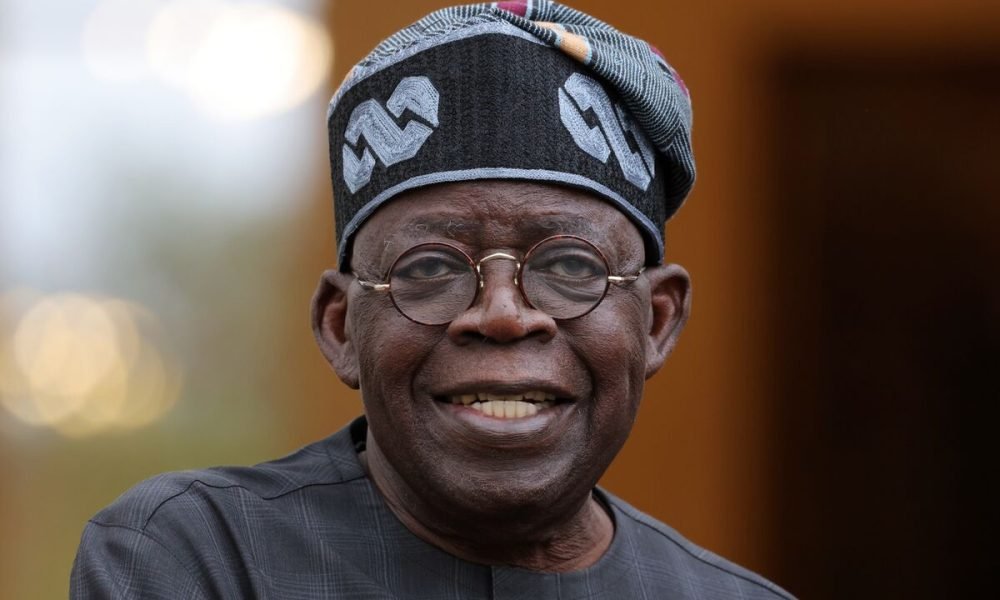
President Bola Ahmed Tinubu says government alone cannot build a trillion-dollar economy as wealth is created by enterprises, investment and manufacturing.
He said the way to prosperity is production, not tax, explaining that his administration is harmonising taxes and ending the menace of multiple taxation.
“We cannot tax our way into prosperity; we must produce our way there,” he said at the presentation of the book, “Economic Diversification and Structural Transformation in Nigeria: The Past, The Present, The Future”, written by a member of the House of Representatives, Abdulmumin Jibrin Kofa.
- EPL: Neville warns Pochettino not to accept Man Utd job without two signings
- ‘You Agreed To Wear Dirty Teeth?’ – Alex Unusual’s Mother Mocks Her Dental Jewellery
Represented by the Speaker of the House of Representatives, Tajudeen Abbas, President Tinubu said when he took the oath of office, he inherited a gathering storm; a collapsing naira, debt service that swallowed nearly all revenue, depleted reserves, a fuel subsidy that bled treasury dry, and factories falling silent as industries and jobs fled across our borders.
While insisting that he chose reform over ruin, the President said two roads were laid before the country.
“One was the comfortable road of cosmetic remedies that had led us to the edge of the cliff. The other was the hard road of surgery to save the patient.”
“We chose reform over ruin. We removed the fuel subsidy. We unified the exchange rate. These were not easy decisions, and I know the weight they placed on every household. But they were necessary, and today the pain is yielding its promise,” he said.
He told the gathering that non-oil activities now account for about 96 per cent of the Gross Domestic Product and non-oil exports have crossed six billion dollars, “the highest in our history.
“Our external reserves have risen to about 55 billion dollars, more than fourteen months of import cover. Our non-oil revenue has grown from ₦13.63 trillion in 2023 to ₦16.4 trillion in the first half of this year alone. Our task has moved from stabilisation to shared prosperity, and our compass points firmly to a one-trillion-dollar economy by 2030, charted in the Medium-Term National Development Plan 2026–2030.”
He argued that government alone cannot build a trillion-dollar economy as wealth is created by enterprises that invest, innovate, manufacture and export.
He, therefore, explained that the duty of government is to clear the path, adding, “That is why our 2025 budget introduced a first-of-its-kind De-risking Framework to draw in private capital, which is expected to provide 86 per cent of the investment “our 2030 goal demands. That is why we are harmonising our taxes, ending the menace of multiple taxation. We cannot tax our way into prosperity; we must produce our way there.”
Meanwhile, ex-Presidential spokesman, Dr Reuben Abati, on his part warned that the benefits of President Tinubu’s economic reforms must be shared among Nigerians rather than in the hands of a few.
Abati said the purpose of any economic reforms should be to improve the living conditions of citizens, warning that macroeconomic stability without improvements in household welfare could threaten the sustainability of government policies.
Abati who reviewed the 526-page book said declining purchasing power and the rising cost of living remained major concerns of the reforms.
He explained that while citizens might be required to make sacrifices, resistance could emerge from organised labour, political groups and ordinary Nigerians struggling with economic hardship.
“Certainly, the purpose of reform must not be the enrichment of a privileged minority at the expense of the people’s prosperity,” he declared.
In his welcome address, the author of the book, Hon. Jibrin said his mission was to provide an empirical account of what needed to be done in the past but was not done as well as the ongoing efforts of the present administration to move the economy away from its monocultural dependence on oil as its primary source of foreign exchange earnings.
“It is my vision that Nigeria will be transformed from an oil-dependent economy into one with a well-diversified economic structure and a resilient economy, ultimately becoming a society whose productivity is built on a solid foundation. This led me to think about what additional contribution I could make to turn this vision into reality.
“An attempt was made to examine the efforts of past administrations to initiate policies aimed at diversifying the economy, as well as those of the current administration, which has focused on subsidy removal, foreign exchange unification and tax reforms.
“For too long, our nation has leaned heavily on a single economic pillar. The future of our macroeconomic prosperity depends on our ability to aggressively unlock the vast potential of our non-oil sectors, from agriculture and technology to solid minerals, industrial manufacturing and the creative industry.
“This text is not built on mere theory but on a rigorous foundation of deep legislative and practical engagement with the levers of our national development. My perspectives are uniquely shaped by the rare privilege of having served across multiple assemblies as Chairman of the House Committees on Finance, Appropriations, Land Transport, Foreign Affairs, and Housing and Habitat.”








Tinubu: Production, not tax, will take Nigeria to prosperity

I Won’t Accept Any Appointment After Leaving INEC – Amupitan

EPL: Disgusting – Gary Neville fumes over Man Utd’s handling of Carrick’s sacking

Now Hiring: Academic and Technical Staff at a Leading Private University in Gombe State

LAUTECH 18th Convocation: EEE Class ’05 Alumni Celebrate as Electronic and Electrical Engineering Department Produced the School’s Overall Best Graduating Student

NMS 95 Reunion Ends in Tragedy as 2 Members Die, 3 Injured in Road Crash


