Headlines
Vehicle Inspection in Nigeria: Why Education Should Complement Enforcement

Road traffic regulation is an essential component of public safety. Every day, millions of Nigerians rely on roads for business, education, healthcare, and social activities. Ensuring that vehicles on these roads are mechanically sound and that motorists obey traffic regulations is, therefore, not merely a legal obligation but a matter of protecting lives.
In Nigeria, responsibility for road safety is shared among several agencies at both the federal and state levels. The Federal Road Safety Corps (FRSC) remains the lead agency for road safety administration, while Vehicle Inspection Officers (VIO) inspect vehicles to ensure they meet prescribed safety standards. The Nigeria Police Force enforces traffic laws, investigates road crashes, and maintains public order.
In addition, many states have established their own traffic management agencies to complement the efforts of federal authorities. Examples include the Bauchi Road Traffic Agency (BAROTA), Kano Road Traffic Agency (KAROTA), Kaduna State Traffic Law Enforcement Authority (KASTLEA), Lagos State Traffic Management Authority (LASTMA), Oyo State Road Traffic Management Authority (OYRTMA), and similar agencies across the country. Although their names and specific responsibilities differ, they all share the common objective of promoting safer roads and ensuring compliance with traffic regulations.
The purpose of vehicle inspection is often misunderstood. It is not merely to check documents or impose fines. It is designed to prevent accidents by ensuring that vehicles are mechanically fit for the road, with functional brakes, good tyres, proper lighting, valid documentation, and other essential safety requirements. Every unsafe vehicle removed from the road is a potential tragedy prevented.
However, while traffic enforcement is necessary, many Nigerians believe that the manner in which it is sometimes carried out deserves serious reflection. A common complaint among motorists is that some officers position themselves in concealed locations—behind buildings, under bridges, around sharp bends, or other hidden spots—to ambush drivers.

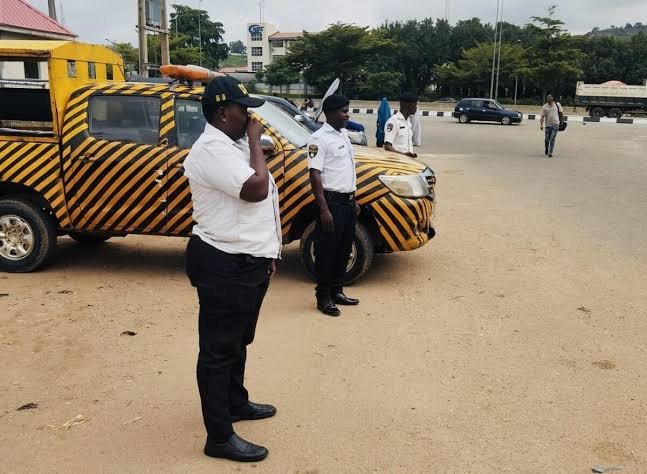
This approach creates the perception that the priority is to catch offenders rather than to prevent offences from occurring in the first place.
If the primary purpose of traffic laws is to save lives, then preventing a violation should be considered just as important as penalising one. An officer who notices a driver without a seat belt, for example, could stop the vehicle safely, explain the danger, and encourage immediate compliance before the journey continues. Such an approach protects lives while also promoting respect for the law.
This is why a widely circulated video of a Nigerien police officer attracted so much admiration. Rather than shouting at motorists or immediately resorting to arrest or punishment, the officer politely explained the importance of wearing seat belts and the dangers of neglecting them. His calm, respectful, and educational approach demonstrated that effective law enforcement is not measured only by the number of arrests made but also by the number of dangerous behaviours corrected before they lead to tragedy.
The lesson from that encounter is one Nigeria’s traffic enforcement agencies can reflect upon. Whether it is the FRSC, VIO, Police, BAROTA, KAROTA, KASTLEA, LASTMA, OYRTMA, or other state traffic agencies, enforcement should be balanced with education, professionalism, and respect for the public. Citizens are generally more willing to comply with the law when they understand its purpose and when they are treated with dignity.
This does not mean that offenders should escape accountability. Motorists who deliberately disregard traffic laws, drive dangerously, use forged documents, or repeatedly violate safety regulations should face the appropriate legal consequences. However, enforcement should always be lawful, transparent, and focused on public safety rather than creating an impression of intimidation or revenue generation.
Governments should continue investing in modern vehicle inspection centres, digital verification systems, continuous training for traffic officers, and sustained public awareness campaigns. Likewise, officers who demonstrate integrity, courtesy, and professionalism should be recognised and encouraged, while effective channels should exist for addressing complaints against misconduct.
Road safety is a shared responsibility. Government agencies must enforce the law fairly and professionally, while motorists must maintain roadworthy vehicles and obey traffic regulations. The ultimate goal should not be to record the highest number of arrests or fines, but to reduce crashes, protect lives, and build a culture in which compliance is driven not only by fear of punishment but also by understanding, responsibility, and mutual respect.
The true measure of success for any traffic enforcement agency is not how many motorists it catches, but how many accidents it prevents and how many lives it saves.
Bashir Khalid Furyam
Bauchi, Bauchi State
08132560171