Connect with us

Cover

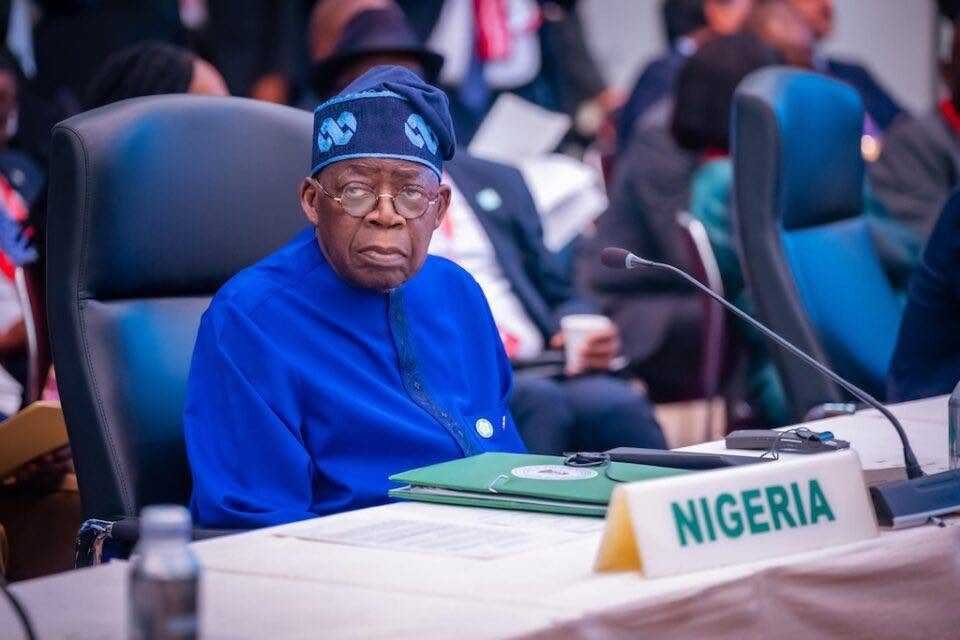
Yoruba Elders’ Council Backs Tinubu For Second Term In 2027

Published

on

-A Vote of Confidence, or Political Cover?

A respected pan-Yoruba socio-cultural body has thrown its weight behind President Bola Tinubu’s bid for a second term, citing economic reforms and infrastructure development as justification for its position — even as many Nigerians continue to grapple with the daily costs of those same policies.

The Yoruba Council of Elders announced its support for Tinubu’s re-election in 2027 through a statement issued by its Secretary-General, Dipo Oyewole, in Ibadan on Monday. The council framed its endorsement as the product of a careful assessment of the administration’s performance since May 2023, rather than ethnic solidarity with the president, who is himself Yoruba.

YCE built its position around a familiar argument in Nigerian political discourse: that painful reforms require time before their benefits become visible, and that switching course midway would waste the sacrifices already made.

“President Tinubu inherited enormous economic and security challenges but had demonstrated courage and determination in addressing them through far-reaching reforms,” the council said. “The removal of fuel subsidy, exchange rate reforms, and efforts to attract investments were difficult decisions that required time to produce desired outcomes.”

ALSO READ

Starmer’s Exit, Path For Burnham As Labour Faces Renewal

The council went further, arguing that the administration deserved space to complete what it started. “The administration should be allowed to consolidate its programmes. Despite the initial hardships associated with some of the reforms, there were signs that the economy was gradually stabilising.”

That claim — that the economy is “gradually stabilising” — will draw scrutiny. Since the fuel subsidy removal and naira float in 2023, Nigerians have lived through a sustained period of inflation, currency depreciation, and rising costs of food, transport, and basic goods. Whether the stabilisation YCE references is reflected in household budgets across the country is a separate question from whether it appears in macroeconomic indicators.

Beyond the macroeconomic reforms, YCE pointed to federal interventions in infrastructure, education, agriculture, and social investment programmes as evidence of a government laying groundwork for long-term development.

The council did not specify which particular projects or programmes it considered most significant, nor did it provide independent data to support its assessment of their impact. The endorsement statement leaned more on broad characterisation than itemised evidence — a pattern common in political endorsements from socio-cultural organisations, where the goal is typically to signal alignment rather than conduct forensic policy analysis.

Aware of how such endorsements are typically read in Nigeria’s political environment — where ethnic and regional calculations often shape public support for candidates — YCE was explicit in distancing its position from tribal considerations.

The council described its decision as “not based on ethnic considerations but on a realistic appraisal of the administration’s performance and prospects.” It added that YCE “remains committed to promoting national unity, good governance and the welfare of all Nigerians, irrespective of ethnic, religious or political affiliations.”

That disclaimer is worth noting, even as it invites an obvious question: would a Yoruba elders’ council have issued an equally enthusiastic endorsement of a non-Yoruba president pursuing identical economic policies? The council’s statement does not address that counterfactual, and readers will draw their own conclusions about how much ethnic considerations factored into a decision the council insists was purely performance-based.

YCE’s declaration adds to a pattern of early political positioning ahead of the 2027 general election, with various groups, associations, and traditional structures beginning to stake out support for or opposition to a second Tinubu term well before the formal campaign season begins.

For Tinubu’s re-election strategy, an endorsement from a prominent South West socio-cultural body carries symbolic value, particularly in consolidating his political base in the region that has historically been considered his political home. Whether such endorsements translate into broader public confidence — especially among Nigerians outside the Southwest, or those within it who have borne the brunt of subsidy removal and currency reforms — remains an open question that 2027 itself will ultimately answer.

The council expressed optimism that, with continued policy consistency, Nigeria would move toward greater economic growth and political stability. Whether that optimism is shared by the millions of Nigerians currently navigating the practical realities of the reforms YCE has praised is a matter the ballot box, not an elders’ council statement, will eventually settle.

Cover

Vondrousova’s Four-Year Ban Shakes Tennis

Published

on

Marketa Vondrousova, the 2023 Wimbledon champion, has been banned from tennis for four years after refusing to submit to an out-of-competition drugs test. The International Tennis Integrity Agency (ITIA) announced the sanction, describing her refusal as a serious breach of anti-doping rules.

The Czech player, once celebrated for her historic triumph at Wimbledon, now faces exclusion from the sport until 2028. The ruling has sent shockwaves through the tennis community, highlighting the uncompromising stance of regulators on doping compliance.

According to the ITIA, Vondrousova declined to provide a sample when approached by testers earlier this year. Under global anti-doping regulations, refusal is treated with the same severity as a positive test. The agency stressed that athletes are obliged to cooperate fully, regardless of circumstances.

Her refusal effectively ended her season and cast doubt on her future in the sport. The ITIA emphasised that the punishment was necessary to uphold fairness and protect the credibility of tennis competitions.

The Women’s Tennis Association (WTA) acknowledged the ruling, noting that the ban was consistent with international standards. Officials reiterated that compliance with testing is non-negotiable, as it ensures a level playing field.

ALSO READ

Serena Williams Returns To Wimbledon Singles With Wildcard

The International Tennis Federation (ITF) also backed the decision, pointing out that refusal undermines the integrity of the sport. Both organisations stressed that the sanction was not about targeting individuals but about enforcing rules that safeguard competition.

Vondrousova’s ban means she will miss four full seasons, including Grand Slam tournaments and the Olympic Games. At 27, the suspension cuts into her prime years, raising doubts about whether she can return to elite form after 2028.

Her Wimbledon victory in 2023 had marked her as one of the brightest talents in women’s tennis. Now, the ban threatens to overshadow her achievements and redefine her legacy.

The case underscores the strict enforcement of anti-doping rules across global sports. Refusal to test is treated as a deliberate violation, with sanctions designed to deter athletes from avoiding scrutiny.

Analysts argue that the ruling sends a clear message: compliance is mandatory, and reputation offers no shield. For tennis, the decision reinforces its commitment to transparency and fairness, even when high-profile players are involved.

The Vondrousova case highlights the importance of education and awareness among athletes. Anti-doping agencies insist that players must understand their obligations and the consequences of non-compliance.

Sports lawyers note that refusal often carries heavier reputational damage than a failed test, as it suggests deliberate avoidance. For younger players, the case serves as a cautionary tale about the risks of disregarding regulations.

Marketa Vondrousova’s four-year ban is a dramatic turn in her career and a reminder of the uncompromising nature of anti-doping enforcement. While her Wimbledon triumph remains part of tennis history, her refusal to test has placed her future in jeopardy.

The ruling reinforces the principle that no athlete, regardless of status, is above the rules. For tennis, it is a painful but necessary step to preserve integrity and trust in the sport.

Continue Reading

Cover

Starmer’s Exit, Path For Burnham As Labour Faces Renewal

Published

on

Keir Starmer announced his resignation outside No.10 Downing Street, confirming he had informed King Charles III of his decision. His exit came after Labour’s poor showing in local elections and a decisive by-election victory by Andy Burnham, which made the former Manchester mayor eligible to challenge for the party leadership.

Starmer admitted he was no longer the best person to lead Labour into the next general election. He promised to remain in office until a new leader is chosen, ensuring what he described as an “orderly handover of power.”

Andy Burnham quickly confirmed his intention to run for Labour leader. His Makerfield by-election win against Reform UK boosted his standing within the party. The scale of his victory convinced many MPs that Labour needed fresh leadership.

Wes Streeting, once seen as Burnham’s main rival, announced he would not contest the leadership and instead endorsed Burnham. This endorsement effectively cleared the path for Burnham to assume leadership without a major challenge.

Starmer’s government, elected with a strong majority in 2024, faced repeated setbacks. Labour lost ground to Nigel Farage’s Reform UK, struggled with policy U-turns, and was weakened by internal disputes. These issues eroded confidence in Starmer’s leadership and made his position untenable.

The resignation reflects broader instability in Westminster, with critics arguing that Labour failed to maintain momentum despite its historic victory two years ago.

Labour’s National Executive Committee will open nominations for leadership on July 9. The contest is expected to conclude before Parliament’s summer recess, ensuring a new leader is in place by September. If Burnham runs unopposed, he could become Prime Minister as early as mid-July.

Starmer’s departure drew tributes from international leaders. European Commission President Ursula von der Leyen praised his role in strengthening European and Ukrainian security. Australian Prime Minister Anthony Albanese said Starmer could be proud of his contribution to the UK.

Burnham’s rise signals a shift in Labour’s direction. His leadership bid is framed as a renewal process, with promises of stability and inclusiveness. For Labour, the challenge will be to rebuild public trust and prepare for the next general election under new leadership.


Continue Reading

Cover

Kwara APC Crisis: Group Urges Tinubu to Remain Neutral in Party Dispute

Published

on

A civil society group, the Centre for Citizens Participation and Democratic Development, has urged President Bola Ahmed Tinubu to remain neutral in the ongoing crisis within the All Progressives Congress in Kwara State.

In a statement issued by its Executive Director, Prof. AbdulKareem Adedeji, the group warned against any action that could create the impression that the Presidency had taken sides in the dispute arising from the party’s recent primaries.

The group expressed concern over reports that a delegation aligned with Kwara State Governor, AbdulRahman AbdulRazaq, plans to visit Abuja to meet key political leaders and the President.

It alleged that the move could be interpreted as an attempt to project an image of unity despite lingering disagreements within the party.

According to the statement, the controversy surrounding the APC primaries, particularly the governorship primary, has continued to generate concerns among party elders, lawmakers, aspirants, youth groups, civil society organisations and other stakeholders.

It noted that the dispute has led to public advocacy campaigns, stakeholder engagements and legal actions.

The group cautioned that any perceived endorsement of one faction by the Presidency could deepen divisions within the party and undermine efforts toward reconciliation.

It also urged traditional rulers to avoid involvement in partisan political activities, stressing that royal fathers should remain neutral and serve as custodians of peace, unity and justice.

Adedeji maintained that President Tinubu, as leader of the nation, should act as a father to all stakeholders by promoting fairness, inclusion and dialogue rather than allowing the Presidency to be drawn into unresolved state-level political disputes.

He called for genuine reconciliation within the APC in Kwara State, insisting that concerns over the primaries should be addressed transparently to preserve public confidence, party unity and democratic credibility.

Continue Reading

Trending

Copyright © 2023 - 2025 DailyMirror Nigeria. Design by AspireWeb.ng, powered by WordPress.