Branded Content
KfW Development Bank becomes an ATIDI Shareholder, Enhances German Investment Opportunities in Africa
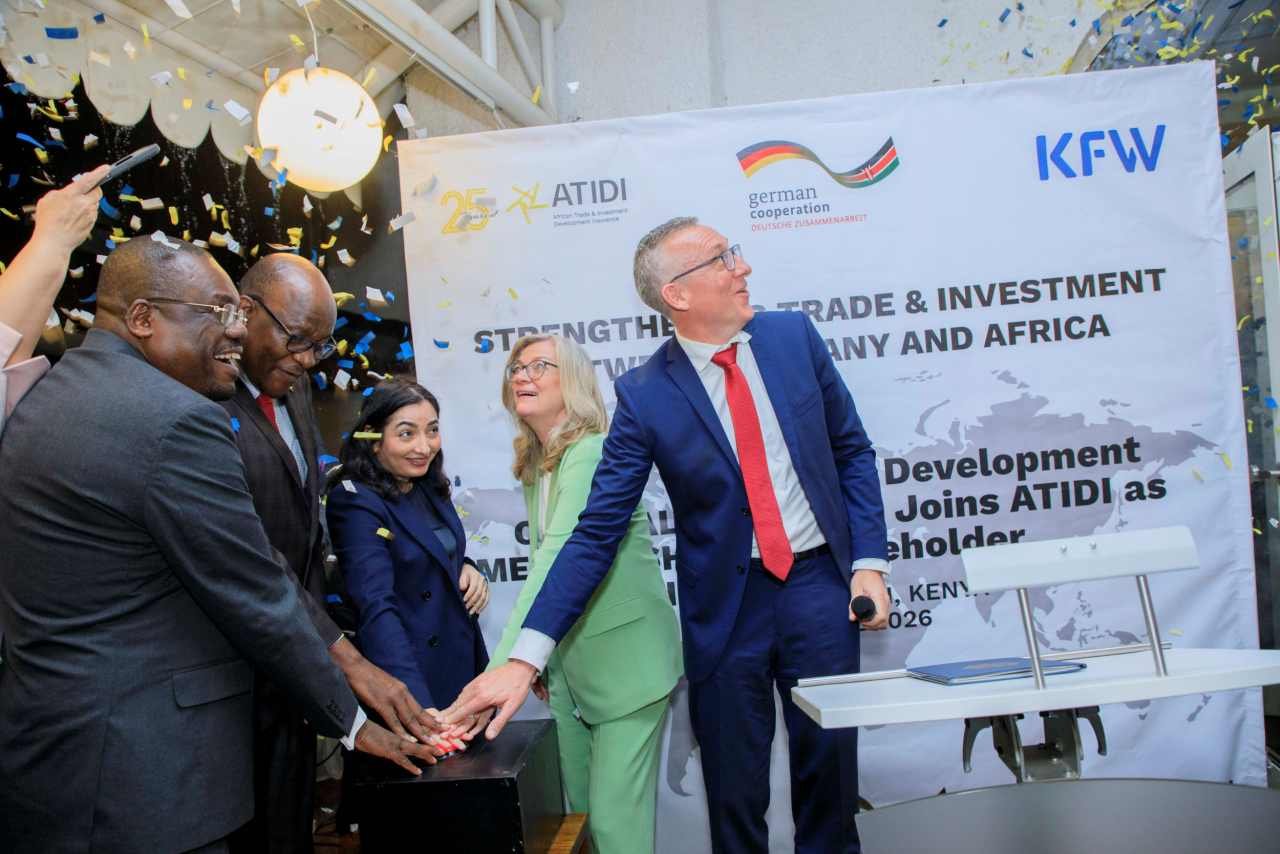
The German development bank KfW acting on behalf of and for the account of the Federal Republic of Germany has become the latest shareholder in the African Trade & Investment Development Insurance (ATIDI). KfW becomes the 13th Institutional shareholder in Africa’s premier development insurer, further strengthening the organization’s capital base and its capacity to support trade and investment across the continent.
The official signing of the subscription agreement between the two organizations is being marked on the occasion of a meeting held today in Nairobi between ATIDI’s CEO and the German Federal Minister for Economic Cooperation and Development, Reem Alabali Radovan. The new shareholding underscores Germany’s commitment to strengthening its economic partnership with Africa and to supporting African institutions that facilitate trade and investment across the continent.
Speaking at the signing ceremony, ATIDI CEO Manuel Moses said, “This milestone is iconic in many ways. First, it elevates our already dynamic bond with KfW and creates more opportunities for German investors looking to engage in Africa. It is also a recognition of ATIDI’s earned status as Africa’s top development insurer and the acknowledgement of the soundness of our business. Last, it underscores the power of partnerships in a global context increasingly marked by volatility and uncertainty. ATIDI will spare no effort to make this partnership a successful one.”
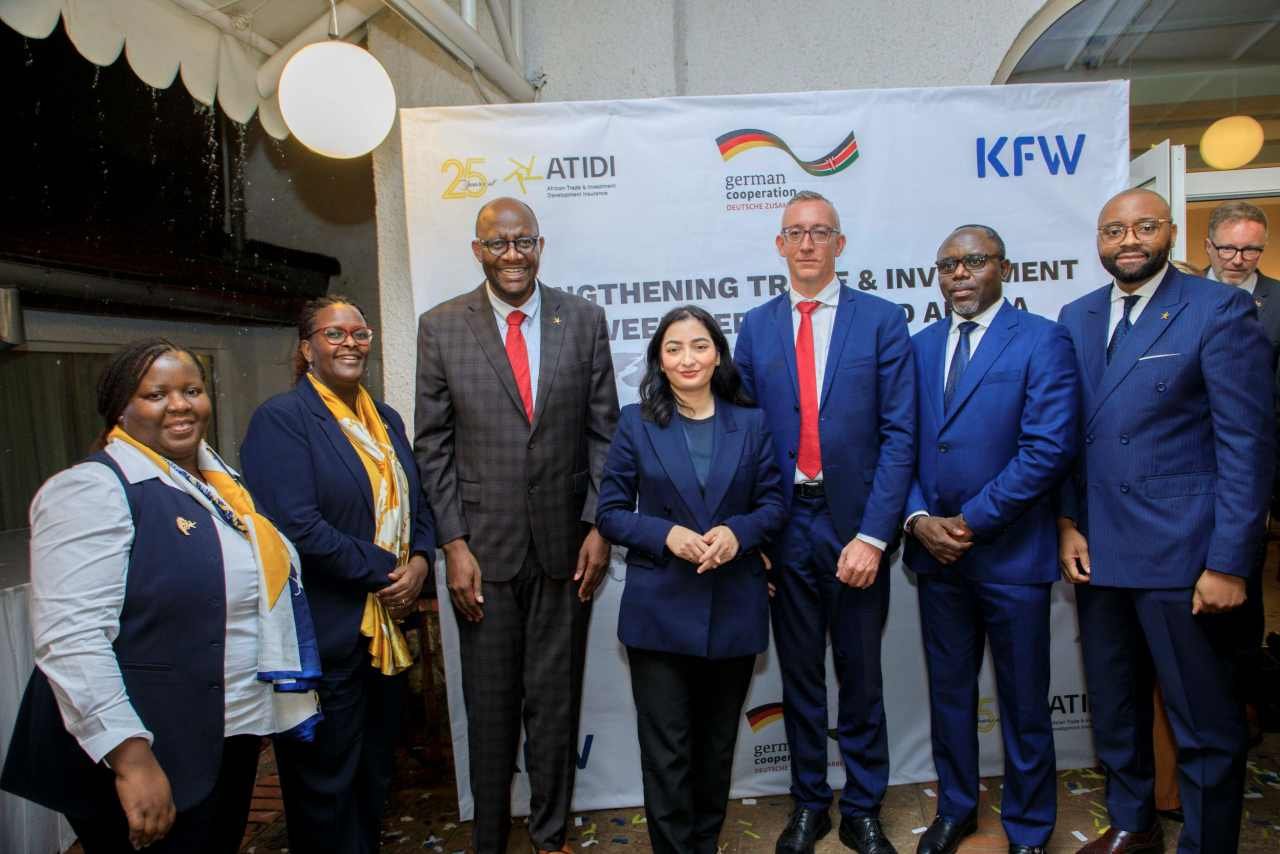
KfW invested USD 32 million to become a D2-class shareholder of ATIDI, a status dedicated to Export Credit Agencies and Non-African Public Entities. Of this amount, USD 18.4 million are funded from BMZ budget resources, with the remaining USD 13.6 million coming from KfW’s own resources. As such, it will assume the obligations and benefits related to its new shareholding status, including representation in ATIDI Governance and decision-making structures and equally participating towards improving German trade and investments in Africa in alignment with the G20 Compact with Africa (CwA 2.0).
KfW’s subscription in ATIDI is the culmination of a dynamic partnership between the two organizations. On behalf of the German Federal Ministry of Economic Cooperation and Development (BMZ), KfW has supported several countries’ membership in ATIDI with over USD100 million financing, thus strengthening the organization’s capital base and expanding its ability to mitigate risk and mobilize private investment across African markets. The new equity participation adds a direct shareholding to this long‑standing cooperation.
“Today we reconfirm our long-standing strategic partnership with ATIDI. Together, we intend to further enhance business opportunities for European and German investors in Africa to create prosperity and development for mutual benefit. Our membership is executed on behalf of the Federal Republic of Germany. It is only the latest culmination of a successful cooperation that has enabled the ATIDI membership of several African states and has created innovative insurance solutions to attract foreign investment on the continent.” Said Christiane Laibach, Member of the Executive Board, KfW.
Established in 1948, KfW is Germany’s state-owned promotional and development bank and a key implementing partner of BMZ in international financial cooperation. It provides financing for projects in critical sectors including sustainability, infrastructure, renewable energy and small business growth in developing countries. Its shareholding in ATIDI is expected to stimulate up to $500 million in trade and investment between German companies and African markets.
Over the past 25 years, ATIDI has grown to become Africa’s premier provider of development insurance and one of its highest rated financial organizations. It leverages its partnerships with leading multilaterals and regional bodies – including the African Union, the World Bank Group, COMESA, the European Investment Bank (EIB), the Norwegian Agency for Development Cooperation (NORAD) – to offer innovative credit and investment insurance products that foster sustainable and transformational growth across the continent.
Beyond capital, this partnership represents a powerful bridge between European financial expertise and Africa’s rapidly expanding investment landscape. By combining KfW’s global development finance experience with ATIDI’s deep regional risk intelligence and market presence, the collaboration will help unlock new pathways for investment in strategic sectors thus supporting sustainable growth, strengthening trade corridors and enabling investors to participate more confidently in Africa’s long-term economic transformation.
Note to editors:
About ATIDI
ATIDI was founded in 2001 by African States to cover trade and investment risks of companies doing business in Africa. The organization notably provides Political Risk, Credit Insurance and Surety Insurance. Since inception, ATIDI has supported USD93 billion worth of investments and cross border trade into Africa. It is rated A/Stable by Standard & Poor’s and A2/Stable by Moody’s, which reflects the organization’s robust financial position and strong risk management practices. In recognition of its growing impact, ATIDI was named the Development Finance Institution (DFI) of the Year at the 2025 African Banker Awards.
About Kfw
KfW Group, founded in 1948, is the German promotional bank and one of the world’s leading promotional banks. It is 80% owned by the Federal Government and 20% by the federal states.
KfW Development Bank carries out Financial Cooperation (FC) projects with developing countries and emerging economies on behalf of the German Federal Government, especially the Federal Ministry for Economic Cooperation and Development (BMZ). The experts at KfW’s head office in Frankfurt am Main and more than 60 international offices cooperate with partners all over the world. The promotional financing strengthens economic perspectives, improves the infrastructure, combats poverty and hunger and protects the climate and the environment as well as peace and security – in a common interest. KfW Development Bank is a competent and strategic adviser for current development policy issues.
For further information, please contact:
Mike Omuodo | Media Fast PR| Tel: +254 736 014 596| Email: mike.omuodo@mediafast.co.ke |

Branded Content
Kenya launches World Agriculture Forum Country Council for next-gen agriculture growth
Kenya has launched the World Agriculture Forum (WAF) Country Council to accelerate the transformation of its agriculture sector, aiming to boost productivity, strengthen climate resilience, and connect global innovation with local farming systems.
Nairobi, Kenya, 30 April 2026: Kenya has officially launched the World Agriculture Forum (WAF) Country Council, marking a significant step in positioning the Country as a continental leader in agricultural innovation powered by artificial intelligence (AI) and bioengineering.
Under the theme “The Convergence of Intelligence: Strategic Investments in AI and Bioengineering for a Resilient Agricultural Future,” the launch, held at the International Livestock Research Institute (ILRI) Auditorium in Nairobi, brought together senior government officials, global agriculture leaders, researchers, investors and agribusiness executives to explore how converging technologies can unlock productivity, resilience, and inclusive growth across Kenya’s food systems.

Delegates pose for a group photo during the launch of the World Agriculture Forum Kenya Country Council.
With climate change disrupting planting seasons, trade barriers constricting supply chains, and a rapidly growing population demanding more food, Kenya faces an urgent need to scale both the quality and quantity of agricultural production. The WAF Kenya Country Council has been launched to bridge the gap between policy ambition and on-farm reality, creating integrated investment pipelines that pair digital intelligence with biological innovation.
Driving a New Era of Agricultural Growth
Speaking during the launch on behalf of the Prime Cabinet Secretary, Professor Shaukat Principal Secretary State Department for Science, Research and Innovation in the Prime Cabinet Secretary’s Office, underscored the strategic importance of the initiative, stating:

Prof. Shaukat Abdulrazak, Principal Secretary State Department for Science, Research and Innovation in the office of the Prime Cabinet Secretary, delivering the keynote address on behalf of Prime Cabinet Secretary Hon. Musalia Mudavadi during the launch of the World Agriculture Forum Kenya Country Council.
“As we formally launch the Kenya Country Council of the World Agriculture Forum, we are doing more than inaugurating another institution. We are declaring that Kenya is ready to lead the ‘Convergence Decade’. The future lies in the synergy between Digital Intelligence and Biological Intelligence. AI can tell a farmer when to plant, but bioengineering gives that farmer the seed that will survive regardless of the season.”
He added that the initiative aligns with Kenya’s Bottom-Up Economic Transformation Agenda (BETA), the AI Strategy 2025–2030, and Continental frameworks such as CAADP and Agenda 2063, with a clear focus on delivering measurable outcomes including increased yields, improved farmer incomes, and socio-economic transformation.
A Platform for Action, Not Just Dialogue
WAF Global Executive Director Dr. M.J. Khan emphasized that the Forum will serve as a catalyst for shaping the future of global food systems.
“WAF is committed to providing thought leadership and setting the agenda for food systems growth in the face of global challenges such as trade barriers, climate change, and population pressures. Data is the new fertilizer, and through our global councils, we aim to harness it to drive smarter, more resilient agricultural systems,” said Dr. Khan.
The WAF platform will operationalize its mission through flagship initiatives including the Global Soil Health Coalition, Global Digital Agriculture Council, Global Sustainability Council, and the Trade and Food Security Council.

ILRI Director General Prof. Appolinaire Djikeng addresses delegates attending the launch of the World Agriculture Forum Kenya Country Council.
Strengthening Research and Local Innovation
Welcoming delegates to ILRI, Director General Prof. Appolinaire Djikeng highlighted the importance of sustained collaboration in transforming agriculture.
“This partnership reflects over a year of collaboration between WAF and ILRI focused on advancing food security, improving agricultural practices, and reducing poverty. The launch of the Kenya Country Council strengthens our shared commitment to translating science and innovation into real impact for farmers,” he said.
Unlocking Value for Farmers Through Technology
Dr Oscar EV Magenya, the WAF Kenya Country Director, added: “The launch of the WAF Kenya Country Council marks a shift from conversation to implementation—bringing together government, investors and researchers to deliver real solutions for farmers. This is not just another council, but a mechanism to turn global best practices into local impact, driving higher productivity, improving farmer incomes and building a more resilient, technology-powered food system.”
The launch also featured insights from industry leaders on how digital tools and innovation are already transforming farming on the ground.
Timothy Wanjohi, CEO of Market Farm Ltd, emphasized the role of technology in improving farmer outcomes:
“We are seeing first-hand how digital platforms, AI-driven advisories, and solar-powered solutions can reduce post-harvest losses, improve market access, and increase profitability for farmers. The opportunity now is to scale these solutions and ensure they reach every farmer who needs them.”
A Clear Roadmap for Impact
The WAF Kenya Country Council will focus on building integrated pipelines for agricultural innovation, fostering public-private partnerships and engaging county governments as key drivers of implementation.
By 2028, the Council aims to establish a proven, scalable model that connects global investors to local agricultural innovation, accelerates adoption of AI and bioengineering solutions, and strengthens Kenya’s position as a hub for agri-tech convergence.
The first County Council meeting will be held within 30 days to set up technical working groups, focusing on aligning regulations, developing financing models, and creating safeguards to protect farmers while making AI easier to understand and use.
Branded Content
UK Launches First Pan-African Founder Support Programme at London Tech Week
UK Government-backed initiative introduces coordinated support to improve how African founders access the UK market
London, UK – 19th May 2026: The UK’s Department for Business and Trade – Africa is backing the launch of the UK–Africa Ecosystem Week, the UK’s first coordinated, pan-African support programme delivered during London Tech Week. Powered by the UK–Africa Sandbox and Ventures 54 in partnership with the UK Department for Business & Trade (DBT), the UK South Africa Tech Hub, the UK Nigeria Tech Hub, London & Partners and the Mayor of London’s office, the initiative marks a new phase in the UK’s emergence as a global launchpad for African technology companies.
The UK-Africa Ecosystem Week introduces a fully structured approach to participation at London Tech Week, one of the world’s largest annual technology gatherings, attracting over 100,000 attendees across more than 500 events. Founders will be able to benefit from a curated, week-long experience designed to help them access and navigate opportunities more effectively and achieve their business growth goals.
The initiative provides a coordinated support layer across the week, including curated sessions, concierge support, dedicated workspaces and a flagship UK–Africa Ecosystem Day bringing together key market entry stakeholders and the wider UK-Africa tech ecosystem to support African Founders and Delegations in London that week.
Supported by London & Partners, the Mayor of London’s office, London Tech Week, and other ecosystem partners, the initiative builds on several years of ecosystem engagement during London Tech Week. What began as informal community gatherings through the London Africa Network has evolved into structured programming and culminated in last year’s UK–Africa Ecosystem Day. This year marks the next phase, scaling to a full week of support designed to improve how African founders access the UK market.

The initiative architect, Anthony William Catt, Founder of Ventures 54 and UK-Africa Sandbox, said
“We’ve seen a clear increase in the number of African founders coming to London Tech Week to explore the UK market. Over the past four years, we’ve been building support around that, starting with a simple mixer, evolving into full day of programming, and now scaling into a full week of activity. This is about putting the right structure in place, so African founders have a dedicated support track to get the most out of the week and access the best of what the UK has to offer.”
Ben Ainsley, His Majesty’s Trade Commissioner (Acting) for Africa said
As home to one of the world’s largest and fastest growing tech ecosystems, a deep VC pool and unrivalled access to global talent, the UK is a natural next step for ambitious African founders looking to scale internationally. The UK Government is committed to supporting high-growth international companies succeed in the UK and initiatives like the UK–Africa Sandbox demonstrate our focus on making it easier for African founders to access support and fully engage with the UK’s world-class innovation ecosystem.”
Howard Dawber, Deputy Mayor of London for Business and Growth, said:
London is a global hub for investment and innovation, and our strength comes from our international connections. Following the Mayor of London’s successful trade mission to Africa last year, we continue to see exciting opportunities to deepen partnerships between London and Africa. Initiatives like this to boost our tech ecosystems, launched at London Tech Week, will help us to do just that as we continue to build a better, more prosperous London for everyone.”
Janet Coyle CBE, Managing Director of London & Partners said:
The launch of the UK-Africa Ecosystem Week emphasises the importance of the channel between London and African ecosystems. We are delighted to bring it into the fold of London Tech Week, an event which highlights London’s role as a Europe’s leading tech hub, driving innovation across industries and connecting the brightest minds from around the globe.”
The UK–Africa Ecosystem Week will welcome delegations and high-growth founders from across Africa, including Nigeria, South Africa, Kenya, Egypt, Algeria and Ghana. The week will begin on Sunday 7 June with a welcome reception at Africa Centre and conclude on Wednesday 10 June with the flagship UK–Africa Ecosystem Day and London Africa Network closing mixer.
Participants will receive VIP access and concierge-style support to help tailor their week, alongside access to a dedicated Africa Lounge for meetings, Africa-focused panels and roundtables, and a full day of practical support around UK market entry, investment and commercial expansion opportunities. The programme will also provide exclusive access and discounted tickets to selected Africa-focused events taking place in and around London Tech Week.
Beyond London Tech Week, this feeds into the evolving UK–Africa Sandbox, a year-round pan-African platform designed to support African founders accessing the UK market while also opening pathways for UK scale-ups into African ecosystems. Building on the foundation established through the Foreign, Commonwealth & Development Office, UK South Africa Tech Hub and UK Nigeria Tech Hub in-country Sandbox programmes, the Sandbox is now expanding into a broader UK-Africa corridor platform, with dedicated support tracks in both South Africa and Nigeria expanding alongside wider pan-African partnership and ecosystem initiatives.
African founders and delegation leads interested in receiving support from the UK Africa Ecosystem Week can register via www.ukafricasandbox.com/ecosystem-week. Organisations and ecosystem partners looking to engage with founders, explore partnerships or support activity during the week are also encouraged to visit the website and connect with the UK–Africa Sandbox team.
Branded Content
Senator George Akume and the Test of Party Democracy in Benue
Senator George Akume, CON, represents a rare breed of Nigerian politician. In a political culture often characterised by impatience, self-interest, and inconsistency, he has distinguished himself through patience, loyalty, and an enduring commitment to teamwork.
I have worked closely with him and witnessed his steady rise since 1999, when he became Governor of Benue State. From there, he went on to serve as Senator, Minister of the Federal Republic, and now Secretary to the Government of the Federation (SGF). His trajectory has been defined not by haste, but by discipline and a remarkable ability to work within the system.
These qualities have been severely tested in recent times, particularly in his relationship with Governor Hyacinth Alia. Governor Alia entered the political arena with significant backing despite having limited political experience, modest resources, and no established structure to contend with seasoned figures such as Barnabas Gemade and Steven Lawani. Against these odds, he emerged victorious.
However, from the moment he assumed office, his relationship with Senator Akume deteriorated without any clear provocation. What began as a strained engagement has since evolved into a persistent political rift.
When discussions later emerged about a potential second term for the governor, many of us close to Senator Akume were understandably concerned by what appeared to be the position of the party’s national leadership. Yet, true to his nature, Akume remained calm and aligned himself with the party, even where the circumstances were personally unfavourable.
This included accepting the controversial dissolution of the duly elected state party leadership and the installation of a caretaker committee—decisions he embraced in the interest of party unity. More notably, when he conveyed the directive that political office holders, including the governor, should be returned unopposed, he did so with restraint, placing party cohesion above personal considerations.
At a gathering in Makurdi, he stated:
“All those elected on the platform of the APC, from the State Assembly to the National Assembly, are expected to return automatically… and of course, the Governor is also expected to be returned.”
That position, however, was publicly rejected by Governor Alia, who insisted there would be no automatic tickets, citing the stance of the President and the party’s national leadership. In effect, this signalled a willingness to proceed without regard for the political structure that facilitated his emergence.
For many of us, that moment was decisive.
Senator Akume, despite what can only be described as sustained political provocation, has remained composed—much like the biblical Job—accepting both favourable and difficult circumstances within the party framework.
But this is no longer about personalities.
It is about the survival of political order and internal democracy within the All Progressives Congress (APC) in Benue State.
There is a dangerous assumption at play—that power can be consolidated through imposition, that party structures can be ignored, and that those who built the system can be sidelined without consequence. That assumption is fundamentally flawed.
Those of us who have stood with Senator Akume have exercised restraint out of respect for his disposition. But restraint must not be mistaken for weakness.
The time has come for a necessary shift.
Our leader, Senator George Akume, must now allow his supporters—and indeed all party members—to fully exercise their political rights. Let there be open contest. Let aspirants emerge freely, without intimidation or artificial barriers. Let the people of Benue State decide.
Anything short of this will not only fracture the party; it will erode its credibility beyond repair.
And let no one be under any illusion: if the process is manipulated, if candidates are imposed, if the will of the people is subverted, it will mark the beginning of the end for the APC in Benue State.
As one who has followed Nigerian politics since the 1970s, I say this without hesitation: no political party survives sustained injustice against its own members.
The warning signs are already clear. What happens next will determine whether the party corrects itself—or collapses under the weight of its own contradictions.
A Benue APC chosen by the people, not imposed from above, will not only survive—it will endure and dominate.
-
Cover9 months agoNRC to reposition train services nationwide.. Kayode Opeifa
-
Fashion9 years agoThese ’90s fashion trends are making a comeback in 2017
-
Entertainment9 years agoThe final 6 ‘Game of Thrones’ episodes might feel like a full season
-
Politics2 months agoNNPP Diaspora Stakeholder and Key Kwankwaso Ally, Dr. Usman Tijjani Shehu, Rejoins APC
-
Opinion1 year agoBureaucratic Soldier, Kana Ibrahim heads Ministry of Aviation and Aerospace After Transformative Tenure at Defence
-
Opinion1 year agoHon. Daniel Amos Shatters Records, Surpasses Predecessor’s Achievements in Just Two Years
-
Opinion6 months agoBarrister Somayina Chigbue, Esq: A rising legal leader shaping institutioal excellence in Nigeria
-
News10 months agoNigerian Nafisa defeats 69 Countries at UK Global Final English Competition