Connect with us

Branded Content

School farms boost food security in Kenya’s drylands

Published

on

Kenya, 9th June 2026: At Inaarok Lukuny Comprehensive School in Kenya’s Kajiado County, pupil enrolment has more than doubled over the past year, rising from 240 to more than 525 children. The head teacher attributes much of that growth to a simple change: access to more nutritious school meals.

In a region where drought, food insecurity and poverty continue to challenge many families, a pilot initiative linking school-based food production with community training is helping to improve children’s diets while creating new opportunities for women farmers.

The work forms part of a wider initiative led by the Kenya Agricultural and Livestock Research Organisation (KALRO) and partners, including Imperial College London, Egerton University, government agencies and local community organisations, to strengthen school feeding systems in Kenya’s arid and semi-arid lands (ASALs). KALRO research identified challenges in school feeding – including limited dietary diversity and difficulties maintaining reliable food supplies. In response, four schools in Kajiado and Isiolo counties were selected in April 2025 to establish school farms. The schools were selected because they faced food insecurity and also had land that could be used to grow nutritious foods.
Climate-smart school meals

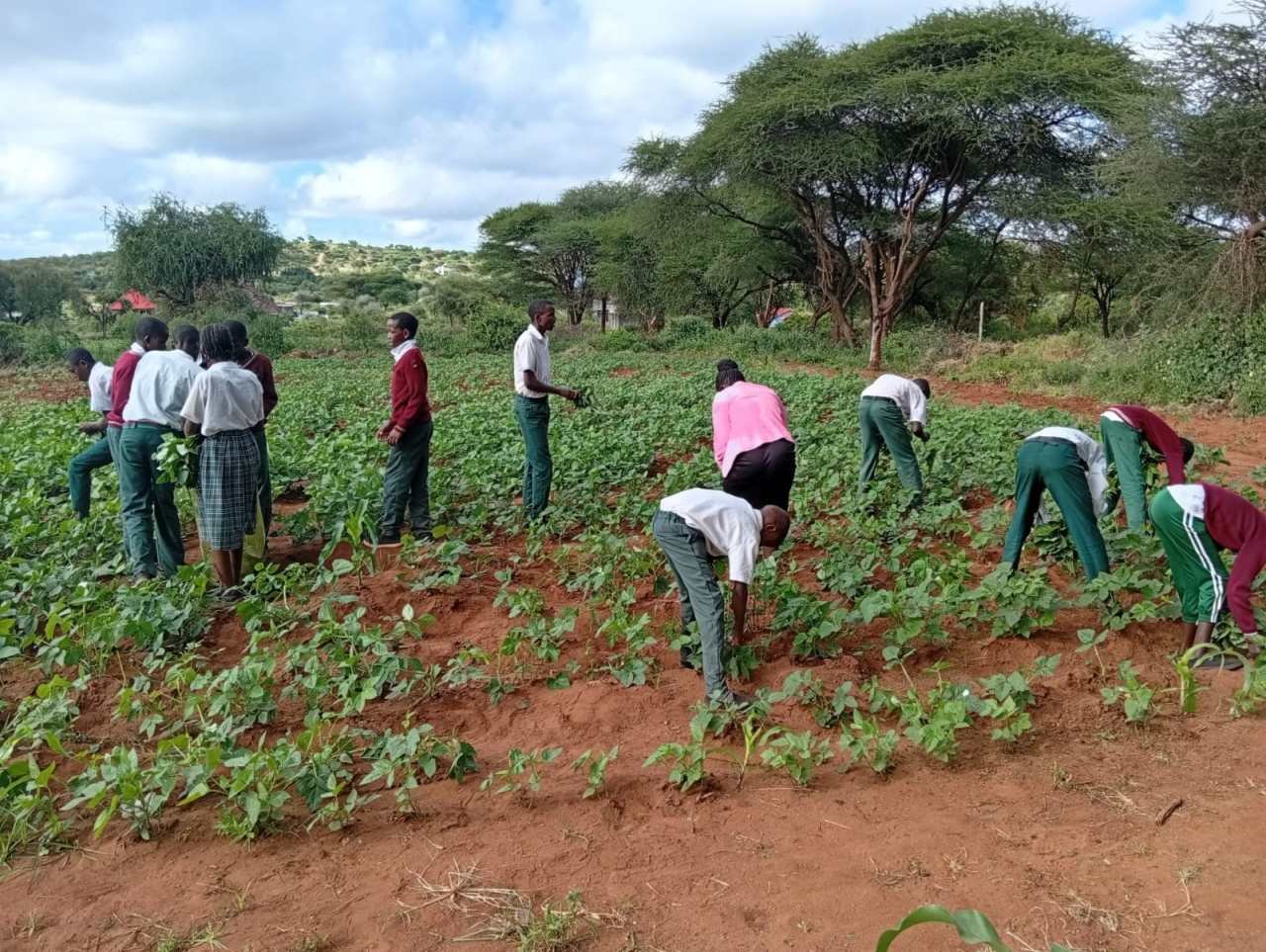
The school farms test practical and climate-smart approaches to food production in drought-prone environments, including the use of manure to boost soil fertility, rainwater harvesting, and drought-tolerant crops such as high-iron Nyota beans, cowpeas and green grams.

At Inaarok Lukuny, what was once dry, uncultivated land has been transformed into a four-acre school farm. Today, the farm includes two acres of intercropped maize and beans, alongside  plots of beans, green grams and African leafy vegetables. Produce harvested from the farm is used to supplement school meals, helping to diversify menus that traditionally relied heavily on externally supplied maize and beans.

For many children, it has introduced foods they had rarely eaten before.

“Most of us had never eaten cowpea, but I must confess it was very sweet,” enthuses one student. “The vegetables have improved the taste of our food.”

School farms boost food security in Kenya's drylands

The initiative has also strengthened relationships between the school and the wider community. The parents, often pastoralists themselves, now contribute labour to the school farm and provide manure from their livestock to help improve soil fertility – and they are more eager for their children to attend school.

“Education is not always a priority, especially during droughts,” explains Mr. Mukiri, Chairman of the School Board. “However, the changes we have seen through the school farm and feeding programme have encouraged more families to send their children to school.”

Building a network for change

The lessons emerging from the school farms are helping to shape wider efforts to transform food systems in Kenya’s drylands.

In May 2026, project partners launched Kenya’s Community of Policy and Practice (CoPP) on school feeding and regenerative agriculture. Led by KALRO, policymakers and local communities, the network aims to share lessons from the pilot farms and support wider adoption across Kenya’s ASALs.

“CoPPs have become a catalyst for food system transformation across Africa because they create ‘agents of change’ who have a common vision,” says Dr. Samrat Singh of Imperial College London.

Benefits beyond the school gates

The experience at Inaarok Lukuny highlights how school feeding can contribute to more than children’s nutrition. It can also strengthen livelihoods and build community resilience in areas facing increasing climate pressures.

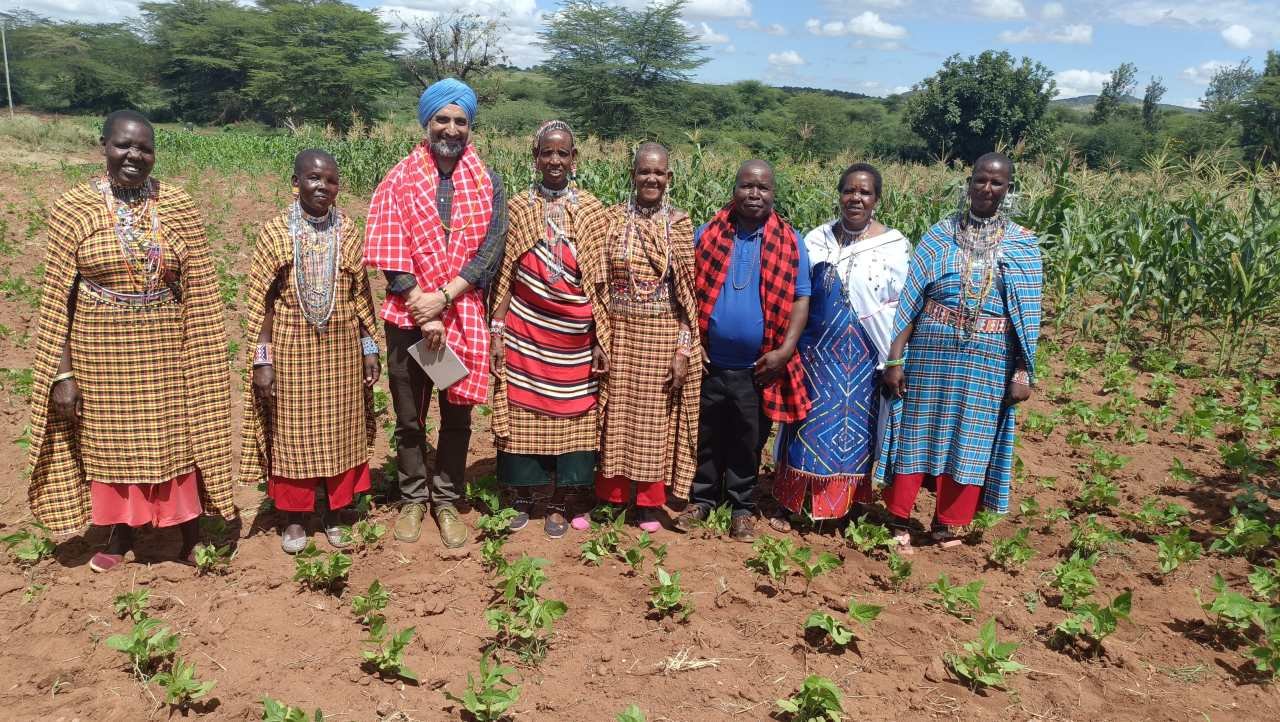
A short distance beyond the school gates, members of the Mashambani Women’s Group – a farming cooperative whose main economic activity is the sale of milk – are adopting many of the practices demonstrated at the school’s farm, which serves as a learning centre for the wider community.

The group, which includes around 30 women, attended the school farm for training in climate-smart approaches, including tied ridges for water conservation – small earth embankments that help rainwater soak into the soil – and grafting fruit tree seedlings to create stronger and more productive trees.

“Group members have embraced dairy farming since they now understand how to produce silage [preserved livestock feed for use during droughts],” explains Grace Martine, Vice Chairperson of the Women’s Group.

Community leaders, such as local chief Stephen Malei, say the school farm initiative is also strengthening women’s role in household decision-making and income generation. He explains that members of the Mashambani Women’s Group each cultivate around one acre of Nyota beans and cowpeas during good rainy seasons. Collectively, they produce an estimated 40 bags per season, generating around KES 550,000 (USD 4,200) in revenue.

“In the past, we depended only on livestock, but now this climate-smart farming project gives households both food and income,” says Malei.

Looking ahead

The next phase of the initiative aims to expand the production of nutritious crops, including Nyota beans, cowpeas and green grams, to additional schools and women’s groups across the region. The newly launched CoPP will help scale this approach to more schools and communities.

While challenges remain, particularly around water access and the long-term sustainability of the school farms, the experience in Kajiado County shows how school feeding programmes can do more than provide a daily meal. By connecting schools and communities –  especially women producers, they can improve nutrition, strengthen livelihoods and build more resilient food systems.

Continue Reading
Click to comment

Leave a Reply

Your email address will not be published. Required fields are marked *

Branded Content

UNAAB Staff Cooperative Society Holds 39th AGM

Published

on

UNAAB Staff Cooperative Society Holds 39th AGM
By Femi Dansu

The UNAAB Staff Cooperative Multipurpose Society Limited (UNAAB CMS Ltd.) on July 1, 2026, held its 39th Annual General Meeting (AGM) and presentation of the Annual Accounts and Financial Statements for the year ended December 31, 2025, at the Society’s New Building Complex, on campus.

In his Welcome Address, the President of the Society, Mr. Olufemi Owoade, appreciated members for their support and commitment to the ideals of the Cooperative, urging them to remain united in advancing its objectives.

Presenting the Management Committee’s report, Mr. Owoade disclosed that the Society’s membership stood at 1,557 as of December 31, 2025. During the period under review, 45 new members joined the Society, while 49 members exited due to retirement and resignation. He also announced that five members passed away during the year.
UNAAB Staff Cooperative Society Holds 39th AGM

The President reported remarkable financial growth over the past four years, with income increasing from ₦49.65 million in 2022 to ₦60.62 million in 2023, ₦94.45 million in 2024 and ₦108.24 million in 2025. He attributed the steady growth to prudent financial management, increased patronage by members and the diversification of the Society’s income streams.

Speaking on loan administration, Mr. Owoade revealed that the Society disbursed loans worth over ₦1.02 billion between January and December 2025, representing a significant increase from the ₦618.24 million disbursed in 2024. He reaffirmed the Society’s commitment to efficient service delivery, noting that emergency loans continued to be processed within 24 to 48 hours after application.

He further disclosed that the Society recorded a net surplus of ₦108.24 million in 2025, compared with ₦94.45 million in the previous year. According to him, loan interest accounted for about 71 per cent of the total profit, while prompt loan repayment and members’ loyalty also contributed significantly to the impressive performance.

UNAAB Staff Cooperative Society Holds 39th AGM

In recognition of the improved financial results, the President announced a proposed Members’ Credit of ₦54.136 million for the 2025 financial year, representing an increase over the ₦47.226 million declared in 2024. He explained that members’ credit was calculated at 0.056 per share, compared to 0.0515 per share in the previous year, adding that payments had been processed for transfer into beneficiaries’ accounts.

Following deliberations, members unanimously adopted the audited financial statements for the 2025 financial year and commended the Management Committee for its prudent financial management, transparency and sound leadership.

Delivering the Vice-Chancellor’s Goodwill Message, the University Librarian, Prof. Abayomi Owolabi, congratulated the Management Committee and members on the successful hosting of the AGM. He commended the Society for its immense contributions to staff welfare and institutional development, describing it as a pillar of support within the University Community. He also encouraged the leadership to sustain the values of transparency, accountability, innovation and integrity.

UNAAB Staff Cooperative Society Holds 39th AGM

Similarly, the Director of Cooperative Services, Ogun State, Mr. Samuel Mustapha, represented by the Deputy Director, Mr. Akeem Ogunjimi, lauded the Society for its impressive financial growth and prudent management of members’ resources. He urged the leadership to consolidate on its achievements and sustain the Society’s remarkable growth trajectory.

A major highlight of the AGM was the presentation of gifts to retired members of the Society in appreciation of their dedicated service and invaluable contributions to its growth and development.

All communications with this email account are bound by the policies and laws of the Federal University of Agriculture, Abeokuta. Kindly go to the http://www.unaab.edu.ng/policy to view details
Continue Reading

Branded Content

FUNAAB Launches Innovative WeTool App on Google Play Store to Advance Smart Agriculture

Published

on

FUNAAB Launches Innovative WeTool App on Google Play Store to Advance Smart Agriculture
The Federal University of Agriculture, Abeokuta (FUNAAB), Nigeria, has expanded its portfolio of digital innovations with the launch of WeTool (Weight Equalisation Tool), a mobile application designed to simplify weight distribution and balancing tasks for agricultural, scientific, and industrial applications. The application, developed by the University’s SmartAgro Research Cluster in the College of Computing Sciences (COLCOMPS), is now available for download on the Google Play Store.

According to the Ag. Head, Directorate of Public Relations, FUNAAB, Mr. Olasunkanmi Olajide, the launch represents another milestone in the University’s commitment to producing practical, technology-driven solutions that address real-world challenges through interdisciplinary research and innovation.

He explained that the application was jointly developed by the Dean of the College of Computing Sciences, Prof. Oluwasefunmi Arogundade, and Prof. Olufemi Akinola of the Department of Animal Nutrition in the College of Animal Science and Livestock Production (COLANIM). The collaboration combines expertise in computing and Animal Science to deliver a solution tailored to the needs of agriculture and related industries.
WhatsApp Image 2026-06-30 at 07.16.46.jpeg
Mr. Olajide noted that WeTool is specifically designed to assist users in sorting, distributing, and equalising weights across multiple partitions with speed and accuracy. The application is expected to benefit Animal Scientists, livestock producers, farmers, laboratory personnel, technicians, researchers, and other professionals who routinely perform weight allocation and balancing operations.

He added that integrating agricultural knowledge with advanced software engineering has resulted in an application that is not only technically robust but also highly relevant to practical field operations. By simplifying complex weight distribution processes, WeTool helps users reduce errors, improve efficiency, and enhance decision-making.

The Ag. Head of Public Relations further stated that the innovation reflects FUNAAB’s growing leadership in digital transformation, applied research, and technology commercialisation. He described the SmartAgro Research Cluster as a hub for developing intelligent solutions that support sustainable agriculture and national development.

Meanwhile, the launch of WeTool has further reinforced FUNAAB’s reputation as one of Africa’s leading universities in agricultural research and technological innovation. It also highlights the institution’s commitment to fostering interdisciplinary partnerships that translate academic research into impactful products capable of creating value for agriculture, science, industry, and society.

The WeTool application is now available for download on the Google Play Store via the link below: https://play.google.com/store/apps/details?id=com.arogprojwork.wetoolapp, providing users worldwide with easy access to the innovative weight equalisation solution developed by FUNAAB researchers.

All communications with this email account are bound by the policies and laws of the Federal University of Agriculture, Abeokuta. Kindly go to the http://www.unaab.edu.ng/policy to view details

Continue Reading

Branded Content

AMREC, Omoluabi Unveil Cassava Waste Processing Machine for Animal Feed Production

Published

on

AMREC, Omoluabi Unveil Cassava Waste Processing Machine for Animal Feed Production
The Agricultural Media Resources and Extension Centre (AMREC) of the Federal University of Agriculture, Abeokuta (FUNAAB), in collaboration with Omoluabi, has donated a cassava waste processing machine to farmers and cassava processors in Alabata Community, Odeda Local Government Area of Ogun State, alongside practical training on converting cassava waste into nutritious animal feed.

The initiative was aimed at promoting sustainable agricultural waste management, adding value to cassava by-products, and reducing livestock feed costs through innovative alternatives.

Represented by the Director of AMREC, Prof. Jacob Olaoye, the Vice-Chancellor, Prof. Babatunde Kehinde, described Alabata as a deserving beneficiary, noting its reputation as one of Ogun State’s leading cassava-producing communities and encouraging residents to maximise the opportunities provided by the project.

The Vice-Chancellor also commended the Olu of Alabata, Oba Sanusi Waheed Alani, and the people of the community for their contributions to food security and agricultural development.

In his response, Oba Alani appreciated the Vice-Chancellor for the University’s continuous support, recalling previous interventions, including the donation of a borehole and AMREC’s extension services, which have improved farmers’ livelihoods. He added that converting agricultural waste into valuable products would increase farmers’ income while protecting the environment.

The Country Representative of Omoluabi, Mr. Mudashiru Quadri, said the project, initiated by Obabinrin Aderonke Okeleye, was designed for the benefit of the entire community. He urged the traditional ruler to ensure proper maintenance of the donated cassava grinder and presser and guarantee equal access for all users.

Mr. Quadri added that effective management of the equipment would position Alabata to benefit from more developmental interventions in the future.
WhatsApp Image 2026-07-01 at 07.12.24.jpeg
During the practical session, Dr. Tolulope Adebowale demonstrated the process of producing animal feed from fresh cassava peels and residues. He advised farmers to use only peels less than 24 hours old and explained the procedures of washing, grinding, pressing, fermenting, and drying the products for livestock feeding.

The programme climaxed with the presentation of the cassava waste processing machine to the Olu of Alabata by the Director of AMREC. Responding on behalf of the community, Oba Alani thanked FUNAAB and Omoluabi for the intervention and appealed for more collaborative projects to enhance agricultural productivity and improve farmers’ livelihoods.

All communications with this email account are bound by the policies and laws of the Federal University of Agriculture, Abeokuta. Kindly go to the http://www.unaab.edu.ng/policy to view details

Continue Reading

Trending

Copyright © 2023 - 2025 DailyMirror Nigeria. Design by AspireWeb.ng, powered by WordPress.