Branded Content
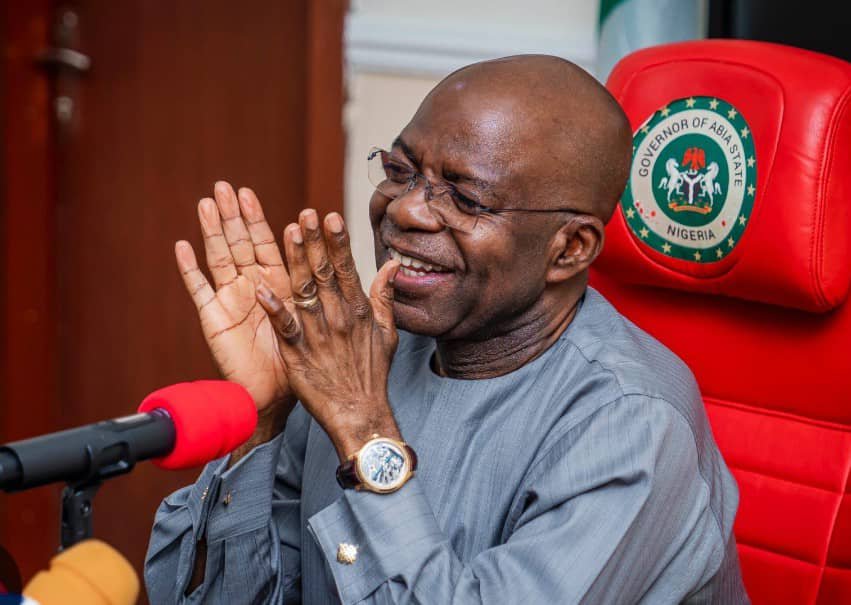
Abia State Governor Dr. Alex Otti’s Governance Model Sparks Widespread Praise
Abia State Governor Dr. Alex Otti has been lauded for his exceptional governance, with stakeholders hailing his administration’s commitment to transparency, accountability, and performance-driven leadership. Since taking office on May 29, 2023, Otti has implemented reforms across key sectors, including infrastructure, healthcare, education, security, and economic development.
A Vision Rooted in Reform and Delivery.
Governance under Dr. Otti is characterised by professionalism, data‑driven decision‐making and transparency. Former Banker turned Governor, he has brought Private‐sector discipline to the public square.
He states his covenant clearly… “to serve all Abians, not a few people.”
From the outset, he declared emergencies in key sectors—Roads, Health, Sanitation and Security – signalling a break from business as usual.
Infrastructure And Connectivity: Roads, Power and Urban Renewal
One of the hallmarks of the Otti administration is the scale and quality of infrastructure. Over 140 roads have been constructed or rehabilitated across Abia State, including Rural ring roads that connect previously isolated communities.
The expansion of the Ossah Road in Umuahia into a six‑lane boulevard (now Aguiyi Ironsi Boulevard) and major works in Aba attest to the ambition of this exceptional Leader.
Power reforms: Understanding that commerce depends on reliable electricity, Dr. Otti’s administration has targeted improved power supply and addressed infrastructure bottlenecks.
These efforts show a shift from fragmented works to strategic infrastructure with economic and social impact. “Our benchmark now is not just the Kilometres built but the economic and social impact they deliver,” the Governor once observed.
Healthcare And Human Capital Development: Investing in People.
Dr. Otti’s government has placed clear emphasis on Health and Education as foundations for long‑term growth.
Health: The State has launched “Project Ekwueme” to upgrade primary Health Care Centres across the 184 wards of the State, and refurbish tertiary facilities including the State Teaching Hospital.
Education and Recruitment.
Thousands of Teaching Staff have been brought on board, and very profound school infrastructure improvements are ongoing.
Welfare: Pension and very long neglected Salary arrears have been systematically cleared, restoring dignity to workers and retirees.
By investing in such fundamentals, the administration is laying the basis for a more resilient and inclusive society.
Economy And The Requisite Enabling Environment Necessary For Business To Thrive.
The Otti administration recognises that Abia’s strength lies in entrepreneurship, industry (especially around Aba), and a favourable business climate. And like a man with an unrivaled clarity of purpose, Dr. Alex Chioma Otti has in less than 2 years and 6 months lifted Aba from the morass to reclaim its pride as the centre of commerce and industry in the South East.
Understanding that Governments must at all times work for the good of the greater number, Dr Otti has followed through with the Reform of revenue collection and taxation to ease burdens on traders while enhancing State income.
Industrial and Innovation Park Initiatives (e.g the Abia Industrial And Innovation Park) as part of economic diversification.
International Partnerships And Donors Engagement: The state has unlocked multi‑lateral support and made Abia more “investment‑ready”.
These efforts speak to a shift from passive dependency to proactive economic fervency.
Governance, Security And Institutional Reform.
A functioning State requires more than projects, it requires strong institutions and a safe environment. To this end the ‘Operation Crush’ Security outfit and multi‑agency collaboration has improved the security profile of Abia State.
Transparency and due process have become key features of the Alex Otti administration, as payments are cleared in 72 hours in some Agencies, and merit‑based recruitment has become the benchmark in the Civil Service. Such institutional reforms matter because they enable sustainability, not just short‑term wins.
Recognition And Early External Validation.
Stakeholders see what is happening in Abia. Traditional Rulers are unanimous in the description of Dr. Otti’s mid‑term performance as “profound and unprecedented”.
Donor Agencies have returned and expanded operations in the State on account of the dogged commitment of Dr Otti’s administration to make Abia State the envy of the States.
I shall in the sequel to this effort furnish my readers with incontrovertible data and details regarding the massive transformation of Abia State under the able superintendence of Dr. Alex Otti.
Prof Chris Mustapha Nwaokobia Jnr
Convener COUNTRYFIRST MOVEMENT. A Good Governance Advocacy Group.

Branded Content
NCC clamps down on illegal signal boosters, fines telcos ₦45 million
Nigeria’s telecoms regulator has removed more than 450 illegal signal boosters and fined operators a combined ₦45 million as it intensifies enforcement efforts to improve network quality across the country.
The Nigerian Communications Commission (NCC) disclosed the actions in a formal response to Nigeria’s minister of communications and digital economy, Bosun Tijani, detailing steps taken in 2025 to strengthen oversight, improve consumer experience, and sanction defaulting operators.
According to the regulator, enforcement teams dismantled over 450 unauthorised signal boosters across the Federal Capital Territory (FCT) in 2025. While often deployed by individuals and businesses to improve indoor coverage, the devices were found to interfere with surrounding network cells, degrading service quality for other users.
The NCC said follow-up analysis showed immediate improvements. At least 70 network sites recorded measurable performance gains after the boosters were removed, based on operator data, crowdsourced network information, and a noticeable drop in related consumer complaints.
Quality of service remains a major pain point for Nigerian telecoms users, and the commission said addressing it will stay central to its regulatory agenda in 2026. The focus, it added, will be on greater transparency, faster response times, and outcomes consumers can directly feel.
As part of that transparency push, the NCC said it has expanded public disclosures to pressure operators into improving service quality. One such move was the approval of tariff adjustments in January 2025, which the regulator described as a “calibrated intervention” to keep the industry financially viable while enabling continued network investment.
Those investments appear to be flowing. The NCC said Nigeria’s telecoms sector attracted more than $1 billion in fresh capital in 2025, alongside the rollout of over 2,850 new and upgraded network sites nationwide.
On consumer protection, the regulator said it adopted a more targeted approach to complaint management, focusing on the most common issues reported by subscribers: poor service quality, rapid data depletion, and refunds for failed transactions.
Operators are now required to notify customers ahead of major outages and maintenance activities. In addition, a Major Outages Reporting Portal on the NCC’s website provides real-time information on network disruptions, their geographic scope, and steps being taken to resolve them.
In October 2025, the commission also launched a crowdsourced National Coverage Map, allowing users to compare operator performance across locations using anonymised, near real-time data. Quarterly industry performance reports, broken down by state and region, are now being published as well.
To tighten enforcement, the NCC said it now receives daily, granular performance data from mobile network operators and infrastructure providers. It also reinstated nationwide drive tests in 2025—its first in nearly a decade—covering both urban and rural areas to independently verify operator-reported data.
Addressing widespread complaints about data depletion, the regulator pointed to tariff simplification guidelines issued in November 2024, which required operators to reduce the number of tariff plans and standardise disclosures to make pricing easier for consumers to understand.
Routine audits and spot checks continue. A fourth-quarter 2025 audit of 965 base stations in the FCT uncovered 5,557 infractions, with the NCC saying 81% were resolved before the end of the year.
On failed airtime and data recharges, the commission said refunds exceeding ₦10 billion have already been facilitated in collaboration with the Central Bank of Nigeria, telecom operators, and financial institutions. A formal refund framework is expected to be launched in March 2026.
The NCC confirmed that Globacom, Airtel, and infrastructure provider IHS were fined a combined ₦45 million in October 2025. Additional enforcement cases, carrying potential liabilities of ₦12.4 billion, are still undergoing regulatory review.
Beyond enforcement, the regulator said it approved several spectrum trades and reassignments, reallocating about 50 MHz of underutilised spectrum. The reassignment of an additional contiguous 10 MHz to Globacom helped boost its average 4G download speeds to around 15 Mbps by late 2025, up from roughly 9.5 Mbps previously.
The commission also revealed that Nigeria’s first Spectrum Roadmap, covering 2025 to 2030, has been drafted and is expected to be released by March 2026, pending board approval.
Branded Content
NCC To Launch Spectrum Roadmap 2026 – 2030, For Improved Connectivity in Nigeria
The Nigerian Communications Commission, NCC, has commenced consultative engagements with critical stakeholders prior to the launch of its National Spectrum Roadmap 2026 — 2030, as well as the opening of new spectrum bands in support of President Bola Tinubu’s Renewed Hope Agenda for a trillion dollars digital economy.
The proposed National Spectrum Roadmap 2026–2030 will drive Nigeria’s digital future through transparency and predictable spectrum regulation.
The Executive Vice Chairman, Dr Aminu Maida, disclosed this on Monday at a Spectrum Roadmap stakeholders’ consultation forum in Abuja.
Mr Maida said the initiative includes the Spectrum Roadmap 2026–2030 and guidelines for opening the lower 6GHz and 60GHz licence-exempt bands.
Represented by the Head of Spectrum Administration, Atiku Lawal, he said the measures aim to improve quality of service nationwide.
Mr Maida said: “Our national ambitions are growing. We want faster speeds, wider coverage, better service quality, stronger innovation and greater inclusion.
“This roadmap creates a transparent, predictable regulatory environment supporting investment, encouraging innovation, expanding access and improving service quality for all Nigerians.”
He said the lower 6GHz and 60GHz guidelines would unlock new capacity for high-speed, affordable and reliable connectivity.
“Spectrum is behind everything digital we do. Though invisible, it is indispensable to mobile, broadband, satellite, emergency and smart technologies,” Mr Maida said.
He added that every video call, online classroom, digital transaction and connected device in Nigeria relies on spectrum.
“We are preparing Nigeria for future data demands across homes, campuses, businesses, healthcare facilities and public spaces,” he said.
The Executive Commissioner, Technical Services, Abraham Oshadami, said spectrum resources must serve every community.
“Today’s engagement reaffirms our commitment to expanding wireless broadband through foresight, fairness and national development goals,” Oshadami said.
Earlier, Atiku Lawal described the roadmap as more than a technical document, calling it a strategic blueprint for Nigeria’s digital future.
Speaking for Huawei, Dr Lola Fafore said the roadmap would drive innovation, boost broadband penetration and contribute significantly to national GDP.
The two-day forum will deliberate on initiatives shaping Nigeria’s digital future.
Branded Content
NCC Unveils 2026–2030 Spectrum Roadmap, Moves to Open New Bands for Wi-Fi Expansion
The Nigerian Communications Commission (NCC) has signaled a major shift in how radio spectrum will be managed in the country over the next five years, as it unveiled plans for a new Spectrum Roadmap (2026–2030) and proposed guidelines for opening the lower 6GHz and 60GHz bands for unlicensed use.
Speaking on January 19, 2026, at the Stakeholders’ Consultative Forum on Spectrum Roadmap 2026–2030 and Guidelines for Opening Lower 6GHz & 60GHz Bands in Abuja, the NCC’s Executive Vice Chairman (EVC), Dr. Aminu Maida, described the initiatives as critical to Nigeria’s digital future. He said the frameworks are designed to make spectrum management more predictable, transparent, and investment-friendly while supporting innovation and wider digital inclusion.
Welcoming industry players, government agencies, and technical experts to the forum, Maida said the discussions would shape policies that affect everything from mobile broadband and satellite services to financial technology, emergency communications, and smart infrastructure. He underscored the centrality of spectrum to modern digital life, noting that “spectrum may be invisible, yet it is indispensable,” as it powers mobile phones, broadband networks, and connected devices across the country.
The EVC warned that spectrum is a finite resource, even as demand continues to surge due to cloud computing, artificial intelligence, Internet of Things (IoT) applications, and data-heavy services. According to him, this makes smarter planning and more flexible regulation imperative. The new Spectrum Roadmap, he said, aims to balance growing demand with national development priorities while improving service quality and network coverage.
Beyond the roadmap, the NCC is also proposing to open the lower 6GHz and 60GHz bands for license-exempt use, a move expected to significantly expand Wi-Fi capacity in Nigeria. Maida explained that this would enable faster indoor broadband, multi-gigabit wireless systems, and better connectivity in homes, schools, hospitals, businesses, and public spaces.
He noted that globally, Wi-Fi already carries a significant share of internet traffic, and Nigeria must position itself to benefit from this trend. Opening these bands, he said, would prepare the country for future data demands beyond traditional mobile networks.
While emphasizing that the regulatory frameworks provide a strong foundation, Maida stressed that private sector investment, innovation, and stakeholder feedback would ultimately determine their success. He linked the initiative to the Federal Government’s Renewed Hope Agenda and President Bola Ahmed Tinubu’s ambition of building a $1 trillion digital economy by 2030.
The EVC also reiterated the Commission’s commitment to consultative and evidence-based policymaking, urging participants to contribute actively to the deliberations. He framed the forum as a collaborative effort to build a more innovative, resilient, and inclusive digital ecosystem for Nigeria.
The consultative forum is expected to inform final policy decisions on spectrum allocation, unlicensed access, and future licensing strategies as the NCC moves toward implementing its new roadmap.
-
Cover5 months agoNRC to reposition train services nationwide.. Kayode Opeifa
-
Fashion9 years agoThese ’90s fashion trends are making a comeback in 2017
-
Entertainment9 years agoThe final 6 ‘Game of Thrones’ episodes might feel like a full season
-
Opinion1 year agoBureaucratic Soldier, Kana Ibrahim heads Ministry of Aviation and Aerospace After Transformative Tenure at Defence
-
Opinion1 year agoHon. Daniel Amos Shatters Records, Surpasses Predecessor’s Achievements in Just Two Years
-
Opinion2 months agoBarrister Somayina Chigbue, Esq: A rising legal leader shaping institutioal excellence in Nigeria
-
News6 months agoNigerian Nafisa defeats 69 Countries at UK Global Final English Competition
-
Special Report1 year agoGolden Jubilee: Celebrating Tein Jack-Rich’s Life of Purpose and Impact