

Headlines
Boardroom to Battleground: Diezani, Patriarchy, and the Politics of Punishment


By Bolouere Opukiri,
A stone has the same mass on Earth as it does on the Moon, but it does not weigh the same. Mass is constant; weight depends on gravity. That distinction helps explain the Diezani Alison-Madueke saga. The mass of any criminal case should be evidence: documents, payment trails, credible testimony and proof that survives cross-examination. But the weight attached to a case often comes from elsewhere: politics, media heat and, in the case of powerful women, patriarchal anxiety.
That is why Diezani’s story matters beyond her as an individual. It is not simply a Nigerian corruption case. It is also a case study in how politics turns women in power into symbols that carry a society’s wider anger about corruption, elite excess and state failure. In Nigeria, women are increasingly accepted as executives and technocrats. Politics remains the arena in which many are still treated as trespassers.
This pattern is not unique to Nigeria, only more visible in some places than others. In societies where education is broader, social norms have evolved further and white-collar professional culture is more deeply rooted, women generally find it easier to exercise authority without being treated as anomalies. Where those transitions are weaker or more uneven, female power is still read more readily as disorder, rebellion or trespass. Even in advanced democracies, women in politics are judged more heavily on personality and likeability than many men. The difference is often one of degree, not kind.
Part of the reason lies in the difference between corporate and political power. Education and white-collar work have made it easier for women to gain authority in structured institutions. In professional settings, power is mediated through qualifications, internal rules, measurable performance and formal hierarchies. Sexism remains, but competence is easier to see and defend. That is why women have achieved more visible success in boardrooms and firms than in electoral politics.
Diezani herself embodied that corporate route to legitimacy. She earned a degree in Architecture from Howard University in the United States, later obtained an MBA from Cambridge University in the United Kingdom, joined Shell in 1992, and rose through technical and managerial roles until she became the first woman appointed Executive Director in Shell Nigeria’s history. She later became Minister of Petroleum Resources and, in 2014, the first female President of OPEC. Whatever one’s view of her tenure, she was no accidental figure.
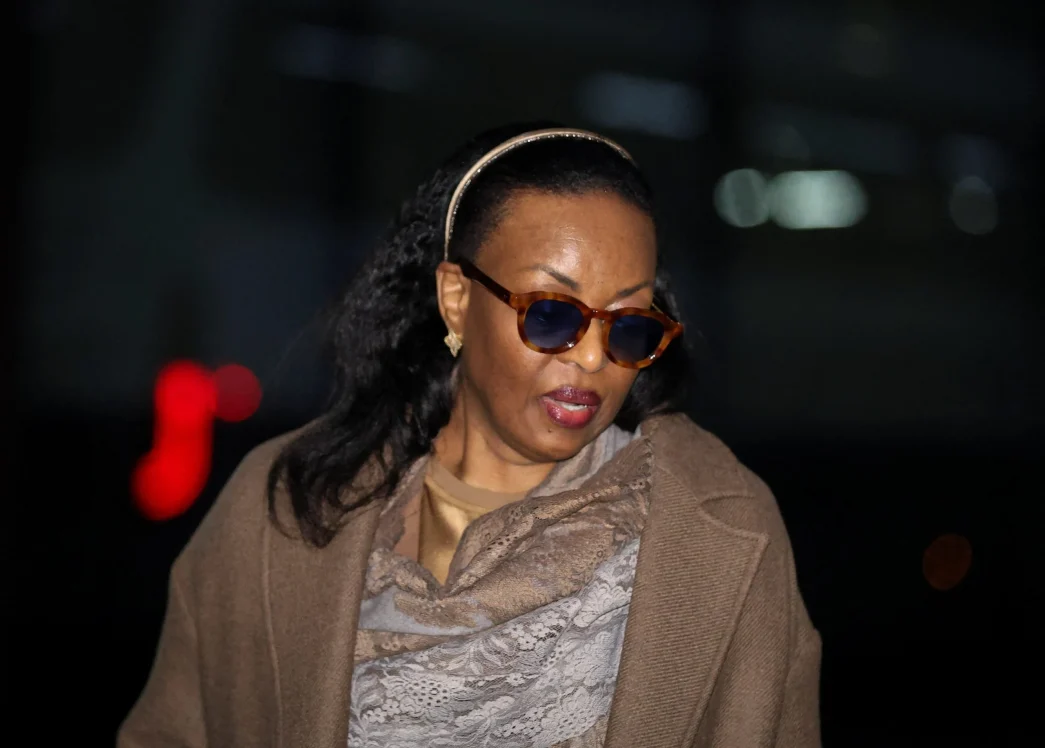
But the boardroom and the political arena do not resolve conflict in the same way. Corporate life leans more heavily on numbers, technical skill, audited performance and institutional process. Politics is harsher because it depends less on technical precision and more on mass persuasion, coalition-building, patronage, symbolic dominance and the management of conflict between competing interests. Success in politics often turns not on who has the best résumé, but on who can assemble loyalties, survive attacks and command emotion.
That is especially true in much of West Africa, where politics still often sits close to patron- client networks, ethnic balancing, party godfathers, security influence, youth mobilisation and the distribution of state access. Formal democratic structures exist, but informal power frequently remains decisive. Elections are not only contests of ideas; they are also contests over networks, presence, mobilisation and protection.
That is why politics is often harsher for women than the corporate workplace. Men who enter it often have easier access to the hidden infrastructure of coercion — thugs, patronage brokers, security contacts, party enforcers and, in some regions, militants who can intimidate, protect or retaliate. Women rarely inherit the same channels. And when they try to build them, they are judged twice over: first as dangerous politicians, then as women who have stepped outside acceptable femininity. Many are therefore expected to compete in an arena shaped by force without equal access to the informal instruments through which force is organised.
Seen in that light, Diezani’s trajectory becomes more revealing. She moved from a corporate system into a political order in which power was less about procedure than about who could command loyalty, absorb attack and survive attrition. A woman who could be accepted as an oil executive could still be turned into a national cautionary tale as a politician.
Her tenure was also about control over one of the largest concentrations of economic power in the country. As petroleum minister, she was associated with the drive to deepen Nigerian participation in the oil and gas sector through local-content policy. Nigerian and Niger Delta stakeholders publicly urged stronger enforcement of local-content rules, and she defended awarding a majority of crude term contracts to indigenous firms as part of a deliberate effort to deepen Nigerian participation in the sector. Those reforms shifted opportunities toward local firms and created friction for international operators and entrenched intermediaries. A 2022 study in Energy Policy used Shell Companies in Nigeria’s contract data and an in-country spend model to estimate that contracts awarded to Nigerian companies by Shell alone contribute about $5.6 billion — roughly ₦5.6 trillion — to Nigeria’s GDP each year. That is the scale of value around which local-content conflict was organised.
This helps explain the shape of the public narrative around her. The most viral stories were rarely about regulatory disputes or institutional design. They were about Harrods, jewellery, shopping and spectacle. The diamond-bra story was false, yet it endured because it was too symbolically useful to die. It turned a politically consequential woman into a cartoon of feminised excess.
That was not incidental. It was a form of softer political violence. Not every attack arrives through physical force. Some arrive as headlines, rumours, memes and morality tales designed to make one woman carry the dirt of an entire system. The men around the same networks often fade into the background, while she absorbs the moral weight.
None of this means women should be shielded from scrutiny. It means scrutiny must be evidence-based, proportionate and equal. If Nigeria wants more of its most educated and accomplished women to move from corporate leadership into politics, it must confront a political culture in which informal coercion still shapes conflict, and in which a woman in power can too easily become the symbolic vessel for a nation’s accumulated anger.
The real question raised by the Diezani saga is larger than one defendant or one verdict. It is whether Nigeria is willing to judge women in politics by the same evidential standards and within the same moral frame it increasingly applies to women in other fields of power. A democracy that welcomes women into boardrooms but punishes them when they approach sovereign authority is not testing merit. It is defending an old monopoly.
Bolouere Opukiri is a Communications Consultant based in Abuja


Man allegedly kills, dismembers friend in Kano

NCDC identifies two more suspected Ebola cases, tracks 53 contacts

Crowd boos Tinubu at APC campaign rally in Kaduna

Now Hiring: Academic and Technical Staff at a Leading Private University in Gombe State

LAUTECH 18th Convocation: EEE Class ’05 Alumni Celebrate as Electronic and Electrical Engineering Department Produced the School’s Overall Best Graduating Student

NMS 95 Reunion Ends in Tragedy as 2 Members Die, 3 Injured in Road Crash


