

Branded Content
Building Businesses That Can Last: Inside ProvidusUnity Bank’s SME Growth Programme

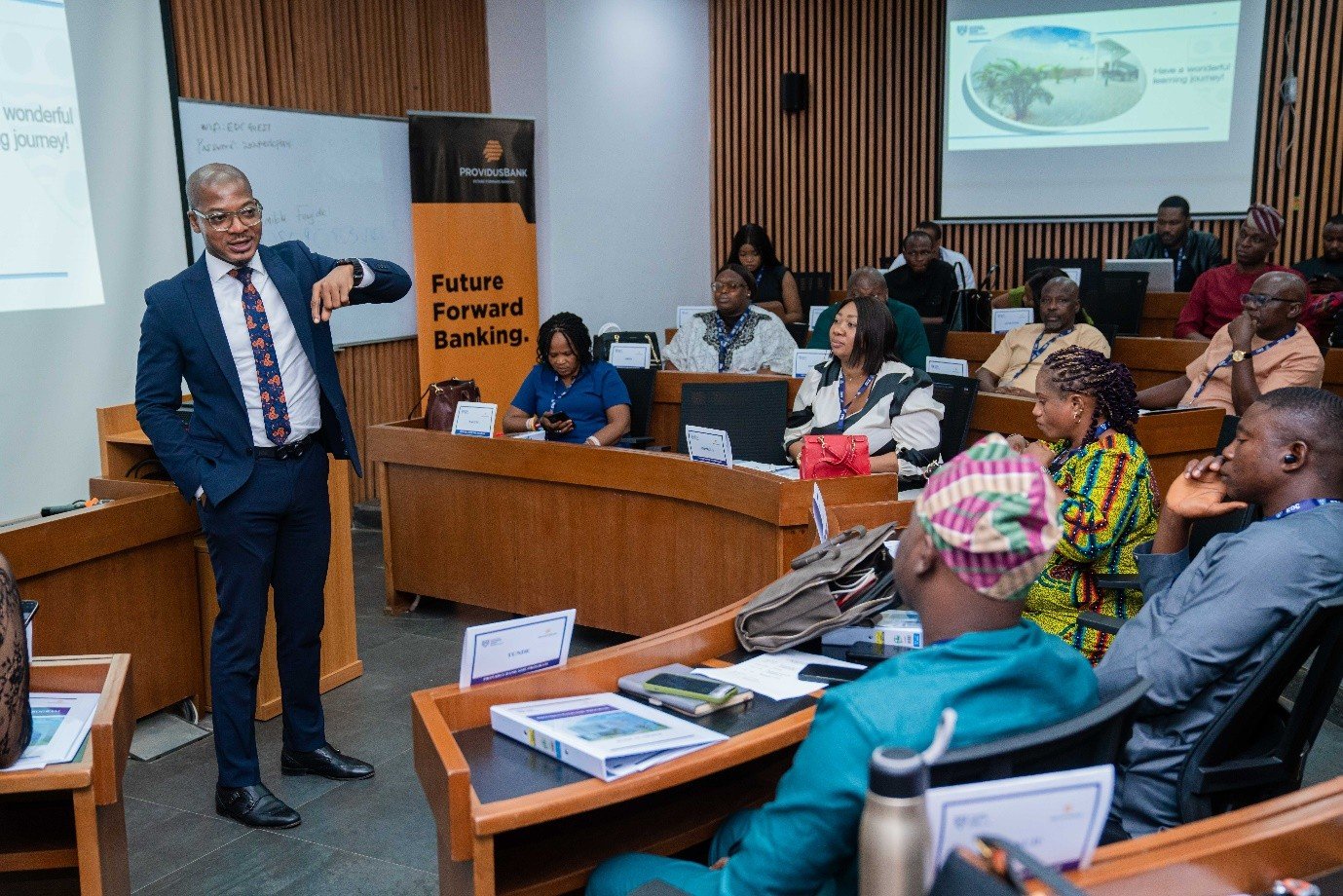
For entrepreneurs across Nigeria, access to capital is only one part of the journey to building a sustainable business. Increasingly, the ability to put the right structures, systems and skills in place is proving just as important. It is this gap that ProvidusUnity Bank has sought to address through its SME capacity-building programme, which has now entered its sixth cohort.
Six years ago, ProvidusUnity Bank launched the programme in partnership with the Enterprise Development Centre (EDC) of Pan-Atlantic University. Six cohorts later, it has expanded beyond Lagos to Abuja and Port Harcourt, with more than 300 SMEs benefiting from the initiative. The programme combines intensive training, mentorship, networking and, ultimately, access to funding in a hybrid structure that runs for more than three months.
Its curriculum focuses on areas that can determine whether an emerging enterprise remains small or develops into a sustainable business, including business strategy, operational efficiency, financial record keeping, sustainability, risk management and growth planning. The approach is particularly significant for businesses outside the country’s established commercial centres, where founders often have to build systems and access expertise while managing difficult operating conditions.

The scale of Nigeria’s SME ecosystem makes the need especially urgent. Data from the Development Bank of Nigeria puts the country’s MSME population at nearly 40 million, contributing 46.32 per cent to GDP and accounting for 87.9 per cent of employment. Yet the International Finance Corporation estimates the MSME financing gap at approximately $32.2 billion. The challenge, therefore, is not simply finding money; many businesses also lack the structures and systems required to attract and effectively manage institutional financing.
PwC’s survey found that 96.2 per cent of MSMEs were sole proprietorships, a structure that can create challenges around succession, governance, accountability and the separation of personal and business finances. Meanwhile, fewer than five per cent of MSMEs have access to bank credit, underscoring the scale of the financing challenge. ProvidusUnity Bank’s model seeks to address some of the capacity gaps that prevent businesses from becoming investment- and finance-ready.
ALSO READ
- As attacks on schools rise by 33% in 2025, UNESCO calls for stronger protection of education
- Citi Foundation Launches Fourth Global Innovation Challenge, committing $25 Million to preparing Youth for AI
The programme has evolved with the needs of participating businesses. The first cohort focused on helping struggling businesses find their footing, pivot and build resilience. The second placed greater emphasis on long-term strategy and profitability, while subsequent cohorts broadened eligibility to accommodate more high-potential businesses. By the fifth cohort, demand had grown significantly, prompting the expansion beyond Lagos, while the sixth cohort is now underway across Lagos, Abuja and Port Harcourt.
For beneficiaries, the impact extends beyond the classroom. Uju Okeke, founder and CEO of Ava Collections and a participant in the third cohort, described the programme as one of the most impactful capacity-building initiatives she has undertaken since starting her business more than a decade ago. She said the lessons around sustainable structures helped her consolidate the gains she had already made and provided a clearer path for future growth.
Olatunji Alaaki, founder and CEO of Jeun, similarly said the programme exposed him to the knowledge required to strengthen corporate governance, structure, marketing and branding, while preparing his business for scale. For Tunji Onakoya, founder and CEO of AutoClinic NG and a participant in the current cohort, the programme addresses a critical gap in Nigeria’s entrepreneurship ecosystem. “This is something that is needed in the entrepreneurship ecosystem in Nigeria, and someone has to do it. ProvidusUnity Bank is doing it,” he said.
Facilitator Adegboyega Adebajo also believes the programme is changing how participants approach their businesses. He noted that it has helped beneficiaries identify gaps, understand the importance of structure and rethink how they approach growth. “The success they make in the long term will be much more definitive than any competition they can win in the short term,” he said.
For Ernest Elue, Head of Business Development at ProvidusUnity Bank and coordinator of the programme, the objective goes beyond training individual entrepreneurs. “Our ambition is to build a credible platform that gives SMEs the knowledge, structure and support they need to become stronger and more sustainable businesses,” he said. “When we help entrepreneurs build businesses that can survive, create jobs and scale, we are not only supporting individual businesses; we are contributing to the broader growth of the Nigerian economy.”
That is ultimately the bigger proposition behind the programme. Nigeria does not only need more entrepreneurs; it needs more businesses that can survive, formalise, employ people, access capital and scale. With millions of MSMEs already carrying a significant share of the country’s economic activity, closing the capacity gap could unlock enormous value. By investing in the capabilities behind the businesses, not just the businesses themselves, ProvidusUnity Bank is positioning its SME programme as a practical contribution to building the stronger enterprises that Nigeria’s next phase of economic growth will require.


EPL: Real reason why Man Utd haven’t sacked Carrick yet

LaLiga: Why Real Madrid beat Barcelona 2-1 – Mourinho

Turkey: ‘Our defenders will neutralise him’ – Fenerbahçe’s Muriqi warns Osimhen ahead of Galatasaray clash

Now Hiring: Academic and Technical Staff at a Leading Private University in Gombe State

LAUTECH 18th Convocation: EEE Class ’05 Alumni Celebrate as Electronic and Electrical Engineering Department Produced the School’s Overall Best Graduating Student

NMS 95 Reunion Ends in Tragedy as 2 Members Die, 3 Injured in Road Crash


