Opinion
FOREIGN ENGAGEMENTS, ECONOMIC STABILIZATION, AND THE DANGERS OF POPULIST SIMPLIFICATION
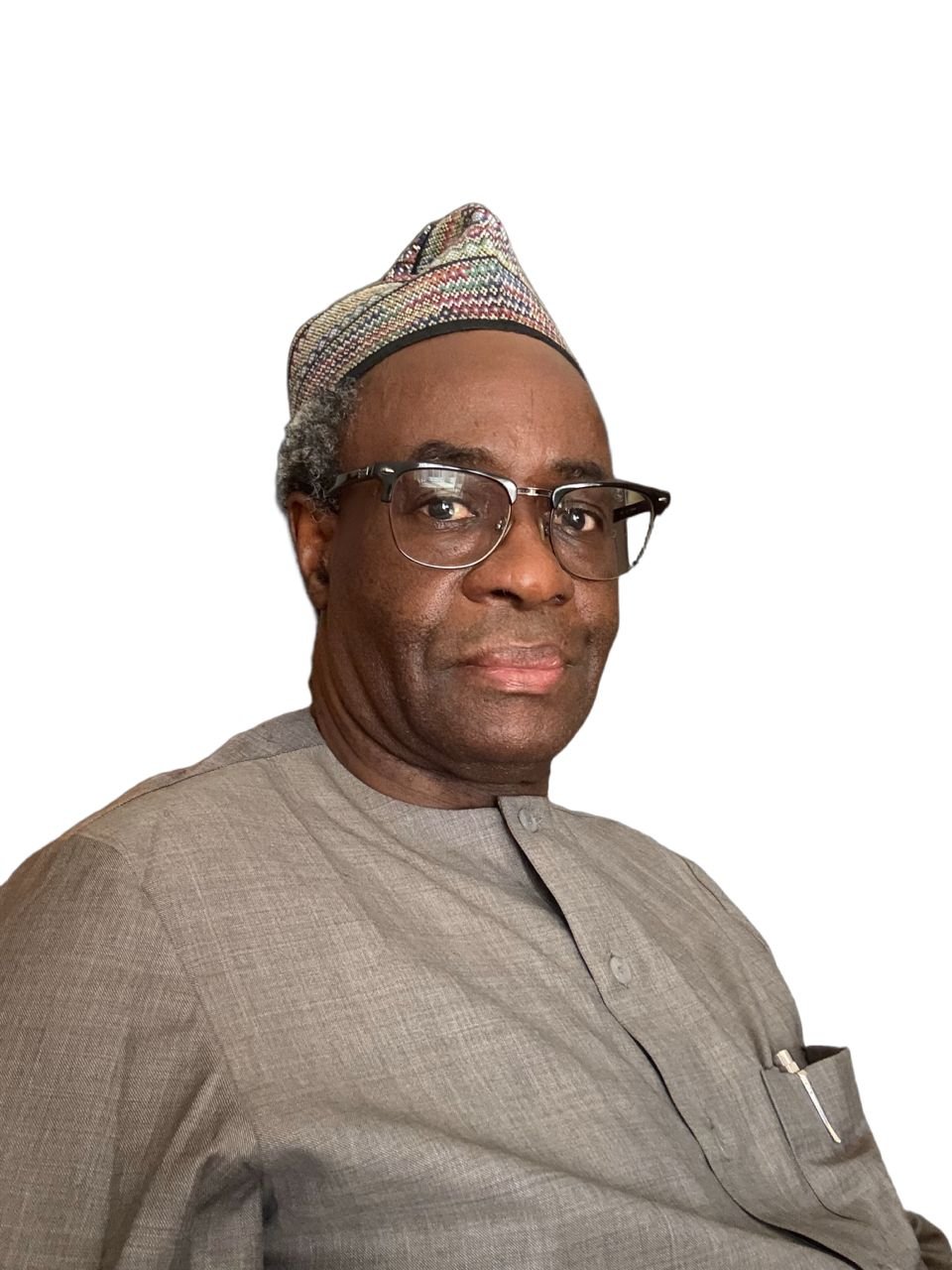
By Tanimu Yakubu
Introduction
Peter Obi’s intervention once again reflects a persistent tendency to reduce extremely complex questions of economic recovery, sovereign diplomacy, and international capital engagement into simplistic populist soundbites.
The Real Economic Inheritance
No serious analyst disputes that foreign engagements should ultimately produce measurable economic outcomes. The real issue, however, is whether Mr. Obi properly understands the sequence through which nations emerging from fiscal and monetary instability rebuild investor confidence, restore credibility, and reposition themselves within global capital markets.
President Tinubu inherited an economy facing severe structural stress: an unsustainable fuel subsidy regime, multiple exchange-rate distortions, collapsing fiscal buffers, mounting debt-service pressures, dwindling investor confidence, and unprecedented dependence on Ways and Means financing simply to sustain government operations.
Why International Engagement Matters
Under such circumstances, international engagements are not mere ceremonial excursions; they become instruments for rebuilding sovereign credibility, restoring policy confidence, reassuring investors, strengthening diplomatic alignments, attracting long-term capital, and repositioning the country within regional and global economic networks.
The False Comparison with the United States
Mr. Obi’s comparison between Nigeria and the United States under Donald Trump is particularly superficial. The United States engages China from the position of the world’s dominant reserve currency issuer, the largest consumer market on earth, and a mature industrial economy with deep capital markets and global technological dominance. Nigeria, by contrast, is a reforming emerging economy attempting to stabilize itself after years of fiscal distortion and policy disequilibrium. The contexts are not remotely comparable.
Investment Confidence Takes Time
More importantly, many of the benefits of state engagements do not materialize instantly in the form of dramatic headline announcements. Serious investments, infrastructure partnerships, manufacturing relocations, energy financing arrangements, and sovereign investment commitments often emerge gradually after sustained diplomatic engagement, policy stabilization, and investor confidence-building.
The Contradiction in the Criticism
Ironically, many of the same critics now demanding immediate investment inflows were among those who opposed the difficult stabilization reforms — including fuel subsidy removal and exchange-rate unification — that were necessary to restore the macroeconomic credibility investors require before committing long-term capital.
The Fiscal Reality
The uncomfortable truth is that Nigeria was approaching a dangerous fiscal cliff before this administration intervened. The government had become excessively reliant on Central Bank financing merely to sustain recurrent obligations. Fuel subsidies had become fiscally indefensible. Exchange-rate arbitrage had become systemic. Delayed reforms would likely have produced even deeper economic instability.
What this administration confronted was not the luxury of ideal sequencing, but the urgency of stabilization.
Conclusion
It is therefore intellectually inconsistent to oppose stabilization reforms on one hand while simultaneously demanding the investment confidence that only such reforms can eventually produce.
Diplomacy should indeed generate economic value. But rebuilding a damaged economy requires more than slogans, photo comparisons, or selective foreign analogies. It requires difficult decisions, international re-engagement, policy credibility, institutional stabilization, and the patience necessary for long-term economic restructuring to take root.

Opinion
AMB. DR. KINGSLEY AMAFIBE: A Visionary Peace Advocate Transforming Lives Through Leadership, Empowerment, and Humanitarian Service
By Anthony Ada Abraham
Ambassador (Dr.) Kingsley Amafibe represents a modern generation of African leaders who understand that true development goes beyond politics and economics alone.
His journey from media and entertainment into peace advocacy, humanitarian service, youth empowerment, and leadership development reflects a vision centered on people, progress, and social impact.
Born in Delta State, Nigeria, Amb. Amafibe has spent more than sixteen years building platforms that connect governance, business, culture, and youth development. What makes his contribution remarkable is not merely the titles he holds, but the consistency with which he has used influence, media, and events as instruments for social transformation.
As the Founder and President of the Peace Ambassador Agency Worldwide, he has helped create opportunities for dialogue, recognition, and collaboration among leaders, creatives, entrepreneurs, and young Africans.
In a continent where divisions based on ethnicity, religion, and politics often threaten social cohesion, his advocacy for peace and unity remains highly relevant. Through initiatives such as the Peace Achievers International Conference & Awards and the 100 Most Notable Peace Icons Africa, he has amplified the voices of individuals and institutions working toward positive change.
One of the strongest aspects of Amb. Amafibe’s work is his commitment to youth empowerment. Many leaders speak about young people as the future, but he has consistently invested in programmes that provide practical opportunities through scholarships, mentorship, talent discovery, entrepreneurship support, and educational outreach.
Platforms like the Big Dreams Talent Show and Miss Ambassador for Peace demonstrate his belief that creativity and entertainment can become powerful tools for empowerment and nation-building.
His contribution to humanity is also evident in the humanitarian dimension of his work. Through the Davdan Peace and Advocacy Foundation and other outreach programs, he has supported underprivileged communities, students, and aspiring entrepreneurs. In societies where many young people struggle with unemployment, lack of direction, and limited access to opportunities, initiatives like these can create lasting social impact.
Amb. Amafibe’s influence extends beyond Nigeria. By organising international conferences and events across countries including Rwanda, Kenya, Ghana, Morocco, France, and the United States, he has contributed to projecting African excellence and encouraging cross-border collaboration. His ability to unite government officials, security agencies, business leaders, creatives, and youth advocates under one platform reflects exceptional organizational and diplomatic skill.
Professionally, his background in finance, business administration, leadership, media, and advertising has shaped his multidimensional approach to leadership.
He understands that sustainable peace cannot exist without economic empowerment, education, and institutional development. This philosophy is visible in both his advocacy work and entrepreneurial ventures.
His recognition through numerous local and international awards further highlights the impact of his efforts. However, beyond awards and public recognition, perhaps his greatest achievement lies in inspiring hope and ambition among young Africans. He represents the idea that leadership is not only about occupying positions of power but about creating opportunities for others to grow and succeed.
As an author and public speaker, Amb. Amafibe has also contributed intellectually to conversations surrounding peacebuilding, governance, African development, philanthropy, and the creative industry.
His books and public engagements continue to encourage conversations about leadership, social responsibility, and continental progress.
In many ways,
Ambassador (Dr.) Kingsley Amafibe embodies the role of a bridge-builder, someone working across industries and sectors to promote unity, empowerment, and development.
His work reminds society that peace is not merely the absence of conflict, but the presence of opportunity, inclusion, education, and hope.
While Africa continues to face challenges ranging from insecurity to unemployment and social inequality, individuals like Amb. Amafibe play an important role in shaping a more positive future.
His contributions to humanity stand as a testament to the power of visionary leadership, humanitarian service, and the belief that empowered people can transform communities and nations.
Anthony Ada Abraham is a journalist and social commentator writes in from Abuja
Opinion
President Tinubu, Famadewa and Nigeria’s Homeland Security
By Anthony Kolawole
In a decisive step to strengthen Nigeria’s domestic security architecture, President Bola Ahmed Tinubu recently appointed Major General Adeyinka A. Famadewa (Retd) as the pioneer Special Adviser on Homeland Security. This new federal office represents a pragmatic and forward-looking response to the country’s evolving threats.
Homeland Security, as a concept, refers to a coordinated system of domestic agencies that work closely with international partners to share intelligence, harmonise responses, secure national borders, protect trade routes, and defend cyberspace.
In the United States, the Department of Homeland Security (DHS) maintains one of the most expansive global networks, deploying personnel across more than seventy-five countries. Similarly, the Schengen Information System links law enforcement agencies throughout the European Union, while NATO’s Civil Emergency Planning Directorate coordinates collective responses to disasters and Chemical, Biological, Radiological, and Nuclear (CBRN) threats among member and partner nations.
These frameworks have recorded notable successes through effective synergy and proactive measures. The U.S. Container Security Initiative, for example, enables the prescreening of high-risk containers at overseas ports in over fifty locations before they reach American shores, drastically reducing the risk of weapons and explosives infiltrating global supply chains.
Complementing this are initiatives such as the C-TPAT programme, which has certified over 10,200 partners worldwide, compelling private companies to adopt stringent security standards. This has been reinforced by more than 19,300 on-site evaluations, strengthening international trade security without impeding the flow of legitimate commerce.
Beyond cargo protection, the U.S. Secret Service operates cyber units supported by over twenty attaché offices in more than 18 countries. In 2021, strategic multinational collaboration between Dutch police and Europol led to the dismantling of major ransomware gangs responsible for attacking 1,800 victims across 71 countries, preventing over $2 billion in potential cyber financial losses annually.
These agencies have also advanced aviation security, resolved missing persons cases, tracked fugitives, and developed interoperable action plans for CBRN threats across NATO’s 46 member and partner countries, with real-time crisis monitoring through the NATO Situation Centre.
President Tinubu’s creation of the Office of the Special Adviser on Homeland Security and the appointment of Major General Adeyinka A. Famadewa (Retd) send a clear and unambiguous signal: Nigeria cannot confront 21st-century security challenges using outdated 20th-century command-and-control structures.
Threats such as banditry, terrorism, kidnapping, cyber-attacks, and organised crime demand integrated, intelligence-driven solutions rather than fragmented efforts by siloed agencies often working at cross purposes. Major General Adeyinka Famadewa is exceptionally well-qualified for this historic role.
A highly decorated officer with over 30 years of distinguished service in the military and intelligence community, his career is marked by deep expertise in intelligence fusion, institutional reform, and national security strategy. Between 2015 and 2021, as Principal General Staff Officer to the National Security Adviser, he played a pivotal role in establishing the Intelligence Fusion Centre at the Office of the National Security Adviser (ONSA).
This centre successfully integrated the Defence Intelligence Agency (DIA), National Intelligence Agency (NIA), Department of State Services (DSS), Nigeria Police Force, and the Armed Forces, creating a unified platform for joint threat assessment and coordinated response. In addition to his operational experience, General Famadewa has made significant intellectual contributions to security discourse. He authored the influential monograph Policing and National Security in Nigeria, which provides practical frameworks for civil-security collaboration.
As a Senior Research Fellow at the Nigerian Army Resource Centre, he has actively engaged in high-level discussions on policing reforms, civil-military cooperation, and broader security sector transformation. His work consistently diagnoses the critical breakdowns in Nigeria’s intelligence cycle — from collection and analysis to timely action — and proposes actionable remedies.
General Famadewa’s strategic approach rests firmly on a tripod of principles: intelligence fusion, inter-agency coordination, and inclusive civil-security partnerships. He strongly advocates moving beyond fragmentation toward a unified “one threat picture, one response plan” model that bridges gaps between the Army, Police, DSS, NIA, and other stakeholders.
This vision champions a shift from reactive, brute-force deployments to proactive, intelligence-led operations. It emphasises enhancing civil-security cooperation, police reform, community policing, and trust-building initiatives that position ordinary citizens as active participants in national security rather than passive observers.
These ideas align closely with post-9/11 homeland security doctrines adopted by the United States and the United Kingdom, which successfully integrated civilian and military agencies for more holistic threat management.
At a moment when insecurity continues to challenge various regions of the country, and amid growing public demand for better coordination amid rising misinformation and daily security incidents, the establishment of this dedicated office within the Presidency elevates homeland security to a cabinet-level priority. Importantly, it complements rather than duplicates the National Security Adviser’s mandate on external threats.
This is no mere political or experimental gesture. General Famadewa’s intimate knowledge of Nigeria’s security architecture — its people, processes, strengths, and persistent failure points — positions him ideally to scale successful coordination mechanisms nationally. His appointment reflects President Tinubu’s Renewed Hope Agenda and a genuine commitment to restoring public confidence in the government’s capacity to safeguard lives and property.
By moving Nigeria from ad-hoc crisis responses to an institutionalised, proactive risk management system, President Tinubu has once again shown pragmatic and transformational leadership. Viewed through the President’s clear lens, the appointment of Major General Adeyinka A. Famadewa (Retd) as Special Adviser on Homeland Security represents a bold and necessary foundation for a more integrated, resilient, and effective homeland security architecture capable of addressing Nigeria’s contemporary security realities.
The journey ahead will require sustained implementation, resources, and political will, but this decisive step provides a strong and credible starting point.
Kolawole PhD contributed this piece from Keffi.
Cover
IKOH NDI ABIA 2027: The Maturity Of Time For A Calm, Experience And Winning Leadership In Abia State
By Aaron Mike Odeh
Politics, especially in a developing democracy like ours, is beyond mere political activities and electoral contests. It is fundamentally about leadership, vision, emotional intelligence, capacity, and the ability to inspire confidence among the people. In moments when the destiny of a people stands at a defining crossroads, wisdom demands that political parties and stakeholders place competence, experience and acceptability above sentiments and unnecessary experimentation.
As someone who has actively participated in Abia politics for over twenty-six years, occupying different positions at appointment status, i believe I possess the moral standing and practical experience to speak with clarity on the political future of Abia State and the direction the All Progressives Congress (APC), should take ahead of the 2027 governorship election.
My political journey and Media Consultancy has taken me across the length and breadth of NIGERIA including Abia State. From Arochukwu to Ukwa, from Umunneochi to Ikwuano, I have interacted closely with party leaders, grassroots mobilizers, traditional institutions, youths, women groups and stakeholders across different divides. I have watched governments emerge and fade. I have seen political structures built and dismantled. I have equally studied the expectations, emotions and aspirations of Abia people over the years.
From this wealth of experience and practical evaluation of Abia politics, one fact has remained consistently clear: for APC to genuinely position itself for victory in 2027, the party must present a candidate with political maturity, administrative experience, emotional stability, credibility and the capacity to unite various interests within and outside the party.
Without hesitation, I strongly believe that Chief Henry Ikechukwu Ikoh perfectly fits into this critical expectation.
Chief Ikoh represents a rare blend of humility, experience, consistency and strategic political understanding. In a political environment often dominated by controversies, unnecessary bitterness and divisive tendencies, he has remained calm, focused, approachable and remarkably stable. These qualities may appear ordinary to some people, but in practical governance and political management, they are indispensable virtues that sustain leadership and build confidence among the electorate.
One of the strongest assets Chief Ikoh possesses is his maturity and ability to relate across political, ethnic and social lines. Politics in Abia today requires a leader who can build bridges rather than walls; a leader who understands that governance succeeds better when stakeholders are respected and united under a common vision. Chief Ikoh has demonstrated this quality over the years through his interactions with people across party affiliations and communities.
Beyond his personal qualities, Chief Henry Ikechukwu Ikoh possesses extensive experience in public service and political administration. Leadership is not learned overnight. It is developed through years of service, sacrifice, strategic engagement and practical exposure. Abia State at this moment requires a leader who understands governance, appreciates political realities and possesses the administrative competence to navigate the challenges confronting our people.
Another important factor that distinguishes Chief Ikoh is his consistency of purpose. His aspiration to govern Abia State is not a sudden ambition driven by opportunism or political convenience. Since 2003, he has remained steadfast, focused and committed to his vision for the state. Such consistency speaks volumes about conviction, preparedness and genuine passion for service.
In politics, consistency builds trust. It reassures the people that a leader is not merely pursuing personal ambition but is driven by a long-term vision and commitment to societal development. This is one quality many Abians have come to appreciate in Chief Ikoh.
Furthermore, APC as a party must begin to prioritize electability and acceptability ahead of internal sentiments. Elections are won not merely through slogans, but through strategic calculations, grassroots acceptance and broad-based support. The reality before us is that the people of Abia are yearning for a leadership that is calm, responsible, inclusive and development-oriented. They desire a leader who can listen, unite and inspire confidence across different sectors of society.
Chief Henry Ikechukwu Ikoh possesses these qualities in abundance.
His calm disposition, amiable personality and infectious ebullience naturally attract people to him. He is not known for needless controversies or divisive politics. Rather, he embodies the spirit of maturity and responsible engagement that APC needs to expand its acceptance across Abia State.
The journey toward 2027 should therefore not be approached with bitterness, selfish calculations or divisive tendencies. It should be approached with sincerity, wisdom and genuine concern for the future of Abia State and the success of our great party.
There comes a moment in the life of every people when destiny presents an opportunity that must not be ignored. I strongly believe that moment has come for APC in Abia State.
Indeed, as the Holy Scripture declares, “The time to favour Zion, yea, the set time, has come.” For Abia State, this is the maturity of time to embrace tested experience, political maturity and purposeful leadership.
With deep sense of responsibility and commitment to the progress of our state, I most respectfully appeal to APC stakeholders, leaders and delegates to rally behind Chief Henry Ikechukwu Ikoh and support the vision of IKOH NDI ABIA 2027.
This is not merely about an individual ambition; it is about giving APC the strongest opportunity to win the governorship election and provide purposeful leadership for the good people of Abia State.
The task before us is collective. The future is now. And the time is ripe for a leader with capacity, humility, experience and vision.
THE SET TIME IS NOW!
Aaron Mike Odeh, A Public Affairs Analyst, Media Consultant, Human and Community development advocate wrote from Post Army Housing Estate Kurudu Abuja
-
Cover9 months agoNRC to reposition train services nationwide.. Kayode Opeifa
-
Fashion9 years agoThese ’90s fashion trends are making a comeback in 2017
-
Entertainment9 years agoThe final 6 ‘Game of Thrones’ episodes might feel like a full season
-
Politics1 month agoNNPP Diaspora Stakeholder and Key Kwankwaso Ally, Dr. Usman Tijjani Shehu, Rejoins APC
-
Opinion1 year agoBureaucratic Soldier, Kana Ibrahim heads Ministry of Aviation and Aerospace After Transformative Tenure at Defence
-
Opinion1 year agoHon. Daniel Amos Shatters Records, Surpasses Predecessor’s Achievements in Just Two Years
-
Opinion5 months agoBarrister Somayina Chigbue, Esq: A rising legal leader shaping institutioal excellence in Nigeria
-
News10 months agoNigerian Nafisa defeats 69 Countries at UK Global Final English Competition