Business
PORT HARCOURT REFINERY AND THE TRUTH WE MUST KNOW
By Eguono King
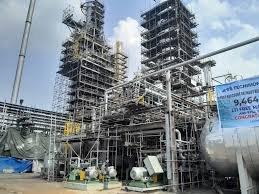
The story of the Port Harcourt Refinery’s alleged operation is one that stands out as a significant lesson in the developing tale of Nigeria’s petroleum industry. It is replete with deceit, laced with ineptitude, and a violation of public confidence. The Nigerian National Petroleum Company Limited’s (NNPCL) Group Chief Executive Officer (GCEO), Mele Kyari, has once again demonstrated that he is better at publicity stunts than at executing true leadership. His recent statements regarding the refinery are not only false, but they also represent a larger systemic breakdown that jeopardizes the future of Nigeria’s oil industry.
It would take just a little digging to unpack the layers of deception surrounding the Port Harcourt Refinery. Kyari’s role in perpetuating this fraud is now very clear to President Tinubu to see him for what he truly is: an inherited problem from the Buhari administration who must be pruned from his administration and held accountable for the grave injustice done to Nigerians. The oil sector is too critical to Nigeria’s economy and national security to be left in the hands of unaccountable individuals.
It would be important to understand that the Port Harcourt Refinery has long served as a representation of Nigeria’s faltering oil sector. Once a ray of hope for the country’s ability to produce its own refined petroleum products, it has been enmeshed in political mismanagement, corruption, and operational inefficiency for decades. Nigerians are now dependent on imported petroleum products since the refinery has not lived up to expectations despite billions of dollars in alleged “rehabilitation” works.
In this context, many knowledgeable observers already viewed Kyari’s statement of the refinery’s purported functionality with skepticism. And rightly so: further investigation has shown that the refinery has not actually started refining Premium Motor Spirit (PMS) as stated. Rather, the entire story seems to have been made up to score cheap political points and divert attention away from the NNPCL leadership’s persistent failure.
The scope of this fraud that NNPCL masterminded under Kyari’s direction is demonstrated by a two-phased reports.
Firstly, a quick observation of this charade highlights a stark similarity between the Port Harcourt Refinery and the doomed Nigeria Airways project. It can be recalled that the Nigerian Airways was a ponzi joke which lasted for a while, and was cunningly used to siphon public funds under the pretense of developing our aviation sector. These programs have come to reflect the level of incompetence and deceit going on in the government. The refinery’s touted functionality is nothing more than a flightless dream – an obvious mirage designed to manipulate and sway public perception.
Secondly, information from a whistleblowers within NNPCL have revealed the shocking reality: PMS is not being refined at all by the refinery. These insiders claim that NNPCL has resorted to blending imported products such as Naphtha and cracked petroleum resins, to provide the illusion of domestic refining. This deceitful behavior not only erodes public confidence but also calls into question the integrity of NNPCL’s leadership. The revelation that parts of the refinery capable of producing PMS are still non-functional further discredits Kyari’s claims. It is now evident that the trucking of petroleum products from the refinery was staged, with NNPCL relying on external purchases to mask the refinery’s continued dormancy.
There has been a pattern of mismanagement, dishonesty, and a blatant disregard for accountability during Mele Kyari’s time as NNPCL’s GCEO. A number of his acts have undermined trust in NNPCL, its capacity to fulfill its purpose, and his handling of the Port Harcourt Refinery issue is just the most recent. The tenure of Kyari’s leadership has seen the oil industry devolved into a theater of unfulfilled promises. From botched refinery restoration initiatives to dubious financial dealings, Kyari has continuously and consistently prioritized short-term optics above long-term fixes. His leadership style has been defined by a lack of transparency and a reluctance to confront the systemic problems that the oil and gas industry Is facing. The question of concern remains, Why is President Bola Tinubu still working with such burden in his administration?
The Port Harcourt Refinery debacle exemplifies Kyari’s modus operandi: using elaborate publicity stunts to mask underlying failures. By falsely claiming that the refinery is operational, Kyari has not only misled Nigerians but also jeopardized the credibility of NNPCL at a critical time when the nation is grappling with economic challenges and rising energy costs.
The damage Inflicted by Mele Kyari on Nigeria’s oil and gas sector extends beyond immediate financial and operational losses, it has deeply undermined public trust in the industry and government. For decades, Nigerians have been promised a robust and self-sufficient refining sector, yet time and again, these promises have been betrayed. The Port Harcourt Refinery fiasco symbolizes the culmination of years of mismanagement and deceit, and the public’s patience is wearing thin. His actions are a stark betrayal of confidence imposed in him by his employer, the president. Without he himself realizing it, he has created a subconscious, deep-seated longing for the sort of invidiously stratified, poor regime that’s being strengthened with every bad Policy and public stunts he has ever adopted for a cover-up.
Kyari must be held accountable for his acts if Nigeria’s petroleum industry is to regain public confidence. President Tinubu needs to take firm action to stop the corruption in NNPCL and acknowledge Kyari as a liability that was passed down from the Buhari administration. The Port Harcourt Refinery allegations and other contentious choices taken during Kyari’s leadership should first be the subject of an impartial investigation. Finding the entire scope of the deceit and identifying the syndicates he employed in deceiving the public should be the goals of this investigation.
Secondly, NNPCL’s operations and leadership need to be completely overhauled, because it’s obvious that with the level of corruption going on there, nothing good will come from such leadership. A new generation of leaders dedicated to transparency and commitment must be introduced, and the culture of impunity that Kyari has fostered must be destroyed.
Lastly, real refinery restoration initiatives that are led by professionals and devoid of political interference must be given top priority by the government. Only by establishing a viable, self-sufficient refining industry will Nigeria’s reliance on imported petroleum products be lessened as a national security threat.
It is a fact that , “From error to error, one discovers the entire truth,” Sigmund Freud once said. In other words, errors in speech and in writing sometimes serve as lenses that help reveal an unconscious, suppressed, or subdued desire or internal thought. Nigerians have endured this multiple errors thrown at them, and now it’s time to embrace the truth. Kyari’s actions are intentional errors that were made to profit some few individuals at the expense of the livelihood of millions of individuals. Mr President error is in retaining a catastrophe like Kyari in his administration up till this present moment, and it will be a great disservice to the country if he doesn’t remove him from his position.
To tell Nigerians the truth, Mele Kyari’s tenure as GCEO of NNPCL has been a disaster for Nigeria’s oil and gas sector and for the future of millions of Nigerians dependent on it. His deceptive claims about the Port Harcourt Refinery are a proven stark reminder of the dangers of entrusting critical national assets to individuals who lack the vision and integrity to manage them effectively. One of the biggest enablers of corruption and inefficiency in Nigeria’s oil sector is the culture of impunity that allows officials like Kyari to operate without fear of accountability. This must change. A strong message needs to be sent that no one, regardless of position or influence, is above the law.
The Port Harcourt Refinery controversy is more than just a scandal to be debated upon, it is a reflection of the systemic dysfunction that has plagued Nigeria’s oil sector for decades. The final decision is in the hands of Mr President if he’s truly conscious of implementing his renewed hope agenda. President Tinubu has a unique opportunity to chart a new course for Nigeria’s petroleum sector. By confronting the failures of the past and taking bold steps to address the systemic issues within NNPCL, he can lay the foundation for a brighter, more sustainable future.
Kyari must be seen for what he is: a menace to the oil sector, a disappointment to the presidency, a liability, and a remnant of the failed policies of the Buhari administration that must be excised for the good of the nation. It is time for him to be pruned and convicted, and for NNPCL to undergo the radical transformation it so desperately needs. The truth about the Port Harcourt Refinery is just the tip of the iceberg—beneath it lies a deeper crisis that demands urgent attention and decisive action.
This is a crossroads moment for Nigeria. The decisions made in the coming months will determine whether the country continues to stumble under the weight of past failures or rises to meet the challenges of the future. Kyari must go, and the truth about the Port Harcourt Refinery must be a turning point, not just for the oil sector, but for the nation as a whole.
King wrote this piece from Port Harcourt.

Business
Eko Flavours call on businesses, investors and policymakers to recognize gastronomy as one of Nigeria’s most promising sectors
Practitioners in the food sector have called on businesses, investors and policymakers to recognise gastronomy not merely as culinary art but as a powerful engine of national development.
They made the call on Thursday, June 18, 2026 in Lagos during the celebration of the World Gastronomy Day, framing gastronomy not just as the nation’s cultural signature but as a strategic pillar for inclusive, diversified and sustainable development.
The event, held under the theme “A Seat at the Table”, was organised by the Lagos State Ministry of Agriculture and Food Systems, in partnership with Culinara Group, Tantacom and MIPAD.
The gathering was a showcase of not just fine dining, it underscored how every element of Nigeria’s food ecosystem, from seed to plate, offers opportunities for investment, job creation, and sustainable growth.
“Gastronomy sits at the crossroads of culture and commerce. When we invest in our farmers, our chefs, our food entrepreneurs, we invest in Nigeria’s future,” the Permanent Secretary for Agriculture in the Lagos State Ministry of Agriculture and Food Systems, Emmanuel Audu, said in his opening remarks.
Lagos State Commissioner for Agriculture and Food System, Abisola Olusanya, reinforced this message, calling for coordinated policies that link smallholder producers with processors, distributors, hospitality operators, and exporters.
All the speakers at the event maintained that gastronomy can, and must, be integrated into national development plans. Listing the advantages, they said that agricultural producers gain stable markets and better incomes when chefs and restaurants source locally; food processors and manufacturers create value-added products that command higher prices in domestic and international markets; hospitality and tourism sectors attract visitors eager for authentic culinary experiences, driving revenue and infrastructure development; and youth and women entrepreneurs find pathways to build sustainable food businesses, catering services, packaged-food brands, culinary schools, creating employment and uplifting communities.
A panel of chefs, agronomists, investors, and tourism experts explored practical steps forward. The suggestions included establishing a Lagos Gastronomy Council to coordinate stakeholders; creating grants and low-interest loans for food startups; embedding culinary and agribusiness training in educational curricula; and marketing Nigerian cuisine at global events.
A highlight of the evening was the official unveiling of Eko Flavours Season 3.0, a pioneering culinary franchise that blends competition with modules on entrepreneurship, sustainability, and business development. Season 3 contestants will not only craft delicious dishes but also pitch viable business plans, source responsibly, and tackle waste-reduction challenges, demonstrating that gastronomy can be both art and enterprise.
As the event drew to a close, one message rang clear: the full potential of Nigeria’s gastronomy economy will be realized only when government, industry, investors, educators, and cultural custodians pull together.
Among those in attendance were Canada’s Deputy High Commissioner to Nigeria, Carlo’s Rojas-Arbulu; Special Adviser, Ministry of Agriculture, Oluwarotimi Fashola; Director General, National Council of Arts and Culture, Obi Asika; Chief Communication Officer, GTCO Plc, Oyindamola Adegite; Culture Ambassador, Afro Caribbean Chamber of Culture, Art and Tourism, Olubukola Ariyibi; Co-founder, Pedros, Lola Pedro; Founder and CEO, Awari App, Tannaz Bahnam,Aliensmedia CEO, Segun Awosanya.
Others were Head, SMEs, Partnerships and Collaborations, Ecobank Nigeria, Omoboye Odu; President/Founder, Aliensmedia, Segun Awosanya; Managing Director, Primlaks, Anil Hemnani; CEO, African Concierge Network and Convener, Nigeria Food Summit, Chef Gibbs; culinary artist/Nigerian food enthusiast, Chef Fregz; Busayo Ogunlowore, category development manager, Nestle Nigeria Plc, and Edgar Ayalogu, outreach lead, the HungreeApp.
The event was hotsed by Kamil Olufowobi, founder and chairman, Most Influential 100 (MIPAD); Jennifer Odufuwa, co-CEO, Culinara; and Olufunke Adu of Tantacom.
It was a call to action: to give every stakeholder a voice, every farmer a market, every chef an opportunity, and every community a taste of prosperity.
Business
Dantsoho Pushes Massive Port Modernisation Across West and Central Africa
President of the Port Management Association of West and Central Africa (PMAWCA), Dr. Abubakar Dantsoho, has said Africa cannot achieve meaningful economic growth with outdated port infrastructure, stressing that aggressive investment in modern ports, technology and deep sea facilities is now unavoidable.
Dantsoho, who is also the Managing Director of the Nigerian Ports Authority (NPA), said countries across West and Central Africa have resolved to modernise their ports to remain competitive in global trade and accommodate larger vessels.
Speaking at the closing of the PMAWCA meetings in Lagos, Dantsoho commended President Bola Tinubu and the Minister of Marine and Blue Economy for providing policy direction that is repositioning Nigeria’s maritime sector.
According to him, port infrastructure remains the backbone of economic growth, noting that no country can expand its GDP without expanding and modernising its ports.
“This is an industry that requires huge investment in infrastructure. You cannot make progress with obsolete facilities and still expect to receive newer and larger vessels,” he said.
“You cannot have a hotel built 50 years ago and expect modern customers to continue coming without refurbishment. It is the same thing with ports.”
He said countries within the sub-region, including Nigeria, Ghana, Senegal, Côte d’Ivoire and Benin Republic, are currently repositioning their port systems through upgrades and modernisation projects.
Dantsoho disclosed that while Nigeria is refurbishing Apapa and Tin Can Island ports as a medium-term solution, the country must ultimately develop more modern deep sea ports capable of handling future trade volumes.
He noted that the Lekki Deep Sea Port, with two berths, represents progress, but added that Africa must aim for larger and more sophisticated facilities comparable to global maritime hubs.
“In Singapore, they are building ports with hundreds of berths. Guinea is developing a $20 billion deep sea port project. These are the kinds of investments Africa must begin to pursue if we want to compete globally,” he said.
The PMAWCA President also highlighted the growing role of technology, automation, artificial intelligence and robotics in port operations, insisting that data-driven systems are now central to efficient maritime administration.
According to him, the Nigerian Ports Authority has achieved nearly 90 per cent automation in its operations, with electronic payment and cargo processing systems significantly improving efficiency.
He cited the electronic call-up system introduced at Apapa Port as one of the innovations that has drastically reduced traffic congestion around the port corridor.
“Today, you can go into Apapa and leave within minutes. Before now, people spent hours and sometimes slept on the bridge because of congestion,” he said.
Dantsoho further stated that Nigeria currently accounts for over 70 per cent of cargo traffic entering the West and Central African sub-region due to its large population, market size and strategic position in serving landlocked neighbouring countries such as Niger, Chad, Mali and Burkina Faso.
He explained that Nigeria’s huge consumer market, combined with its youthful population, gives the country enormous maritime and economic potential if supported with modern infrastructure.
“Our market extends beyond Nigeria because several landlocked countries depend on Nigerian ports. But to sustain that advantage, we must provide deeper waters, stronger quays and modern infrastructure that can accommodate bigger ships,” he added.
He also stressed the importance of regional collaboration and peer review among African port authorities under PMAWCA, saying member countries are increasingly sharing experiences, performance benchmarks and strategies to improve operational efficiency and competitiveness across the region.
According to him, Africa’s future economic growth will depend heavily on how quickly its maritime sector adapts to global realities through infrastructure renewal, technological innovation and regional integration.
Business
NCC Admits Service Challenges, Assures Nigerians of Faster Internet, Better Calls
The Nigerian Communications Commission has assured Nigerians that ongoing efforts to improve the quality of telecommunications services across the country are yielding results, even as it acknowledged persistent challenges affecting consumers in some areas.
In a statement issued on Wednesday by the Commission’s Head of Public Affairs, Nnena Ukoha, the NCC said it was aware of public complaints over dropped calls, slow internet speeds, unstable data services and other service disruptions.
The Commission noted that telecommunications services have become essential to daily life, stressing that consumers deserve reliable and efficient services for the money they pay.
According to the NCC, improving Quality of Service has remained a major regulatory focus over the past two years. It said the Commission had intensified oversight of Mobile Network Operators, Internet Service Providers and Tower Companies, while also engaging key stakeholders to tackle structural challenges affecting service delivery.
The regulator disclosed that the telecom sector is currently undergoing one of its largest network expansion and modernisation exercises in recent years following a long period of under-investment.
It revealed that Mobile Network Operators invested more than N2.13 trillion in network infrastructure and upgrades in 2025, while Tower Companies added another N373.8 billion to support the expansion drive.
The investments, according to the Commission, led to the addition and upgrade of more than 2,800 telecommunications sites nationwide to improve coverage and network capacity.
The NCC explained that the upgrades included the deployment of faster 4G and 5G technologies, expansion of fibre backhaul infrastructure, targeted improvements in high-demand urban centres, rollout of services to underserved communities and replacement of outdated equipment.
The Commission said the expansion drive had continued in 2026, with industry players committing to add or upgrade more than 12,000 sites this year. It added that nearly 3,000 sites had already been completed, while over 730 additional 5G sites had been deployed across 27 states.
The NCC also disclosed that it had facilitated the reallocation and restructuring of idle and underutilised radio spectrum among major network operators to improve network efficiency, capacity and service performance.
According to the Commission, recent Quality of Service assessments showed gradual improvements in network capacity, coverage and internet speeds in several parts of the country.
It stated that 4G penetration had increased from 45 per cent in January 2024 to 54 per cent currently, while national median download speeds rose from 16.5Mbps to 20Mbps within the same period.
The Commission further noted improvements in power availability at telecom tower sites, which increased from a national average of 99.3 per cent in January 2025 to 99.7 per cent currently.
Despite the progress, the NCC admitted that many subscribers still experience poor call quality, congestion and unstable internet services in some locations, stressing that operators must accelerate improvements.
The Commission also identified major threats to network performance, including fibre cuts caused by road construction activities, vandalism, theft of telecom equipment, power disruptions and restricted access to network facilities.
It disclosed that more than 27,000 avoidable fibre-cut incidents were recorded nationwide in 2025 alone.
The NCC said it was working closely with the Office of the National Security Adviser and other stakeholders to enforce the Presidential Order on Critical National Information Infrastructure and curb vandalism and theft affecting telecom facilities.
To improve transparency, the Commission said operators had been directed to promptly notify consumers whenever major network outages occur and restore services within specified timelines.
The regulator added that enforcement of the updated Quality of Service Regulations 2024 commenced in November 2025, including measures for consumer compensation and sanctions against operators that fail to meet service standards.
The Commission warned that it would continue to take regulatory action against service providers that fail to deliver measurable improvements.
The NCC also called on federal, state and local governments, as well as host communities, to support efforts aimed at protecting telecommunications infrastructure and creating a conducive environment for sustained investment in the sector.
The Commission reaffirmed its commitment to ensuring that Nigerians enjoy reliable, affordable and high-quality telecommunications services across the country.
-
Cover10 months agoNRC to reposition train services nationwide.. Kayode Opeifa
-
Fashion9 years agoThese ’90s fashion trends are making a comeback in 2017
-
Entertainment9 years agoThe final 6 ‘Game of Thrones’ episodes might feel like a full season
-
Politics3 months agoNNPP Diaspora Stakeholder and Key Kwankwaso Ally, Dr. Usman Tijjani Shehu, Rejoins APC
-
Opinion2 years agoBureaucratic Soldier, Kana Ibrahim heads Ministry of Aviation and Aerospace After Transformative Tenure at Defence
-
Opinion1 year agoHon. Daniel Amos Shatters Records, Surpasses Predecessor’s Achievements in Just Two Years
-
Opinion7 months agoBarrister Somayina Chigbue, Esq: A rising legal leader shaping institutioal excellence in Nigeria
-
News11 months agoNigerian Nafisa defeats 69 Countries at UK Global Final English Competition