
Business
PORT HARCOURT REFINERY AND THE TRUTH WE MUST KNOW

By Eguono King
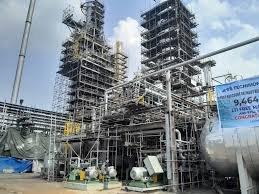
The story of the Port Harcourt Refinery’s alleged operation is one that stands out as a significant lesson in the developing tale of Nigeria’s petroleum industry. It is replete with deceit, laced with ineptitude, and a violation of public confidence. The Nigerian National Petroleum Company Limited’s (NNPCL) Group Chief Executive Officer (GCEO), Mele Kyari, has once again demonstrated that he is better at publicity stunts than at executing true leadership. His recent statements regarding the refinery are not only false, but they also represent a larger systemic breakdown that jeopardizes the future of Nigeria’s oil industry.
It would take just a little digging to unpack the layers of deception surrounding the Port Harcourt Refinery. Kyari’s role in perpetuating this fraud is now very clear to President Tinubu to see him for what he truly is: an inherited problem from the Buhari administration who must be pruned from his administration and held accountable for the grave injustice done to Nigerians. The oil sector is too critical to Nigeria’s economy and national security to be left in the hands of unaccountable individuals.
It would be important to understand that the Port Harcourt Refinery has long served as a representation of Nigeria’s faltering oil sector. Once a ray of hope for the country’s ability to produce its own refined petroleum products, it has been enmeshed in political mismanagement, corruption, and operational inefficiency for decades. Nigerians are now dependent on imported petroleum products since the refinery has not lived up to expectations despite billions of dollars in alleged “rehabilitation” works.
In this context, many knowledgeable observers already viewed Kyari’s statement of the refinery’s purported functionality with skepticism. And rightly so: further investigation has shown that the refinery has not actually started refining Premium Motor Spirit (PMS) as stated. Rather, the entire story seems to have been made up to score cheap political points and divert attention away from the NNPCL leadership’s persistent failure.
The scope of this fraud that NNPCL masterminded under Kyari’s direction is demonstrated by a two-phased reports.
Firstly, a quick observation of this charade highlights a stark similarity between the Port Harcourt Refinery and the doomed Nigeria Airways project. It can be recalled that the Nigerian Airways was a ponzi joke which lasted for a while, and was cunningly used to siphon public funds under the pretense of developing our aviation sector. These programs have come to reflect the level of incompetence and deceit going on in the government. The refinery’s touted functionality is nothing more than a flightless dream – an obvious mirage designed to manipulate and sway public perception.
Secondly, information from a whistleblowers within NNPCL have revealed the shocking reality: PMS is not being refined at all by the refinery. These insiders claim that NNPCL has resorted to blending imported products such as Naphtha and cracked petroleum resins, to provide the illusion of domestic refining. This deceitful behavior not only erodes public confidence but also calls into question the integrity of NNPCL’s leadership. The revelation that parts of the refinery capable of producing PMS are still non-functional further discredits Kyari’s claims. It is now evident that the trucking of petroleum products from the refinery was staged, with NNPCL relying on external purchases to mask the refinery’s continued dormancy.
There has been a pattern of mismanagement, dishonesty, and a blatant disregard for accountability during Mele Kyari’s time as NNPCL’s GCEO. A number of his acts have undermined trust in NNPCL, its capacity to fulfill its purpose, and his handling of the Port Harcourt Refinery issue is just the most recent. The tenure of Kyari’s leadership has seen the oil industry devolved into a theater of unfulfilled promises. From botched refinery restoration initiatives to dubious financial dealings, Kyari has continuously and consistently prioritized short-term optics above long-term fixes. His leadership style has been defined by a lack of transparency and a reluctance to confront the systemic problems that the oil and gas industry Is facing. The question of concern remains, Why is President Bola Tinubu still working with such burden in his administration?
The Port Harcourt Refinery debacle exemplifies Kyari’s modus operandi: using elaborate publicity stunts to mask underlying failures. By falsely claiming that the refinery is operational, Kyari has not only misled Nigerians but also jeopardized the credibility of NNPCL at a critical time when the nation is grappling with economic challenges and rising energy costs.
The damage Inflicted by Mele Kyari on Nigeria’s oil and gas sector extends beyond immediate financial and operational losses, it has deeply undermined public trust in the industry and government. For decades, Nigerians have been promised a robust and self-sufficient refining sector, yet time and again, these promises have been betrayed. The Port Harcourt Refinery fiasco symbolizes the culmination of years of mismanagement and deceit, and the public’s patience is wearing thin. His actions are a stark betrayal of confidence imposed in him by his employer, the president. Without he himself realizing it, he has created a subconscious, deep-seated longing for the sort of invidiously stratified, poor regime that’s being strengthened with every bad Policy and public stunts he has ever adopted for a cover-up.
Kyari must be held accountable for his acts if Nigeria’s petroleum industry is to regain public confidence. President Tinubu needs to take firm action to stop the corruption in NNPCL and acknowledge Kyari as a liability that was passed down from the Buhari administration. The Port Harcourt Refinery allegations and other contentious choices taken during Kyari’s leadership should first be the subject of an impartial investigation. Finding the entire scope of the deceit and identifying the syndicates he employed in deceiving the public should be the goals of this investigation.
Secondly, NNPCL’s operations and leadership need to be completely overhauled, because it’s obvious that with the level of corruption going on there, nothing good will come from such leadership. A new generation of leaders dedicated to transparency and commitment must be introduced, and the culture of impunity that Kyari has fostered must be destroyed.
Lastly, real refinery restoration initiatives that are led by professionals and devoid of political interference must be given top priority by the government. Only by establishing a viable, self-sufficient refining industry will Nigeria’s reliance on imported petroleum products be lessened as a national security threat.
It is a fact that , “From error to error, one discovers the entire truth,” Sigmund Freud once said. In other words, errors in speech and in writing sometimes serve as lenses that help reveal an unconscious, suppressed, or subdued desire or internal thought. Nigerians have endured this multiple errors thrown at them, and now it’s time to embrace the truth. Kyari’s actions are intentional errors that were made to profit some few individuals at the expense of the livelihood of millions of individuals. Mr President error is in retaining a catastrophe like Kyari in his administration up till this present moment, and it will be a great disservice to the country if he doesn’t remove him from his position.
To tell Nigerians the truth, Mele Kyari’s tenure as GCEO of NNPCL has been a disaster for Nigeria’s oil and gas sector and for the future of millions of Nigerians dependent on it. His deceptive claims about the Port Harcourt Refinery are a proven stark reminder of the dangers of entrusting critical national assets to individuals who lack the vision and integrity to manage them effectively. One of the biggest enablers of corruption and inefficiency in Nigeria’s oil sector is the culture of impunity that allows officials like Kyari to operate without fear of accountability. This must change. A strong message needs to be sent that no one, regardless of position or influence, is above the law.
The Port Harcourt Refinery controversy is more than just a scandal to be debated upon, it is a reflection of the systemic dysfunction that has plagued Nigeria’s oil sector for decades. The final decision is in the hands of Mr President if he’s truly conscious of implementing his renewed hope agenda. President Tinubu has a unique opportunity to chart a new course for Nigeria’s petroleum sector. By confronting the failures of the past and taking bold steps to address the systemic issues within NNPCL, he can lay the foundation for a brighter, more sustainable future.
Kyari must be seen for what he is: a menace to the oil sector, a disappointment to the presidency, a liability, and a remnant of the failed policies of the Buhari administration that must be excised for the good of the nation. It is time for him to be pruned and convicted, and for NNPCL to undergo the radical transformation it so desperately needs. The truth about the Port Harcourt Refinery is just the tip of the iceberg—beneath it lies a deeper crisis that demands urgent attention and decisive action.
This is a crossroads moment for Nigeria. The decisions made in the coming months will determine whether the country continues to stumble under the weight of past failures or rises to meet the challenges of the future. Kyari must go, and the truth about the Port Harcourt Refinery must be a turning point, not just for the oil sector, but for the nation as a whole.
King wrote this piece from Port Harcourt.








LaLiga: I Must Confess – Mourinho Speaks On Huijsen’s Red Card After Atletico Madrid

EPL: ‘Worst I’ve Ever Seen’ – Neville Slams Man United Players After 1-1 Draw With Fulham

EPL: ‘So Disappointing’ – Morrison Surprised By David Raya’s Errors In Arsenal 3-0 Defeat To Brighton

Now Hiring: Academic and Technical Staff at a Leading Private University in Gombe State

LAUTECH 18th Convocation: EEE Class ’05 Alumni Celebrate as Electronic and Electrical Engineering Department Produced the School’s Overall Best Graduating Student


