Connect with us

Cover

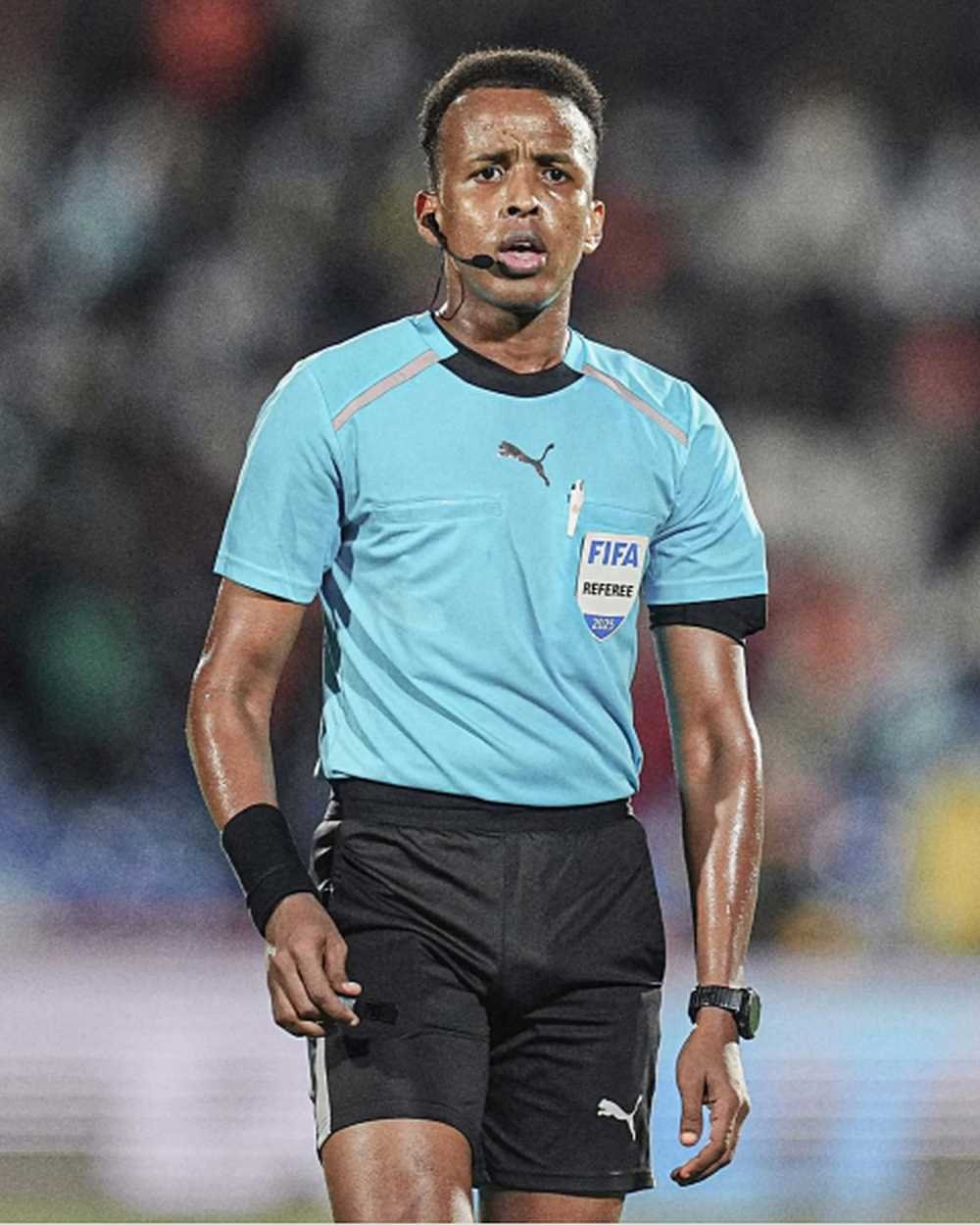
Somali Referee Artan’s World Cup Dream Blocked At US Border

Published

on

The 2026 FIFA World Cup has already produced its first major controversy, and it has nothing to do with the pitch. Somali referee Omar Artan, selected to officiate at football’s biggest stage, was denied entry into the United States despite holding a valid visa.

A Historic Opportunity Lost
Artan’s inclusion among the 52 referees chosen for the expanded 48-team tournament was celebrated across Africa. At 34, he was poised to become the first Somali referee to officiate at a World Cup match, a milestone for Somali football and a symbol of progress for African officiating. That dream ended abruptly at Miami International Airport.

Immigration Block
According to Somali officials, Artan travelled with all required documentation, including a visa issued specifically for the World Cup. Yet after hours of questioning, US immigration authorities refused him entry, citing vague “vetting concerns.” He was returned to Istanbul, Turkey, leaving FIFA with no option but to remove him from the tournament roster.

FIFA’s Position
FIFA confirmed Artan’s exclusion, stressing that it cannot override immigration decisions made by host countries. The governing body acknowledged the setback but said it had been informed that his status would not change. For FIFA, the incident adds another layer of controversy to a tournament already under scrutiny for logistical and organisational challenges.

Artan’s Reputation
Artan is far from an unknown figure in African football. Since becoming a FIFA-listed referee in 2018, he has officiated at the Africa Cup of Nations and the CAF Champions League. His performances earned him the CAF Men’s Referee of the Year award in 2025, cementing his reputation as one of the continent’s most respected officials. His rise was seen as a beacon of hope for Somalia, a country often overlooked in global football.

Wider Implications
Artan’s case has intensified debate about access and fairness at the World Cup. Iran recently protested over revoked ticket allocations for its supporters, while other officials have reportedly faced entry restrictions. The incident highlights the tension between global sporting events and national immigration policies, raising questions about inclusivity in football’s showcase tournament.

Symbolism Beyond Football
For Somalia, Artan’s exclusion is more than a personal setback. It represents a missed chance to showcase national pride on the world stage. For African referees, it underscores the challenges of breaking barriers in a sport still grappling with issues of representation and equity.

Looking Ahead
As the World Cup kicks off, Artan’s absence will be felt not only by Somali fans but by those who saw his appointment as a step toward greater diversity in football officiating. His story is now part of the broader narrative of a tournament struggling to balance its global ambitions with the realities of politics and border control.

The controversy serves as a reminder that the World Cup, while a celebration of sport, is also shaped by forces far beyond the game. For Omar Artan, the dream of making history has been replaced by a painful lesson in the intersection of football and geopolitics.

Continue Reading
Click to comment

Leave a Reply

Your email address will not be published. Required fields are marked *

Cover

Why Alvarez Won’t Leave For Madrid

Published

on

Atletico Madrid have made their position clear: Julian Alvarez is not for sale. The club rejected a €150 million bid from city rivals Real Madrid, sending a strong message about the Argentine forward’s value and their determination to keep him at the heart of Diego Simeone’s project.

Real Madrid’s Ambitious Move
Real Madrid’s formal offer was confirmed in an official statement, underscoring their intent to secure Alvarez as part of their summer rebuild. The bid, worth €150 million, would have made Alvarez one of the most expensive signings in football history. Yet Atletico swiftly declined, pointing to the player’s release clause and his contract, which runs until 2030.

Atletico’s Defensive Stance
Atletico expressed gratitude for the proposal but reiterated that Alvarez’s future remains tied to the club. The refusal reflects not only financial considerations but also the strategic importance of Alvarez, who has become a cornerstone of Simeone’s attack. His productivity—20 goals in 49 appearances last season, including 10 in the Champions League—has reinforced his status as indispensable.

Barcelona’s Interest
While Real Madrid’s bid grabbed headlines, Barcelona are also in the race. Reports suggest the Catalan giants are preparing an offer of around €100 million. Manager Hansi Flick and sporting director Deco are long-time admirers of Alvarez, and sources indicate the striker would be open to joining the reigning La Liga champions.

Barcelona are already close to finalising the signing of Anthony Gordon from Newcastle United in an €80 million deal. Adding Alvarez would further strengthen their frontline, signalling intent to dominate both domestically and in Europe.

Arsenal Watching Closely
Beyond Spain, Alvarez has attracted interest from England. Arsenal’s new sporting director Andrea Berta reportedly made informal enquiries earlier this year. Manager Mikel Arteta, fresh from guiding the Gunners to the Premier League title, is keen to bolster his attacking options. Bournemouth’s Eli Junior Kroupi and Aston Villa’s Morgan Rogers are also on Arsenal’s radar, but Alvarez represents a marquee target.

Alvarez’s Journey
Alvarez joined Atletico from Manchester City in 2024 in a deal worth up to €95 million. Since then, he has delivered consistently, scoring 29 goals in his debut season and maintaining high performance levels. His rise has made him one of Europe’s most sought-after forwards, blending technical skill with relentless work rate.

International Duty
For now, Alvarez’s focus shifts to international duty. He will lead Argentina’s attack as the world champions begin their defence of the World Cup crown, starting with a group-stage clash against Algeria on July 17. His performances on the global stage could further elevate his market value, intensifying the transfer battle.

What the Rejection Means
Atletico’s rejection of Real Madrid’s bid is more than a financial decision. It is a statement of intent. By holding firm, the club signals that Alvarez is central to their ambitions. For Real Madrid, the setback highlights the difficulty of prising talent from rivals. For Barcelona and Arsenal, it opens the door to renewed negotiations, though Atletico’s stance suggests only a release clause will trigger serious talks.

Looking Ahead
As the transfer window unfolds, Alvarez’s future will remain a focal point. Atletico’s refusal has set the tone: they will not be bullied into selling. Whether Barcelona or Arsenal can mount a successful challenge remains to be seen, but Alvarez’s name is now firmly at the centre of Europe’s summer transfer drama.

Continue Reading

Cover

Atiku Dismisses Babachir Lawal’s Allegations, Demands Evidence

Published

on

Former Vice President Atiku Abubakar has dismissed allegations made by former Secretary to the Government of the Federation, Babachir Lawal, over the conduct of the African Democratic Congress (ADC) presidential primary. Atiku described Lawal’s claims as baseless, urging him to produce evidence rather than rely on accusations.

Allegations Without Proof
Lawal had appeared on national television, accusing Atiku of manipulating the ADC primary. But according to Atiku’s aide, Phrank Shaibu, the former SGF failed to present any verifiable proof.

“Mr. Lawal spent nearly an hour making grave accusations but produced no documents, petitions, result sheets, witness statements, or recordings,” Shaibu said. “He arrived with accusations. He left with accusations. In between, the evidence never arrived.”

Political Disappointment
Atiku’s camp argued that Lawal’s intervention was not that of a whistleblower but of a disappointed political actor. By his own admission, Lawal had openly supported another aspirant before the primary concluded. His criticism, Atiku’s team suggested, stemmed from frustration over the failure of his preferred candidate.

Contradictions in Lawal’s Claims
The statement also pointed to contradictions in Lawal’s narrative. He portrayed Atiku as politically irrelevant yet simultaneously accused him of orchestrating a nationwide conspiracy across 8,809 wards.

“Atiku was supposedly inactive and unpopular, yet he allegedly engineered a nationwide plot. Such arguments are implausible and insulting to party members whose democratic choices he now seeks to invalidate,” Shaibu said.

Targeting Atiku’s Constituencies
Atiku’s team accused Lawal of acting as a “political mercenary,” attempting to weaken the former Vice President’s standing among Christian communities in the Middle Belt and other regions where Atiku retains support.

The statement rejected Lawal’s claim that Atiku had “absolutely nothing,” pointing instead to his record in liberalising Nigeria’s telecommunications sector, advancing economic reforms, supporting private sector growth, and investing in education.

Atiku’s Final Word
Shaibu stressed that Atiku would not engage further on the matter. “This is the final response to Mr. Lawal’s increasingly desperate attempts to remain politically relevant through sensationalism and character assassination,” he said.

He added that Nigerians had heard Lawal’s allegations, seen his performance, and judged for themselves. “The facts remain unchanged. The truth remains intact. And no amount of bitterness can alter either,” Shaibu concluded.

Broader Implications
The clash between Atiku and Lawal reflects the growing tensions within Nigeria’s opposition politics ahead of the 2027 elections. Allegations of manipulation in party primaries are not new, but Atiku’s sharp response underscores his determination to protect his political credibility.

For the ADC, the controversy highlights the challenges of managing internal disputes while presenting itself as a credible alternative in national politics. For Atiku, it is a reminder that his political journey remains under constant scrutiny, with rivals eager to question his influence and relevance.

Looking Ahead
As Nigeria moves closer to the 2027 polls, disputes like this are likely to intensify. Atiku’s dismissal of Lawal’s claims reflects a broader strategy: confront allegations directly, demand evidence, and frame critics as politically motivated.

Whether Lawal produces proof or fades from the conversation, the episode has already added another layer to Nigeria’s complex political narrative. In a political climate where credibility and perception are decisive, Atiku’s insistence on evidence over rhetoric signals how opposition figures intend to defend their standing in the run-up to the next election.

Continue Reading

Cover

INEC Battles Court Rulings That Threaten 2027 Election Timetable

Published

on

Nigeria’s Independent National Electoral Commission (INEC) has raised alarm over two recent court judgments that challenge aspects of its timetable for the 2027 general elections. The commission insists that the rulings, if left unaddressed, could disrupt the entire electoral calendar and undermine preparations for the polls.

Court Judgments Spark Concern
The first ruling, delivered on May 20, 2026, in a case brought by the Youth Party, questioned specific timelines in INEC’s schedule. A second ruling, issued on May 26 in a suit filed by the Social Democratic Party (SDP), produced a mixed outcome. While affirming INEC’s authority to issue an electoral timetable, the court nullified certain deadlines relating to candidate nomination and substitution.

INEC Chairman, Prof. Joash Amupitan, told political party leaders at a consultative meeting in Abuja that the commission has filed appeals against both judgments. He stressed that electoral activities are interconnected and cannot be arbitrarily removed without creating chaos.

Why the Timetable Matters
Amupitan explained that the timetable is not a collection of isolated dates but a framework designed to ensure orderly elections. Beyond statutory deadlines, INEC must accommodate several operational processes, including:

  • Submission and verification of party membership registers
  • Monitoring of primaries nationwide
  • Upload of primary results to INEC’s portal
  • Candidate nomination procedures
  • Printing and quality assurance of ballot papers and result sheets
  • Deployment of election materials and training of personnel
  • Voter education campaigns
  • Procurement of sensitive materials
  • Configuration of BVAS machines
  • Compliance with legal obligations such as inviting parties to inspect electoral materials

He argued that removing or altering any of these processes without a coherent framework would compromise transparency and efficiency.

Respect for Judicial Process, But Warning of Risks
While acknowledging the authority of the courts, Amupitan said the judgments raise critical questions about the extent of INEC’s constitutional powers. He warned that fragmenting the timetable could destabilize Nigeria’s electoral system.

“The commission considers it imperative that all electoral activities be harmonised within a coherent and workable framework that promotes certainty, transparency, administrative efficiency and equal treatment of all political parties,” he said.

Political Parties Briefed
INEC assured political parties that despite the pending appeals, preparations for the 2027 elections remain on track. Amupitan announced that on June 26, 2026, the commission will issue access codes to parties for its Candidate Nomination Portal. The portal will allow designated officers to upload names and details of candidates. He cautioned that the portal is fully automated and will close once the prescribed period expires.

Broader Implications
The dispute highlights the tension between judicial oversight and electoral management. While courts play a role in ensuring legality, INEC argues that excessive interference in operational timelines could paralyze the system.

Observers note that the controversy comes at a sensitive time, with Nigeria preparing for its first election under a 48-team global football-style calendar of political parties and heightened public scrutiny of democratic institutions. The rulings have already sparked debate about whether Nigeria’s electoral laws provide sufficient clarity on INEC’s powers.

Looking Ahead
INEC’s appeals will determine whether the commission retains full control over its timetable or whether courts will continue to intervene in operational details. For now, the commission insists it will conduct the 2027 polls in strict compliance with the Constitution, the Electoral Act, and lawful judicial pronouncements.

The outcome of these legal battles will shape not only the 2027 elections but also the future of electoral governance in Nigeria. At stake is the delicate balance between judicial authority and the independence of the body charged with safeguarding the nation’s democracy.

Continue Reading

Trending

Copyright © 2023 - 2025 DailyMirror Nigeria. Design by AspireWeb.ng, powered by WordPress.