Connect with us

Cover

Super Falcons Set For Senegal Test Ahead Of WAFCON

Published

on

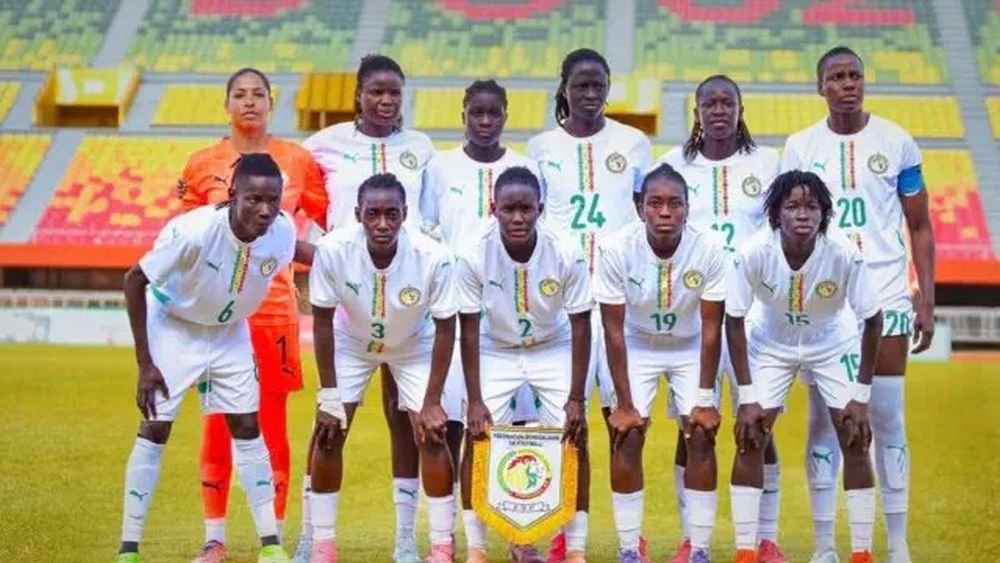
Nigeria’s Super Falcons are gearing up for a crucial test as head coach Justine Madugu unveiled a 23-player squad for two friendly matches against Senegal. The games, scheduled for June 6 and June 8 at the Remo Stars Sports Complex in Ikenne, Ogun State, are part of preparations for the 2026 Women’s Africa Cup of Nations (WAFCON).

Experienced Core Returns
The squad features established stars including captain Rasheedat Ajibade, goalkeeper Chiamaka Nnadozie, and forward Asisat Oshoala. Their inclusion signals Madugu’s intent to blend experience with emerging talent. Midfielder Ngozi Okobi-Okeoghene, forward Francisca Ordega, and Gift Monday also return, adding depth and leadership.

Fresh Opportunities
Madugu has opened the door for new faces. Belarus-based Blessing Nkor and Turkey-based Kafayat Shittu earned call-ups, while home-based players Anderline Mgbechi, Sikiratu Isah, Rofiat Imuran, and Oluwatosin Demehin were selected. Their presence highlights the coach’s commitment to expanding the talent pool and rewarding domestic league performers.

Balanced Squad
The roster reflects balance across all positions. Defenders include Shukurat Oladipo, Glory Ogbonna, and Christy Ucheibe, while midfield options feature Halimatu Ayinde, Toni Payne, and Jennifer Echegini. In attack, Oshoala leads alongside Ordega, Joy Omewa, and Rinsola Babajide. This mix of European-based professionals and homegrown players strengthens Nigeria’s tactical flexibility.

Strategic Friendlies
Facing Senegal’s Lionesses of Teranga offers Nigeria a competitive rehearsal. Senegal, drawn in Group A with Morocco, Algeria, and Kenya, will test Nigeria’s defensive organization and attacking sharpness. For the Falcons, grouped with Egypt, Zambia, and debutants Malawi, these matches provide a chance to fine-tune strategies before the continental showdown.

WAFCON and World Cup Pathway
The 2026 WAFCON, running from July 25 to August 16, doubles as qualification for the 2027 FIFA Women’s World Cup. Nigeria, 10-time African champions, aim to reaffirm dominance while integrating younger players into the squad. The Senegal friendlies are therefore more than warm-ups—they are stepping stones toward continental glory and global competition.

Full Squad List
Goalkeepers: Chiamaka Nnadozie, Comfort Erhabor, Anderline Mgbechi
Defenders: Shukurat Oladipo, Rofiat Imuran, Glory Ogbonna, Oluwatosin Demehin, Sikiratu Isah, Blessing Ilivieda, Christy Ucheibe
Midfielders: Rasheedat Ajibade, Halimatu Ayinde, Ngozi Okobi-Okeoghene, Toni Payne, Jennifer Echegini, Kafayat Shittu
Forwards: Asisat Oshoala, Gift Monday, Joy Omewa, Francisca Ordega, Folashade Ijamilusi, Rinsola Babajide, Blessing Nkor

Continue Reading
Click to comment

Leave a Reply

Your email address will not be published. Required fields are marked *

Cover

APC Faces Internal Crisis As Primaries Trigger Mass Defections

Published

on

The All Progressives Congress (APC) is grappling with a deepening crisis following its nationwide primaries. Instead of consolidating President Bola Tinubu’s political base ahead of the 2027 elections, the ruling party has been rocked by defections, disputes, and disillusionment among its ranks.

Pantami’s Defection
Former Minister of Communications and Digital Economy, Isa Ali Pantami, has defected to the Peoples Democratic Party (PDP). Pantami secured the PDP governorship ticket in Gombe State after withdrawing from the APC race, citing violations of the Electoral Act and imposition of candidates. His move sets up a fierce contest against APC’s Jamilu Gwamna in 2027.

Former Police Chiefs Exit
The exodus continued with former Inspector-General of Police Mohammed Abubakar Adamu resigning from the APC after losing the Nasarawa governorship primary. Adamu accused the party of eroding internal democracy and announced plans to contest under the Social Democratic Party (SDP). Another former IGP, Usman Baba Alkali, also left the party, signaling cracks among APC’s influential figures.

Benue and Gombe Losses
In Benue State, former Speaker Hyacinth Dajoh defected to the PDP, alleging manipulation in the primaries. Former Governor Samuel Ortom welcomed him. Similarly, Senator Anthony Siyako Yaro abandoned the APC for the PDP in Gombe South, saying the opposition party better represents his district’s aspirations.

Lawmakers Trapped
While big names flee, many APC lawmakers remain trapped. Nearly 60 National Assembly members lost their return tickets. Ironically, the anti-defection clause in the Electoral Act 2026—passed by these same lawmakers—now prevents them from switching parties after membership registers were submitted to INEC. This provision, designed to weaken opposition, has become a cage for aggrieved APC members.

High-Profile Casualties
Among the notable figures sidelined were former Deputy Senate President Ovie Omo-Agege, who lost heavily in Delta Central, and Senator Ned Nwoko, defeated in Delta North by former Governor Ifeanyi Okowa. In Imo West, Governor Hope Uzodimma blocked Rochas Okorocha’s return bid. Former Ogun governors Gbenga Daniel and Ibikunle Amosun opted out entirely, refusing to contest under disputed conditions.

Voices of Dissent
Discontent runs deep. Ekiti lawmaker Kolawole Akinlayo dismissed the primaries as fraudulent, claiming results were written in Government Houses rather than decided by voters. Others have filed petitions, hoping internal review processes will offer redress.

APC’s Response
The APC insists the primaries are not yet final. Party spokesman Abimbola Tooki stressed that winners will only be declared after appeals are concluded. He accused some politicians of using media propaganda to discredit the process. Kwara APC chairman Sunday Fagbemi urged members to accept defeat with sportsmanship, saying politics requires resilience.

The Bigger Picture
Despite official reassurances, the defections and grievances point to a party in turmoil. With prominent figures already gone and many more weighing their options, APC faces a test of survival. The appeals process may calm some tensions, but the steady stream of departures suggests the ruling party is managing a hemorrhage rather than a minor bruise.

The coming months will reveal whether APC can contain the fallout or whether the primaries mark the beginning of a broader unraveling ahead of the 2027 elections.

Continue Reading

Cover

The 10 Men Most Likely To Win The 2026 World Cup Golden Boot — Ranked

Published

on

The 2026 FIFA World Cup kicks off on June 11 across the United States, Mexico, and Canada. Forty-eight teams. Hundreds of goals. And one striker who will leave North America with the Golden Boot.
The award has belonged to football’s greatest names — Eusébio, Gerd Müller, Ronaldo Nazário, Gary Lineker. Kylian Mbappé and Harry Kane have shared it between them at the last two editions. Both are back. Both want it again. Neither will have it easy.
Here are the ten players with the strongest claims.

10. Folarin Balogun — United States
The co-hosts’ best chance at an individual award arrives in the form of a 24-year-old who has been in outstanding form all season.
Balogun scored 19 goals for Monaco in 2024-25, including 12 in his final 18 appearances. He switched international allegiance from England to the United States and has since delivered nine goals and four assists in 26 outings for the Stars and Stripes.
Mauricio Pochettino’s side face Paraguay, Turkey, and Australia in Group D — a draw that gives the US a genuine path to the knockout rounds. Home advantage and Balogun’s current form make him a live contender.

9. Luis Díaz — Colombia
Díaz arrives at his second World Cup carrying the weight of one of the most emotionally charged seasons in recent memory. After his father was kidnapped and freed during the 2022-23 campaign, the winger has simply not stopped performing.
He moved from Liverpool to Bayern Munich and immediately scored 26 goals — forming part of one of the most dangerous attacking units in European football. A stunning goal against Argentina in qualifying and a brace that handed Colombia their first ever win over Brazil confirmed he delivers on the biggest stages. Colombia open against World Cup debutants Uzbekistan. Expect Díaz to make a statement immediately.

8. Vinicius Jr — Brazil
Brazil’s most electrifying attacker enters his first World Cup with Carlo Ancelotti — his former Real Madrid manager — now leading the Seleção. The chemistry could prove decisive.
Vinicius’s international scoring record has been modest — just nine goals in 48 appearances. But his club form this season rediscovered the explosive edge that made him one of the world’s best. Brazil’s group includes Haiti, Scotland, and Morocco — matches where Vinicius should find space and goals.

7. Julián Álvarez — Argentina
Playing in the shadow of the greatest footballer ever produced is not easy. Álvarez has managed it better than almost anyone.
At the 2022 World Cup, he scored four goals in seven games — bettered only by Messi and Mbappé. His La Liga season at Atlético Madrid was disappointing, but his quality is beyond question and a World Cup platform could restore both his confidence and his form. If Messi draws the defensive attention — and he will — Álvarez will find space.

6. Cristiano Ronaldo — Portugal
At 41, Ronaldo is playing his sixth World Cup. This will be his last. He knows it. Portugal knows it. And the tournament will be shaped, in part, by whether he can write one final extraordinary chapter.
Five goals in five qualifying games confirmed he remains a force. FIFA suspended two games of a ban for elbowing an opponent before clearing him to play the full tournament. Portugal’s group — Colombia, DR Congo, and Uzbekistan — offers genuine goalscoring opportunities. And the supporting cast around him — Bruno Fernandes, Bernardo Silva, Rafael Leão — remains world-class.

5. Lionel Messi — Argentina
He has won everything. He has never won the World Cup Golden Boot.
This is his last chance. Messi turns 39 during the tournament. He won the MLS Golden Boot last season with 35 goals. He finished as the top scorer in CONMEBOL qualifying with eight goals. He is not slowing down.
Argentina are defending champions. The global spotlight follows Messi wherever he plays. At a tournament in North America — where he plays his club football and where he is worshipped — the environment could not be better suited to one final, extraordinary individual performance.

4. Mikel Oyarzabal — Spain
He scored the winning goal in the Euro 2024 final. Since then, he has netted 11 times in 11 appearances for Spain. He scored 15 La Liga goals in 2024-25 — his best ever club season. He takes penalties.
And with Lamine Yamal injured and unavailable for the start of the tournament, Oyarzabal steps forward as Spain’s primary attacking focal point at a competition where the defending European champions are expected to go deep. Eleven goals in eleven games is a run of form that cannot be dismissed.

3. Erling Haaland — Norway
The numbers from qualifying were almost absurd. Sixteen goals in eight games. Double the next highest scorer in the entire European qualifying campaign. Norway, at their first World Cup since 1998, built their campaign around a striker who is arguably the most naturally gifted finisher in world football.
Haaland has never played at a major international tournament. The 2026 World Cup is his debut. The uncertainty around how he handles that stage is the only reason he sits at three rather than one. His group — which includes France and Senegal — will test him immediately. His opener against Iraq offers the perfect stage to announce himself.

2. Kylian Mbappé — France
Eight goals in seven games. That was Mbappé’s 2022 World Cup Golden Boot-winning haul. He arrives at this tournament having scored 42 goals in 44 games for Real Madrid — a season of relentless clinical finishing that has confirmed him as the sport’s dominant forward.
France’s supporting cast is extraordinary — Ousmane Dembélé, Michael Olise, Rayan Cherki, and Désiré Doué will create chances in abundance. Mbappé has minor injury concerns to manage but has consistently saved his best for World Cups. Nobody has won the Golden Boot twice. Mbappé is the likeliest man to change that.

1. Harry Kane — England
Kane won the 2018 Golden Boot. Eight goals in eight qualifying games set the tone for what this tournament could be for England’s captain. He arrives having scored an extraordinary 61 goals across all competitions for Bayern Munich this season — a campaign that ended with back-to-back hat-tricks.
He holds England’s all-time scoring record. He is 32 years old, at the peak of his powers, and playing for a nation that expects the World Cup to come home. England face Croatia, Ghana, and Panama in the group stage — the same Panama against whom Kane scored a hat-trick in 2018.
The platform is set. The form is there. The motivation is the highest it has ever been.
Kane is the favourite. And on the evidence of everything this season, he deserves to be.

Continue Reading

Cover

PSG’s Champions League Glory Overshadowed By Nationwide Unrest

Published

on

Paris Saint-Germain’s second consecutive Champions League triumph has sparked both jubilation and turmoil across France. The team’s dramatic victory over Arsenal in Budapest, sealed by a 4-3 penalty shootout, was followed by a day of celebration in Paris. Yet the joy was marred by violent clashes, mass arrests, and political recriminations.

Triumph in Budapest
PSG returned home on Sunday after defeating English champions Arsenal in a tense final. Tens of thousands of supporters lined the streets from Charles de Gaulle airport to the Champ-de-Mars plaza near the Eiffel Tower. The players paraded the trophy before adoring fans, with captain Marquinhos and striker Ousmane Dembele receiving thunderous applause. Dembele promised supporters, “We will be back next year for the third.”

The squad was also received by President Emmanuel Macron before heading to Parc des Princes, where more than 40,000 fans gathered for a final celebration.

Violence Overshadows Victory
The night before the parade, celebrations spiraled into chaos. Cars were torched, shops looted, and clashes erupted between youths and police in Paris and other cities. Authorities reported 780 arrests nationwide, a sharp increase compared to disturbances after last year’s final.

Interior Minister Laurent Nunez confirmed 57 police officers were injured, alongside 219 civilians, eight of whom remain in critical condition. One man died in a motorcycle crash during the celebrations, while stabbings and other assaults were also recorded.

Municipal workers spent Sunday morning clearing debris, broken glass, and burned vehicles from Paris streets ahead of the team’s return.

Political Fallout
President Macron condemned the violence as “unspeakable,” praising PSG as a source of national pride but warning that France was “fed up” with unrest. He vowed harsh punishment for those arrested.

Paris Mayor Emmanuel Gregoire downplayed the severity, arguing that disturbances are common during major events. He criticized media coverage for amplifying the unrest and accused troublemakers of exploiting social media to gain attention.

The Champs-Élysées district council took a harder stance, describing the avenue as an “arena of urban guerrilla warfare” and calling for a ban on future gatherings there.

Divided Reactions
Political leaders across the spectrum weighed in. Far-right figure Marine Le Pen claimed France was unique in turning football victories into riots. Conservative leader Valerie Pecresse condemned “brainless thugs” for tarnishing Paris’s image. Meanwhile, the left-wing France Unbowed party criticized the government’s handling of the situation, saying security measures were inadequate.

Security Clampdown
To prevent further unrest, authorities deployed 6,000 police officers across central Paris for Sunday’s celebrations. Fans passed through security checkpoints before reaching the stage where players lifted the trophy. PSG president Nasser Al-Khelaifi appealed for calm, urging supporters to “protect our city.”

Despite the heavy police presence, the atmosphere at the parade was largely festive. Supporters sang “We Are the Champions” and waved flags as the team walked a red, white, and blue carpet.

A Nation Torn Between Pride and Anger
For many fans, the victory was a moment of pure joy. “It was great, there was the stress of the penalty shootout, but it was good stress in the end,” said Mirna Makima, a physiotherapist who traveled from Belgium to witness the celebrations.

Yet the unrest has reignited debate over public order, policing, and the role of sport in French society. PSG’s triumph, while historic, has left the nation grappling with the dual reality of sporting excellence and social discord.

Continue Reading

Trending

Copyright © 2023 - 2025 DailyMirror Nigeria. Design by AspireWeb.ng, powered by WordPress.