

Opinion
TAIWO OYEDELE AND HIS MIDAS TOUCH ON FINANCIAL TRANSPARENCY

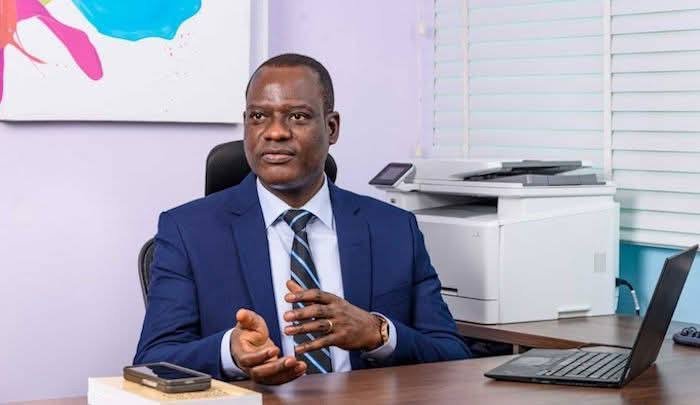
By Charles Obeli
There is a difference between occupying a public office and making an institution work. The real test of leadership is not the title attached to a position, but the changes that become visible after a person assumes responsibility. In the case of Taiwo Oyedele, his early impact at the Ministry of Finance is increasingly being seen in this light. He has started restoring confidence, improving financial discipline and bringing greater seriousness to the management of public resources.
Oyedele came into government with a reputation built over more than two decades in accounting, taxation, fiscal policy and public finance. His appointment as Minister of State and subsequent elevation as the Minister of Finance and Coordinating Minister of the Economy by President Bola Ahmed Tinubu was therefore not simply a reward for professional experience.
It was a decision to place specialised knowledge at the centre of an administration facing the difficult task of rebuilding Nigeria’s fiscal system.
When President Tinubu swore him in as Minister on March 16, 2026, the President described the appointment as a vote of confidence in his abilities. He particularly praised Oyedele’s professionalism, knowledge of tax policy, dedication and determination; qualities that had already been demonstrated during his work with the Presidential Committee on Fiscal Policy and Tax Reforms.
That background matters because financial management is rarely about figures alone. It is about confidence. Contractors need to believe that government obligations will be treated seriously. Businesses need clarity about policies. Ministries and agencies need predictable financial processes. Most importantly, citizens need to know that public resources are being managed responsibly.
It is against this background that Oyedele’s presence at the Finance Ministry has become significant. One of the clearest signs of change is the improved atmosphere around the ministry’s headquarters. A place that had, at various times, become associated with complaints and protests by local contractors is gradually returning to what it ought to be: a centre of serious government business.
The significance of this change should not be underestimated. When contractors spend their time protesting over unpaid obligations rather than executing projects, both the government and the economy suffer. Workers, suppliers and communities connected to those contracts also feel the consequences. Addressing such problems is therefore not merely an administrative exercise; it restores confidence across the wider economic chain.
Oyedele’s approach appears rooted in the belief that public finance must ultimately serve the public interest. Since assuming office, he has repeatedly emphasised revenue mobilisation, fiscal discipline and the efficient use of government resources. His message has been straightforward: that public money must be managed with responsibility, transparency and a clear understanding of its impact on ordinary Nigerians.
His professional record gives weight to that approach. An economist, accountant and public policy expert, Oyedele began his career at PricewaterhouseCoopers in 2001 and spent 22 years rising to become Fiscal Policy Partner and Africa Tax Leader. He has also undertaken executive education at institutions including the London School of Economics, Yale University and Harvard Kennedy School, while contributing to academia as a Professor at Babcock University and a Visiting Scholar at Lagos Business School.
But qualifications alone do not make a public servant effective. What matters is how knowledge is converted into results. On this score, Oyedele has shown a willingness to confront difficult fiscal questions and explain them in terms that connect government decisions to the wider economy. His disclosure on the impact of subsidy reforms offers one example. According to him, reforms between June 2023 and December 2025 freed ₦15.8 trillion in resources for the federation.
He said the Federal Government received ₦5.4 trillion while ₦10.4 trillion was distributed among state and local governments. He also reported additional independent revenue of ₦3.1 trillion, bringing the total additional resources from subsidy savings, independent revenue and borrowing to ₦20.4 trillion. The importance of such figures lies not merely in their size, but in the transparency with which they are being presented.
Financial reforms become easier to understand when citizens can see where resources came from, where they went and what pressures shaped government spending. Oyedele’s willingness to place these figures before the public contributes to a culture in which fiscal policy is explained rather than hidden behind complicated official language.
He has also been clear that the reforms were not designed simply to increase government revenue. He has linked them to the need to correct longstanding inefficiencies, distortions and leakages in the fuel subsidy and foreign exchange systems. That distinction is important because sustainable reform is ultimately about building a healthier financial system, not merely collecting more money.
Another dimension of Oyedele’s work is his support for domestic capacity. During a visit to Galaxy Backbone in Abuja, he argued that supporting made-in-Nigeria goods and services, particularly digital infrastructure, should be regarded as a national duty. His argument reflects a broader economic principle that government spending should, where quality and value permit, strengthen Nigerian businesses, create jobs and develop local expertise.
His emphasis on digital infrastructure also shows an understanding that financial reform cannot be separated from technology. Better systems can improve record-keeping, reduce opportunities for leakages, strengthen accountability and make public financial management more efficient. In an economy increasingly driven by data and digital services, this is an area Nigeria cannot afford to neglect.
Perhaps the most compelling aspect of Oyedele’s approach is his stated understanding of public service as a responsibility rather than a privilege. After his swearing-in, he said his focus would include strengthening revenue mobilisation, promoting fiscal discipline and ensuring that public resources translate into real improvements in the lives of Nigerians. That is the standard by which every public finance official should ultimately be judged.
The early signs are encouraging. A ministry associated with financial administration must project order, confidence and professionalism. When contractors can approach government with greater confidence, when financial information is explained more openly, and when fiscal decisions are tied to measurable outcomes, the institution becomes stronger. Oyedele’s “Midas touch”, therefore, should not be understood as magic.
It is the result of experience, technical competence, discipline and a willingness to bring transparency into an area of government that directly affects every Nigerian. His challenge now is to sustain the momentum, deepen accountability and ensure that the culture of seriousness extends across the wider public finance system. Nigeria does not need financial management that exists only on paper. It needs a system where numbers tell the truth, obligations are respected, reforms are explained and public resources are deployed for the public good.
If Oyedele can continue along this path, his tenure at the Finance Ministry may well become remembered not only for the policies introduced, but for the confidence and seriousness restored to the institution itself.
*Obeli writes from Abuja


Gbajabiamila: Ebola under control in Nigeria

NSCDC Nabs Four Over Alleged Theft of Armoured Cables, Electrical Equipment in Abuja

Europa League: Amorim Provides Injury Update On Chukwueze Ahead Of Bournemouth Clash

Now Hiring: Academic and Technical Staff at a Leading Private University in Gombe State

LAUTECH 18th Convocation: EEE Class ’05 Alumni Celebrate as Electronic and Electrical Engineering Department Produced the School’s Overall Best Graduating Student

NMS 95 Reunion Ends in Tragedy as 2 Members Die, 3 Injured in Road Crash


