Connect with us

Cover

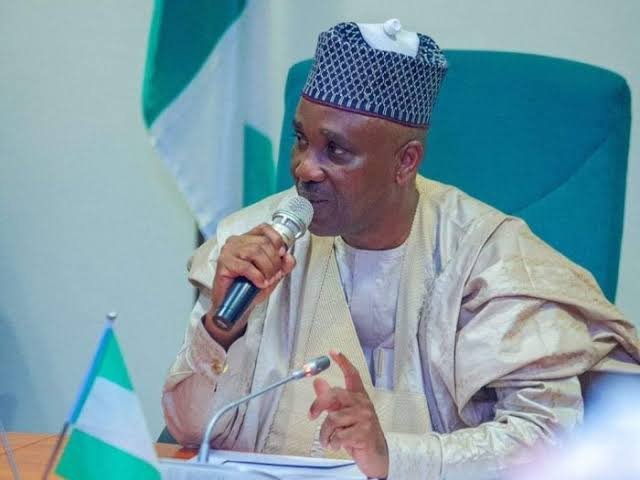
Tax Reforms Act: Civil Society Groups Name Speaker Tajudeen Abbas as Man of the Year

Published

on

*Commend House of Reps for Leading Transparency in Governance

Three prominent civil society organizations, led by the Centre for Social Justice, Equity and Transparency (CESJET), have named Rt. Hon. Tajudeen Abbas, Speaker of the House of Representatives, as the Man of the Year 2025 for his exemplary leadership in promoting transparency, particularly in handling the controversial tax reform laws.

The groups praised Abbas for his pivotal role in championing transparency within Nigeria’s governance framework, particularly through the swift and public release of certified tax reform documents amid swirling controversies.

In a joint statement issued here in Jos on Saturday, the organizations highlighted Abbas’ dedication to accountability as a beacon for Nigerian democracy in their annual review of 2025’s key figures and events.

Signed by Dr. Adebayo Lion Ogorri, Executive Director of CESJET, Comrade James Awe and Danladi Danjuma, the statement described Abbas as a “trailblazer in restoring faith in public institutions.”

It emphasized his decisive actions in overseeing the disclosure of four critical tax reform laws, which were signed into effect by President Bola Ahmed Tinubu.

These measures, the groups argued, not only quelled misinformation but also set a new standard for legislative integrity.

“Abbas’ leadership exemplifies why he deserves this honor,” the statement read. “In a year marked by fiscal challenges and public skepticism, he steered the House toward unprecedented openness.

“By mandating the immediate release of verified copies of the tax acts—including the Nigeria Tax Act, the Nigeria Tax Administration Act, the National Revenue Service Establishment Act, and the Joint Revenue Board Establishment Act—he ensured that Nigerians could access authentic records without delay.

“This move directly addressed concerns over discrepancies in circulating versions, proving his commitment to evidence-driven reforms that prioritize fairness and national development.”

The CSOs built a compelling case for Abbas as Man of the Year by pointing to his hands-on guidance throughout the tax reform journey.

From facilitating broad consultations with stakeholders to leading intense committee reviews and plenary discussions, the groups said Abbas insisted on processes that were inclusive and grounded in Nigeria’s economic needs.

They added that his prompt response to a lawmaker’s alert about inconsistent document versions—triggering an internal probe and public dissemination—demonstrated proactive vigilance.

According to them, this not only safeguarded the laws’ authenticity but also reinforced public trust in the National Assembly as a custodian of accurate records.

“In an era where opacity breeds distrust, Abbas has shown that transparency is not just a policy but a principle,” the statement added, urging other leaders to emulate his approach.

Beyond the tax reforms, the organizations lauded Abbas for navigating numerous political and institutional challenges in 2025, maintaining unity in the House despite intense pressures.

The groups pointed to his role in fostering harmony among diverse interests, facilitating progressive legislation, and championing initiatives like open parliament events that enhanced public engagement and earned global acclaim.

Abbas’ efforts in supporting youth and women empowerment through policies and constituency projects, as well as his active parliamentary diplomacy—positioning Nigeria prominently in regional and international forums—were also highlighted as key achievements.

The CSOs described 2025 as a defining year for the 10th House under Abbas, where he emerged as a pillar of stability, service, and accountability.

Continue Reading
Click to comment

Leave a Reply

Your email address will not be published. Required fields are marked *

Cover

Beyond Arrests: Stakeholders Push Media to Expose Systemic Corruption

Published

on

Stakeholders in Nigeria’s anti-corruption space have called for stronger collaboration between the media, civil society, and government institutions to enhance the implementation of the National Anti-Corruption Strategy (NACS) 2022–2026.

This was the outcome of a one-day workshop themed “Reinvigorating the National Anti-Corruption Strategy (NACS) 2022–2026: A Post-Assessment Roadmap for the Fourth Estate,” which brought together representatives of anti-corruption agencies, civil society organisations, and leadership of the Nigeria Union of Journalists from across the federation and the FCT.

The workshop focused on assessing progress at the midpoint of the NACS and developing a strategic framework to strengthen the role of the media as a watchdog in preventing corruption.

Participants noted that corruption cannot be tackled solely through prosecution, but requires systemic reforms, ethical conduct, and transparency across institutions and society.

They acknowledged that while the NACS provides a robust framework for combating corruption through preventive measures, its impact has been weakened by gaps in coordination among agencies, low public awareness, limited media engagement, political interference, and slow judicial processes.

The workshop further observed that the media, often described as the Fourth Estate, remains underutilised in the prevention pillar of the strategy, with a tendency to focus more on reporting arrests rather than exposing systemic loopholes.

Participants also highlighted the untapped potential of digital forensic tools and artificial intelligence in advancing investigative journalism, stressing that these innovations are yet to be fully integrated into anti-corruption efforts.

Additionally, the need for institutional protection and incentives for whistleblowers and investigative journalists was described as urgent to ensure sustained accountability.

The workshop resolved that anti-corruption agencies should establish dedicated “media desks” to improve real-time access to non-classified information for journalists, thereby promoting transparency and evidence-based reporting.

It also emphasised that the media should be recognised not just as observers but as active drivers of reform, deserving of legal protection and institutional support.

Participants recommended the introduction of specialised training programmes to equip journalists with the skills to better interpret the pillars of the NACS, particularly in areas such as public financial management and ethics compliance.

They urged the media to shift focus from prosecution-driven narratives to preventive advocacy by promoting solution journalism and highlighting institutional reforms that reduce corruption risks.

The workshop also called for expedited legislative action on whistleblower protection to safeguard sources and strengthen investigative reporting.

To ensure sustainability, participants proposed the establishment of a tripartite monitoring committee comprising government, media, and civil society organisations to conduct quarterly reviews of the strategy’s progress up to 2026.

Participants commended the Independent Corrupt Practices and Other Related Offences Commission (ICPC) and other stakeholders for their commitment to advancing anti-corruption efforts, while urging the Federal Government to provide adequate funding to prevent operational constraints.

The workshop reaffirmed that a revitalised and empowered media sector is critical to the success of the National Anti-Corruption Strategy, stressing that journalists must investigate fearlessly, report responsibly, educate citizens, and hold leaders accountable.


The communiqué was jointly signed by Musa Adamu Aliyu, Chairman of ICPC, and Alhassan Yahya Abdullahi, President of the Nigeria Union of Journalists, on behalf of participants.

Continue Reading

Cover

Centre Commends Nigerian Military’s Intensified Operations in North Central, Charges Armed Forces to Deepen Gains and Ensure Peaceful Easter Across The Country

Published

on

The Civic Centre for National Security and Civic Responsibility (CCNSCR) has commended the Chief of Defence Staff, General Olufemi Oluyede, and the Armed Forces of Nigeria for what it described as “notable and encouraging improvements” in security operations across Nigeria’s North Central region.

In a statement issued on Thursday and signed by its Executive Director, Dr Johnson Audu, the group said recent military gains in the region reflect a renewed operational drive and stronger coordination under the current leadership of the Armed Forces.

The group noted that communities across several North Central states, previously plagued by banditry, violent attacks, and persistent security disruptions, are beginning to witness a gradual restoration of order, improved troop presence, and more responsive military interventions.

According to the statement, these developments point to a more proactive and intelligence-driven approach by the military, resulting in the disruption of criminal networks and the containment of threats that had long destabilised parts of the region.

“The Civic Centre for National Security and Civic Responsibility commends the Chief of Defence Staff, General Olufemi Oluyede, for the renewed sense of direction and operational coordination within the Armed Forces. The emerging security improvements across the North Central region are both significant and reassuring,” the statement reads.

The group observed that sustained offensives targeting criminal enclaves, alongside increased surveillance and rapid deployment capabilities, have contributed to weakening the operational capacity of armed groups.

It added that the military’s growing ability to secure key transport routes and respond swiftly to distress situations has helped restore public confidence in affected communities.

Dr Audu said the Armed Forces deserve recognition for maintaining pressure on criminal elements despite the complex and evolving nature of security challenges in the region.

“The men and women of our Armed Forces continue to demonstrate resilience, discipline, and commitment in the face of difficult operational realities. Their efforts in safeguarding lives and stabilising communities across the North Central deserve national commendation,” he said.

While applauding the progress made, the group emphasised that the current gains must be consolidated and sustained to prevent any relapse into widespread insecurity.

It urged the military to intensify ongoing operations and maintain strategic momentum in order to ensure that recent improvements translate into lasting peace across the region.

“These gains, while commendable, remain fragile. It is imperative that the Armed Forces sustain the current operational tempo and continue to apply pressure on criminal elements to ensure that stability is not only achieved but preserved,” the statement added.

The group specifically charged the military leadership to replicate emerging pockets of stability across other troubled areas, stressing that consistent presence and sustained engagement are critical to long-term success.

Looking ahead to the Easter period, the CCNSCR called on the Armed Forces to ensure heightened vigilance and robust deployment to guarantee a peaceful and secure celebration across the country.

“We urge the military to sustain and intensify its efforts to ensure that Nigerians across all regions can observe the forthcoming Easter season in peace and safety. The goal must be to replicate and expand current security improvements nationwide,” the statement said.

The group also underscored the importance of citizen cooperation in supporting the work of security agencies, noting that lasting security cannot be achieved through military action alone.

It called on residents of the North Central region and Nigerians at large to remain vigilant, share credible information with security agencies, and resist any form of collaboration with criminal groups.

“Security is a shared responsibility. Citizens must actively support the Armed Forces through vigilance, cooperation, and a collective rejection of all forms of criminality. The fight against insecurity requires a united national effort,” Dr Audu said.

The statement further encouraged community leaders, civil society groups, and local institutions to strengthen grassroots engagement and promote a culture of peace and mutual responsibility.

It stressed that trust between citizens and the military remains a critical factor in sustaining recent gains and preventing the resurgence of violence.

The CCNSCR concluded by reaffirming its support for the Armed Forces and its commitment to promoting civic participation in national security, urging all stakeholders to remain resolute in the collective effort to secure the nation.

“The progress recorded in the North Central region must serve as a foundation for broader national stability. With sustained military effort and active citizen collaboration, Nigeria can move steadily towards lasting peace and security,” the statement said.

Continue Reading

Cover

New Party, DLA, Unveils Ideological Agenda, Targets Economic Reform, Security

Published

on

A new political party, the Democratic Leadership Alliance (DLA), has announced its entry into Nigeria’s political space, outlining an agenda focused on economic reform, national security, and governance driven by ideology.

In a statement signed by its National Chairman, Samuel M. Memeh, and National Publicity Secretary, Chris Mustapha Nwaokobia Jnr., the party said its formation was in response to Nigeria’s “systemic failure, economic stagnation, and insecurity.”

The party said it is founded on the principles of Pan-Africanism, ethical leadership, scientific advancement, and people-centred governance, which it intends to translate into policy actions.

The DLA said it would pursue a transition from a consumption-based economy to one driven by production, innovation, and industrialisation.

It listed its priorities to include support for local manufacturing, investment in technology and research, and the promotion of youth-led enterprises.

According to the party, Nigeria’s development depends on building systems that enable citizens to create wealth and expand economic opportunities.

The party expressed concern over insecurity affecting farming communities, including the destruction of farmlands and displacement of farmers.

It proposed legislative and policy measures to address the situation, including regulation of cattle movement and the adoption of ranching systems.

The DLA said such measures are necessary to protect farmers, ensure food security, and stabilise the economy.

The party called on Nigerians to support its platform, describing its emergence as part of a broader effort to rebuild the country through collective responsibility.

It said membership is open to individuals who align with its vision and urged citizens to engage with its policies and programmes.

The announcement comes as political activities begin to gather pace ahead of the next election cycle, with new and existing parties seeking to mobilise support.

Continue Reading

Trending

Copyright © 2023 - 2025 DailyMirror Nigeria. Design by AspireWeb.ng, powered by WordPress.