Opinion
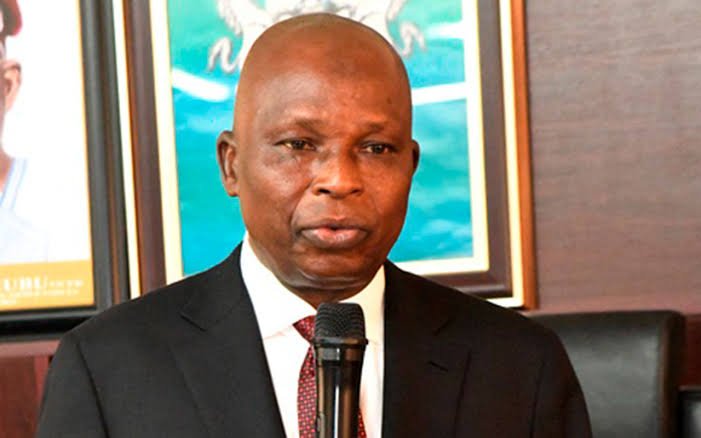
The Quiet Restoration of the Attorney General of Federation’s Office
By Lemmy Ughegbe, Ph.D
For years, the office of the Attorney General of the Federation (AGF) found itself at the centre of controversies that often overshadowed its constitutional importance. Debates raged over whether the office should be separated from that of the Minister of Justice. Critics lamented what they perceived as creeping politicisation, while public confidence in the office steadily eroded.
Today, however, something remarkable appears to be happening. Quietly and without fanfare, the dignity and prestige of that office are being restored. Much of the credit for this belongs to Prince Lateef Olasunkanmi Fagbemi (SAN) whose stewardship as Attorney General of the Federation and Minister of Justice has been marked not by noise, but by professionalism, restraint and a profound respect for the institution he leads.
Against this backdrop, the relative calm that has characterised Fagbemi’s tenure should not be mistaken for inactivity. Far from it. Perhaps his most consequential intervention has been the legal battle for local government autonomy.
For decades, local governments existed largely at the mercy of state governments, with allocations often subjected to varying degrees of control and interference.
Under Fagbemi’s watch, the Federal Government took the politically risky decision of approaching the Supreme Court to challenge the practice.
The resulting judgment, which affirmed the financial autonomy of local governments, may eventually rank among the most important constitutional decisions of the Fourth Republic.
Whatever difficulties may arise in implementation, the case represented a bold attempt to deepen grassroots democracy and strengthen constitutional governance.
In fairness, the AGF has done his bit.The law has spoken. The Supreme Court has pronounced itself in clear and unambiguous terms. The responsibility now shifts from the courtroom to politics and governance.
It is now up to President Bola Ahmed Tinubu to demonstrate the political will required to ensure obedience to the judgment and guarantee that local governments receive their allocations directly from the Federation Account.
History may ultimately judge the case not by the brilliance of the legal arguments that secured victory, but by the fidelity with which the judgment is implemented.
After all, court judgments derive their true value not from the eloquence of their pronouncements, but from the willingness of governments to obey them.
Equally significant has been the increasing emphasis on terrorism prosecutions. For years, Nigerians demanded not merely arrests but convictions. After all, the true test of criminal justice is not simply the apprehension of suspects. It is securing convictions through due process.
The successful prosecution of those responsible for the horrific Owo Catholic Church massacre demonstrated that counterterrorism does not end on the battlefield. It ends in the courtroom.
Security victories are ultimately consolidated through convictions. In this regard, the Ministry of Justice under Fagbemi has played an indispensable role.
Another example of measured leadership emerged during the controversy surrounding the prosecution of minors arrested in connection with the EndBadGovernance protests. Public outrage followed the arraignment of visibly malnourished children on treason charges.
Rather than dig in, the AGF intervened, demanded the case file and subsequently directed that the charges be discontinued. It was a reminder that prosecutorial powers are not merely instruments of punishment. They are also instruments of justice. At a time when emotions were high, the AGF chose restraint over vengeance and compassion over rigidity.
Perhaps equally noteworthy is what has not happened. Unlike previous eras when Attorneys-General frequently found themselves at the centre of public controversies and institutional confrontations, Fagbemi has largely allowed the courts and the law to speak.
He has conducted himself with the restraint, dignity and professionalism expected of the nation’s chief law officer.
Indeed, one of the most striking features of his stewardship has been his evident determination to distance both himself and his office from the temptations of partisan politics.
He has neither sought political relevance nor attempted to transform the office into a platform for political grandstanding.
That distinction matters.
Because the office of the AGF is too important to become merely another political office.
Indeed, for years, legal scholars and public affairs commentators vigorously debated whether the office of the AGF should be separated from that of the Minister of Justice.
The argument was driven largely by concerns that the fusion of both offices often created tensions between professional legal responsibilities and partisan political considerations.
Successive controversies involving some occupants of the office only strengthened calls for such constitutional surgery.
Curiously, the intensity of that debate has diminished considerably under the stewardship of Prince Lateef Olasunkanmi Fagbemi.
Perhaps this is because public confidence has gradually been restored through the conduct of a quintessential gentleman who has approached the office with restraint, professionalism and dignity.
His tenure serves as a reminder that institutions do not always fail because of their design.
Sometimes, they fail because of the character of those entrusted with them.
And sometimes, what appears to require constitutional amendment merely requires the right occupant.
That, perhaps, is one of the quiet but profound lessons of the present stewardship.
No AGF can satisfy everyone.
Nor should any public official be insulated from criticism.
But criticism should not prevent recognition where recognition is deserved.
Perhaps the greatest achievement of the current AGF lies not in any single case.
It lies in restoring dignity and prestige to an office whose credibility had, at different times, come under strain.
Politics rewards noise. History rewards results.
And while it may still be too early to deliver a definitive verdict on his tenure, there are sufficient indicators to suggest that Prince Lateef Olasunkanmi Fagbemi is attempting something increasingly rare in Nigerian public life.
He is placing institution above personality.
Process above spectacle.
Law above politics.
That, in itself, is worthy of notice.
Because in a country often distracted by noise, quiet reforms can sometimes become the most enduring legacy of all.
And perhaps that is the quiet restoration of the AGF’s Office.
Dr Lemmy Ughegbe, FIMC, CMC
lemmyughegbeofficial@gmail.com
WhatsApp ONLY: +2348069716645

Opinion
THE HEROES WE IGNORE
By Lemmy Ughegbe, Ph.D.
When Nigerians think about national security, they think about soldiers. They think about troops advancing through difficult terrain, fighter jets pounding enemy positions and dramatic gun battles. What they rarely think about is intelligence.
Yet intelligence is where victory usually begins. Before the arrest comes surveillance. Before the rescue comes information. Before a terrorist commander is eliminated, somebody must first know who he is, where he hides, how he moves and who sustains him.
That is the work of intelligence. And if recent events are anything to go by, Nigeria’s intelligence community deserves far more recognition than it currently receives.
On May 16, 2026, United States and Nigerian forces carried out what President Donald Trump described as a “meticulously planned and very complex mission” that eliminated Abu-Bilal al-Minuki, the second-in-command of ISIS globally.
Perhaps the most revealing testimony came from General Dagvin Anderson, Commander of the United States Africa Command, who stated that Nigerian authorities were instrumental in developing the target and providing the intelligence that made the operation possible.
Think about that for a moment.
Nigeria’s intelligence agencies helped the world’s most powerful military hunt down and eliminate the number two figure in ISIS.
That should have dominated headlines.
Instead, it passed almost unnoticed.
And that was not all.
Only recently, the Department of State Services arrested five suspects, including two foreign nationals, linked to the logistics network behind the attack on St. Mary’s Catholic School in Papiri, Niger State. Fifteen AK-47 rifles and more than 1,400 rounds of ammunition were recovered from the suspects.
Earlier, painstaking investigations and years of intelligence work culminated in the conviction and death sentences handed to terrorists involved in the horrific Owo Catholic Church massacre.
These are not ordinary achievements.
They are major victories against terrorism.
Yet we are not celebrating enough.
Part of the problem lies in how we consume security news.
There is an unhealthy tendency, particularly on social media, to amplify every attack while paying scant attention to breakthroughs. Some individuals even recycle images from conflicts elsewhere in Africa and falsely present them as recent incidents in Nigeria.
That is not journalism.
It is propaganda.
And it serves the interests of terrorists.
Terrorist organisations thrive on fear. Their objective is not merely to kill but to demoralise societies and create the impression that governments are powerless.
When citizens endlessly circulate images of destruction while ignoring victories, they unwittingly become amplifiers of the enemy’s message.
Other countries understand this.
After the September 11 attacks, Americans rallied against Al-Qaeda. Following the October 2023 Hamas attacks, Israelis united in confronting Hamas.
This does not mean governments should be shielded from criticism. Democracies thrive on accountability.
But before politics comes survival.
Before the 2027 elections, there must first be a country.
The war against insecurity should never become another casualty of partisan passions.
This is why community policing and intelligence sharing deserve serious attention.
No government can deploy enough security personnel to effectively police over 220 million Nigerians. Intelligence must flow from communities, and communities must trust the institutions established to protect them.
Trust grows when citizens see results.
And when results come, they should be acknowledged.
There is another angle that deserves serious consideration.
The DSS is presently prosecuting suspects linked to some of Nigeria’s most devastating terrorist attacks, including the bombing of the United Nations building in Abuja, the attack on the Deeper Life Bible Church in Okene and the Owo Catholic Church massacre.
It is therefore worth asking whether some recent attacks may represent retaliation by foot soldiers seeking revenge for the arrest and prosecution of their leaders.
If that is the case, the answer cannot be retreat. The answer is more intelligence.
The answer is faster trials. The answer is more convictions.
Since assuming office in 2024, DSS Director-General Oluwatosin Ajayi appears to have placed greater emphasis on intelligence-driven prevention. Terrorist cells have been penetrated. Kidnapping syndicates have been disrupted. Arms trafficking networks have increasingly come under pressure.
That is a story worth telling.
But beyond the headlines and the arrests are sacrifices that seldom receive public attention.
An increasing number of operatives of the Department of State Services have paid the ultimate price in the line of duty. Others have sustained life-changing injuries. Their names rarely trend. Their funerals seldom make front pages. Their families bear losses that the nation scarcely notices.
Yet, these men and women willingly place themselves between danger and the rest of us. They are among the quiet guardians of the Republic.
Certainly, Nigeria’s security challenges remain enormous and no institution should be immune from scrutiny. But accountability and appreciation are not opposites.
A democracy that notices its security agencies only when they fail, while refusing to acknowledge them when they succeed, risks creating a culture that rewards cynicism and forgetfulness.
The men and women of our intelligence services work in the shadows. They seldom appear on television. They rarely grant interviews. Many will never receive medals or public acclaim. Some have paid the ultimate price so that others may live.
Yet every terrorist attack prevented, every bomb intercepted, every kidnap victim rescued and every peaceful morning that millions of Nigerians wake up to owes something to their patient, invisible and dangerous work.
Perhaps the greatest victories are not always the ones we see. Sometimes, the most important victories are the tragedies that never happened because someone, somewhere, working quietly in the shadows, stopped them before they began.
Those men and women are the heroes we ignore. They deserve our gratitude.
They deserve our remembrance. And yes, they deserve our celebration
Email: lemmyughegbeofficial +2348069716645
Opinion
The Role of Intelligence in the Nigeria-US Joint Counter-Terrorism Operations That Neutralized Top ISWAP Commander, Fighters
By Augustine Aminu
On Friday, May 16, 2026, the world was jolted by news of the killing of top commander of the Islamic State’s West Africa Province (ISWAP), Abour Mainok and several other fighters. Also known as Abu Bilal al-Minuki, and considered the second-in-command of ISIL (ISIS) globally, the top terrorist commander was reportedly killed during a joint Nigeria-U.S. Counter Terrorism operation in Metele, Borno State.
Ever since the elimination of al-Minuki, considered one of the biggest blows in recent times to terrorists in the world over, torrents of encomium have been pouring in for the Nigeria -U. S. joint terrorism operations.
Posting on his Truth Social handle, U. S. President Donald Trump, wrote, “Brave American forces and the Armed Forces of Nigeria flawlessly executed a meticulously planned and very complex mission to eliminate the most active terrorist in the world from the battlefield,”
Al-Minuki, added President Trump, “thought he could hide in Africa, but little did he know we had sources who kept us informed on what he was doing.”
On his part, President Bola Tinubu stated that both countries had “recorded a significant example of effective collaboration in the fight against terrorism”.
Early assessments indicate that al-Minuki, along with “several of his lieutenants,” were killed during a strike on his compound in Metele, Borno State,” Tinubu said.
“Nigeria appreciates this partnership with the United States in advancing our shared security objectives,” he added. “I extend my sincere gratitude to President Trump for his leadership and unwavering support in this effort,” he added.
A few days after President Trump praised Nigerian Intelligence services for helping to hunt down Abu-Bilal al-Minuki, a man he described as “the most active terrorist in the world,” US Air Force General, Dagvin R.M. Anderson, Commander of U.S. Africa Command, also spoke glowingly of Nigeria’s Intelligence services.
Remarked Anderson, “The Nigerians have been instrumental throughout the last several months, developing the target, helping us with the Intelligence and providing support. So, it could not have been done by our own Forces. We needed to do that in conjunction with them.”
Security sources who analyzed President Trump’s terse statement, alongside that of the to head of AFRICOM, General Anderson, were quick to point out that the “sources” who kept the United States and Nigerian Armed Forces informed of the movements of al-Minuki and his fighters, may be none other than Nigeria’s Intelligence agencies: the Department of State Services (DSS), the Nigerian Intelligence Agency (NIA), and Defence Intelligence Agency (DIA).
Interestingly, six days before al-Minuki’s elimination, something crucial to the fight against terrorism happened in one North central town, well over 1,100 kilometres away from Metele, Borno State, where al-Minuki and over 175 of his fighters would meet their Waterloo.
Just as DSS, NIA and DIA operatives were helping US and Nigerian troops monitor the movement of Al-Minuki and his fighters around the Lake Chad region, a set of DSS operatives covertly captured a notorious leader of one of ISWAP’s critical cell in Nigeria . His name is Abdulrahman Ozovieh Muhammad alias Abu Ghozi.
Abu Ghozi, security sources believe, masterminded the December 2020 attack on a military checkpoint in Okene, killing two naval personnel and carting away their weapons.
Additionally, Abu Ghozi is believed to have masterminded the 11th March, 2021 bank robbery at Okuku, in Oda-Atin LGA of Osun State; carried out several attacks on police formations in Okene, Okehi and Adavi LGAs. He didn’t spare security checkpoints along Okene-Auchi, Okene –Kabba and Okene-Ajaokuta roads.
Also believed to be behind several kidnaps, including the October 2025 kidnap of a Chinese national in Okpella, Edo State, during which eight personnel of the Nigerian Security and Civil Defence Corps (NSCDC) were killed, is Abu Ghozi.
In January, 2026, his group reportedly attacked and burnt down the house of the Chief Priest at Uhodo area of Okehi LGA. Members of his suspected terrorist group were, before his arrest by the DSS, reportedly set to attack detention facilities in Kainji and Abuja, to release detained members of their group.
Security sources believe that Abu Ghozi’s capture by DSS officers may have greatly helped the Nigerian Intelligence Services (DSS, NIA and DIA) gather further Intelligence that was ultimately used to nail al-Minuki and his fighters six days later in faraway Metele, Borno State.
No doubt, Nigeria’s Intelligence community and their military counterpart again proved very invaluable to the recent successes in the global fight against terrorism, and helped position Nigeria as a very trusted ally in the fight against terrorism.
For the first time since Nigeria began fighting terrorism circa 2010, the country has now fully turned the heat on terrorists, smoking them.out on a daily basis.. The recent successes recorded shows that with our Armed Forces increasingly relying on the intelligence supplied by the DSS, NIA and DIA, Nigeria will sooner than later overcome her security challenges.
Aminu has been online editor of several newspapers, and lives in Abuja
Opinion
When Propaganda Failed: How Silence Betrayed the Campaign Against Egbetokun
In Nigeria’s modern political and media environment, public figures often find themselves subjected to intense scrutiny. Criticism, accountability, and public debate are essential pillars of democracy. However, there are moments when criticism crosses the line into calculated campaigns of disinformation, propaganda, and deliberate character assassination.
The controversy surrounding former Inspector-General of Police, Kayode Egbetokun, now appears to be one of those moments.
For months, Nigerians witnessed a relentless media campaign aimed at discrediting the former police chief. From sensational headlines to coordinated social media narratives, the objective appeared obvious: damage the reputation of a man whose policing career spanned decades of service, sacrifice, and professional commitment to the Nigerian state.
Today, however, the sudden silence from many of those voices has exposed the campaign for what it truly was.Among the loudest promoters of the attacks was Omoyele Sowore and his media platform.
The moment Egbetokun attained the age of 60 in September 2024, he was immediately branded an “illegal IGP” by activists and commentators who neither possessed constitutional authority nor the legal mandate to interpret the law beyond the courts.Yet Nigeria is governed by laws, not media outrage, activism, or social media campaigns.
The legal position regarding the tenure of the Inspector-General of Police was already clear. Section 7(6) of the Nigeria Police Act guarantees a four-year tenure for an appointed Inspector-General of Police. More importantly, the Nigeria Police Act (Amendment) Bill, 2024, introduced Section 18(8A), which expressly clarified that an Inspector-General of Police shall complete the statutory tenure attached to the office regardless of retirement rules concerning age or years of service.
That amendment became law in July 2024, months before Egbetokun turned 60.This single legal reality fundamentally weakened the narrative being aggressively promoted in certain political and media circles. The amendment was neither hidden nor ambiguous. It was publicly enacted legislation designed specifically to avoid instability and unnecessary disruptions in police leadership.
What makes the entire episode even more revealing is what did not happen.Despite the daily outrage, media pressure, protests, interviews, and repeated declarations that Egbetokun was “occupying office illegally,” no serious legal challenge was successfully pursued against his tenure. Ironically, many of those leading the media attacks were already frequent visitors to the Federal High Court in Abuja on various matters.If the appointment was truly unconstitutional, why was there no decisive judicial confrontation?
The answer appears increasingly obvious: those driving the narrative likely understood that the law itself did not support their claims.Even more revealing is the silence surrounding the current Inspector-General of Police, Olatunji Rilwan Disu, who reportedly turned 60 on April 13, 2026. During interviews around the Federal High Court, Abuja, Sowore publicly threatened to also label Disu an “illegal IGP.”Yet weeks later, that threat has remained largely rhetorical.
No sustained media outrage. No coordinated campaigns. No daily headlines. No dramatic accusations.That silence has unintentionally exposed what many Nigerians had already begun to suspect: the attacks against Egbetokun may never have been about constitutional principles alone, but rather selective outrage shaped by other motives.
Today, Egbetokun appears more peaceful and relaxed in retirement. Curiously, many of the dramatic allegations and sensational “exposés” that once flooded social media have suddenly disappeared. The circulation of questionable police documents has faded. The orchestrated scandals have evaporated. The noise has reduced because the mission the propaganda served has apparently ended.
History, however, has a unique way of exposing conspiracies and separating truth from manufactured narratives.The Holy Bible states in Proverbs 24:8: “He who plots evil will be called a schemer.” Proverbs 26:27 further warns: “Whoever digs a pit will fall into it; if someone rolls a stone, it will roll back on them.”These verses resonate strongly with the events that unfolded around the former police chief.
Many of the allegations levelled against Egbetokun gradually collapsed under public scrutiny, reinforcing the belief among his supporters that much of the campaign was carefully designed to tarnish the image of a career police officer who devoted much of his life to national service.
This is not to suggest that public officials should be shielded from criticism. Far from it. In every democracy, scrutiny remains necessary for transparency and accountability. But there is an important distinction between constructive criticism and a coordinated attempt to destroy reputations through misinformation, exaggeration, and politically motivated propaganda.
As Nigeria continues to strengthen its democratic institutions, the media and civil society must also recognize the responsibility that comes with influence. Activism is powerful, but when mixed with selective outrage and unverified narratives, it risks undermining public trust and weakening legitimate democratic engagement.
Now retired, Egbetokun can enjoy the peace that often accompanies a clear conscience and years of service rendered to one’s nation. More importantly, Nigeria still needs experienced professionals like him. His institutional knowledge, policing expertise, and strategic understanding of national security remain valuable assets that can still contribute meaningfully to the country’s security architecture and public sector development.
In the end, truth possesses a stubborn quality that propaganda can never permanently suppress.Campaigns fade. Narratives collapse. Silence eventually speaks.And sometimes, silence exposes the conspiracy more loudly than words ever could.
-
Cover9 months agoNRC to reposition train services nationwide.. Kayode Opeifa
-
Fashion9 years agoThese ’90s fashion trends are making a comeback in 2017
-
Entertainment9 years agoThe final 6 ‘Game of Thrones’ episodes might feel like a full season
-
Politics2 months agoNNPP Diaspora Stakeholder and Key Kwankwaso Ally, Dr. Usman Tijjani Shehu, Rejoins APC
-
Opinion1 year agoBureaucratic Soldier, Kana Ibrahim heads Ministry of Aviation and Aerospace After Transformative Tenure at Defence
-
Opinion1 year agoHon. Daniel Amos Shatters Records, Surpasses Predecessor’s Achievements in Just Two Years
-
Opinion6 months agoBarrister Somayina Chigbue, Esq: A rising legal leader shaping institutioal excellence in Nigeria
-
News10 months agoNigerian Nafisa defeats 69 Countries at UK Global Final English Competition