
Uncategorized
NAPTIP, media as partners against stigmatisation of human trafficking survivors

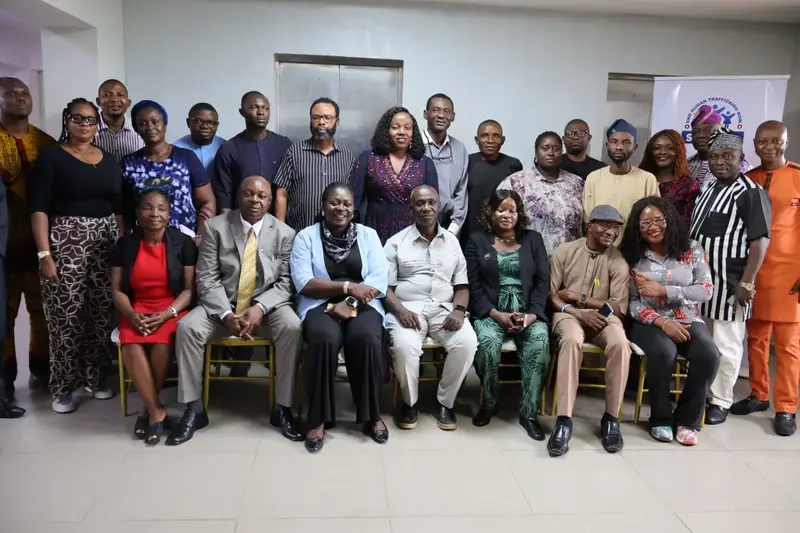
The disturbing trend of human trafficking in Nigeria and Sub-Saharan Africa is deepening daily with survivors withdrawing from telling their stories due to societal, psychological and depressive public reactions.
Experts say stigmatising victims (survivors) of human trafficking has lowered the flag in the fight against human trafficking in the sub-region.
The larger society, the anti-graft agencies, their partners including the media, have been challenged to reawaken the fight against the heinous crime of human trafficking, if the battle must be won in Nigeria.
It is only when the survivors speak out that the culprits could be traced and apprehended.
Conversely, reports and publications that stigmatise can send them into state of hibernation or dumbness.
To address this challenge, the National Agency for the Trafficking In Persons (NAPTIP), in collaboration with the International Centre for Migration Policy Development (ICMPD), organised a two-day workshop for no fewer than 50 journalists and Civil Society Organisations(CSOs) in Benin, Edo.
The workshop with the theme, “Ethical Media Reporting Training on Human Trafficking and Irregular Migration”, drew participants from five states of Ogun, Delta, Edo, Enugu and Benue.
The training was geared towards achieving the Schools Anti-Trafficking Education and Advocacy Project (STEAP) project.
It aimed to expose the media and the CSOs on ethical reporting of Trafficking in Persons (TIP) without injuring or harming the survivors.
The whole idea is to equip journalists and the CSOs with the tools, legal, national and international treaties as well as social norms that ensure the rights of survivors are protected with the use of right words and approaches.
The various speakers at the event stressed on the need for stakeholders to avoid any act, report or publication that suggests stigmatisation, sensationalisation and stereotypes that promote discrimination, hatred, or bias about a person, group, race, community, state or nation.
According to the speakers, survivors of human trafficking already have harrowing experiences in the hands of the traffickers.
“So, subjecting them into any other form of trauma will not only further dehumanise but cause them to withdraw from the society due to stigma.’’
According to NAPTIP and ICMPD, there is a need for to find better ways of protecting the survivors’ identity, get them to speak, tell their stories and suggest ways of rehabilitating and reintegrating them back to the society.
Speaking at the workshop, the Director General, NAPTIP, Hajia Binta Bello, described human trafficking as modern day slavery.
She lamented the emerging trends by traffickers to trick and trap their victims and acknowledged the role of the media as a critical partner in tackling human trafficking activities in the country.
Bello, represented by the Benin Zonal Commander, Mr Sam Offiah, said the workshop aimed at fostering mutual understanding on issues of human trafficking and migration in the country.
She added that the partnership with the ICMPD underscored NAPTIP’s commitment to building the capacity of media partners to accurately report issues about TIP.
Bello expressed hope that the partnership would ensure a unified front against human trafficking, enhance collective capabilities, produce informed and responsible journalism that would educate the public and drive action towards eradicating the heinous crime.
Bello said that NAPTIP would continue to strengthen collaborations with all state and non-state actors to eradicate human trafficking in the Country.
According to her, the agency will upscale strategies to increase the interception and rescue of victims of human trafficking, improve partnership and policy implementation, increase enlightenment and awareness, and ultimately, ensure prosecution of offenders (traffickers).
Also, Mrs Rhoda Dia-Johnson of the ICMPD said that the STEAP, a four- year project initiated in 2024, was funded by the Government of Netherlands to support Nigerian Government in preventing human trafficking in school community through awareness and capacity building of key stakeholders
According to her, STEAP project has been identified as a potent tool for combating human trafficking in school community.
Dia-Johnson said that ICMPD, as an NGO, was established in 1993 in Vienna with 21 member states, but operational in more than 90 countries.
She said STEAP projects had been instituted in 250 schools and initiated in 50 schools in each of the participating five pilot states of Benue, Edo, Delta, Enugu and Ogun.
The ICMPD representative said that human trafficking and irregular migration had challenged the country, by threatening the safety, dignity, and future of countless individuals.
Dia-Johnson, in her presentation on “Strengthening Ethical Media Reporting as well as Monitoring and Evaluation Practices Toward Anti-Trafficking”, described journalists as not only conveyors of information, but watchdogs, educators, and drivers of social change.
She said that sensationalism, misreporting, and stigmatisation of victims could undermine awareness campaigns, delay survivor recovery, and even weaken national and international counter-trafficking efforts.
According to her, the workshop is to build participants’ capacity in two critical areas of Ethical Media Reporting and Monitoring, Evaluation and Learning, especially in strengthening the ability of STEAP project.
“This will strengthen partnership, track results, use evidence for learning, and improve programme implementation.
“It will ensure that interventions were not only visible but effective, accountable, and impactful.
“The participants are expected to leave with practical tools, stronger networks, and renewed commitment to ethical storytelling and evidence-driven programming, with a view to amplifying the voices of human trafficking survivors and foster collaboration among stakeholders,” she said.
NAPTIP Press Officer, Abuja, Mr Vincent Adekoya, in his presentation on “Overview of Human Trafficking and Irregular Migration in Nigeria” urged media intervention to halt the evolving trends of human trafficking in Nigeria.
He said human trafficking had visible features like recruitment, transportation, transfer, and harbouring of victims.
Adekoya said there were three basic elements were the Means, the Act and Purpose of Trafficking.
According to Adekoya, the Means- include the use of force, coercion and abuse of power; the Act -has to do with recruitment, transportation; while the Purpose, entails intention for exploitation.
He also said that the push and pull factors of why people were trafficked include poverty, greed, peer groups and family influence, better opportunities, high demand for cheap labour among others.
Adekoya said that human trafficking as modern day slavery, exposed victims to sex for money, forced labour and human organ harvesting for money.
He said the traffickers often subjected victims to intimidation and oath taking so as to instill fear and avoid speaking out when rescued and even death threats to deter them from escaping their grip.
According to the NAPTIP Officer, the emerging trends include the use of social media apps and space to entangle unsuspecting victims, particularly youths and young children of school age.
“Other avenues employed by traffickers include the Q-Net or Q-link, cryptic pregnancy, baby factory, orphanages, fishing, hunting and adverts for non-existing football clubs, jobs and fake scholarships for students, among others to bait and trap victims.”
Adekoya said that though human trafficking trend emerged in late 1980s in Nigeria, NAPTIP had rescued more than 22,000 victims and had tried and convicted no fewer than 750 traffickers in the country.
He described the evolving trends of trafficking in Nigeria as a national crisis requiring the collective efforts of all stakeholders, particularly, the media to help expose the ills so as to curb the trend.
Adekoya said it was rather disheartening that trafficked persons were taken to work in countries like Iraq, Saudi Arabia, Ghana, Central African Republic and Kuwait among other poor nations in forced labour by traffickers who also rob them of their monies.
A communication and media Expert, Blessing Lass, advocated developmental reporting on national and societal issues to drive change.
In all, participants were exposed to legal implications of defamation and libel as well as human rights breaches and social cyber stoking rules to ensure the media are properly guided on how to safely report human trafficking issues.


Flood destroys homes, fish ponds, farms in Niger

LaLiga: Why I Played Ademola Lookman As No. 9 Against Málaga – Diego Simeone

NIPSS, Kano govt recognise ENGAUSA founder for orange economy contribution

Now Hiring: Academic and Technical Staff at a Leading Private University in Gombe State

LAUTECH 18th Convocation: EEE Class ’05 Alumni Celebrate as Electronic and Electrical Engineering Department Produced the School’s Overall Best Graduating Student


