Cover
Obi Calls Tinubu, Courts to Account Over NDC Crisis
— But Gov Sani Says Check Your Mirror First
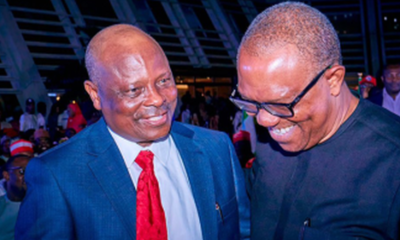
Peter Obi stood before students at Madonna University in Anambra State last Friday. They pointed an accusing finger at President Bola Tinubu, declaring that the federal government was doing “everything possible” to stop him from contesting the 2027 presidential election.
Hours earlier, a Federal High Court in Lokoja, Kogi State, had reversed its December 2025 order compelling the Independent National Electoral Commission to recognise the Nigeria Democratic Congress, the party under whose banner Obi now seeks the presidency. The reversal, delivered by Justice Isah Dashen in Suit No. FHC/LKJ/CS/49/2025 came on an application filed by the Peace Movement Party, which argued it was a necessary party to the original suit and had been denied a fair hearing.
Obi’s camp described the ruling as a “bizarre temporary breakdown,” a calculated suppression of opposition, and evidence of institutional resistance to their movement. His supporters called it judicial banditry. His House of Representatives caucus called it a coup against democracy.
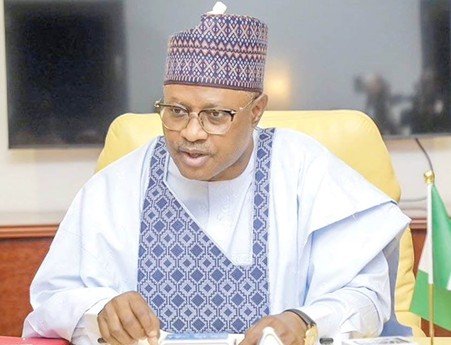
Then Kaduna State Governor Uba Sani stepped in with a different perspective — and a reminder.
Speaking on ARISE NEWS on Tuesday, Sani did not dispute that courts can make contestable decisions. He did not defend the Lokoja judgment or attack the NDC. What he did was turn the mirror toward Obi and the broader class of politicians who alternately venerate and vilify the judiciary depending on which way a ruling cut.
“Many actors who are involved were also beneficiaries of some judicial decisions in this country,” Sani said. “Whether the leader of NDC himself — I mean the presidential candidate, Peter Obi — remember he was also someone that benefited from a very strong judicial pronouncement when he was governor.”
The reference was precise. In 2006, the Supreme Court of Nigeria restored Obi to the governorship of Anambra State after his predecessor, Chris Ngige, was removed. The ruling not only reinstated Obi but extended his tenure, effectively resetting the clock on his administration and giving him the political foundation from which his national profile was built. That ruling, celebrated at the time by Obi’s supporters as justice prevailing, was a court decision — the same kind of institutional act now being labelled a tool of oppression.
Sani’s argument was not that the NDC ruling was correct. His argument was about consistency. Politicians who treat the courts as sacred guardians when verdicts go their way cannot credibly dismiss those same courts as instruments of tyranny when verdicts go against them.
ALSO READ
Sowore’s N200m Bail Terms Draw Protest, Groups Condemnation
“When it favours politicians, they feel the judiciary is the best place to go. When it goes against them, they feel the judiciary is the worst place to go,” the governor said.
The broader context sharpens the point. Obi, the PDP faction led by Tanimu Turaki, the NDC’s House of Representatives caucus, the Obidient Movement and the Kwankwasiyya Movement all condemned the Lokoja judgment, alleging it formed part of a wider plot to weaken opposition ahead of 2027. Obi directly accused Tinubu of using the courts to scuttle his presidential ambition, a claim the governor’s office has not publicly addressed.
Sani rejected that entire line of argument, demanding evidence before accepting the ruling-party-interference narrative.
“What is the evidence that the ruling party is involved in what is happening to them?” he asked. “If you ask me, sincerely speaking, it’s simply because they are only jumping from one party to another looking for just a platform to contest the election. They are not organised.”
The governor’s assessment touches a real structural weakness. The NDC’s own legal situation arose partly from a dispute with the Peace Movement Party over a logo — a procedural vulnerability that a more thoroughly organised party might have anticipated and resolved before it became a courtroom liability.
The NDC has since held emergency meetings involving Obi, National Leader Seriake Dickson, Kwankwaso and National Working Committee members to prepare an appeal at the Court of Appeal. The party’s national chairman, Senator Moses Cleopas, has insisted the NDC has not been deregistered and that all candidates, including Obi and Kwankwaso, remain on course for the 2027 election.
Senior lawyers have supported the NDC’s right to appeal. Senior Advocate Adedayo Adedeji confirmed that the constitution guarantees parties affected by Federal High Court decisions the right to seek redress at the Court of Appeal, and that the Lokoja ruling does not automatically prevent the party or its candidates from participating in future elections.
Sani did not argue that the courts are beyond criticism. He acknowledged directly that no judiciary anywhere in the world is perfect. What he insisted on was that democrats must maintain faith in the system even when it produces unfavourable outcomes — and must pursue redress through legitimate legal channels rather than media campaigns that corrode public confidence in judicial institutions.
“You have to understand, if you’re a democrat, believe in the system,” he said. “Our judiciary is not perfect. Neither is it perfect anywhere in the world. But in any case, can we have faith in the system?”
The question carries weight beyond the NDC. As Nigeria moves deeper into its 2027 election cycle, the pattern Sani describes — selective judicial allegiance — continues to define how political parties engage with the courts. Parties and candidates invoke judicial authority when it serves them and denounce it when it does not, a cycle that weakens institutional credibility with each repetition.
For Obi, whose 2023 presidential campaign was built significantly on a platform of institutional integrity and rule of law, Sani’s reminder presents a reputational challenge that goes beyond the NDC’s current legal battle.

Cover
England Edge DR Congo In World Cup Thriller
England overcame a spirited DR Congo side in a gripping World Cup encounter that kept fans on edge until the final whistle. The match, played under an intense atmosphere, highlighted England’s tactical strength and DR Congo’s determination despite the eventual defeat.
England began with confidence, controlling possession and pressing high. Their midfield trio dictated the tempo, with Jude Bellingham orchestrating play and Bukayo Saka stretching the Congolese defence on the wings.
Harry Kane opened the scoring midway through the first half, finishing calmly after a precise pass from Phil Foden. The goal settled England, but DR Congo refused to fold.
Moments later, DR Congo equalised through Yoane Wissa, who capitalised on a defensive lapse to slot past Jordan Pickford. The equaliser stunned England and energised the Congolese supporters.
The half ended 1-1, reflecting the balance of play and the determination of both sides.
England returned stronger after the break. Their pressing forced DR Congo into errors, and Declan Rice’s dominance in midfield gave them control.
ALSO READ
Naomi Osaka Blends Fashion and Focus at Wimbledon
Marcus Rashford restored England’s lead with a powerful strike from the edge of the box. The goal shifted momentum firmly in England’s favour.
DR Congo, however, continued to fight. Cedric Bakambu tested Pickford with a close-range effort, but the England goalkeeper produced a crucial save.
England sealed the contest late in the half when Kane converted a penalty after Saka was fouled in the box. The third goal ended DR Congo’s hopes of a comeback.
England’s tactical discipline proved decisive. Gareth Southgate’s side combined structured pressing with quick transitions, while DR Congo relied on counter-attacks and physical duels.
Despite the defeat, DR Congo impressed with their resilience and attacking intent. Their ability to challenge England highlighted their progress on the global stage.
Supporters from both nations created a vibrant atmosphere. England fans celebrated the victory, while DR Congo’s faithful applauded their team’s fighting spirit.
The win strengthens England’s position in the group, boosting their chances of advancing to the knockout stage. For DR Congo, the defeat complicates their campaign but leaves room for recovery in upcoming fixtures.
England’s 2-1 victory over DR Congo was a contest of skill, resilience, and tactical execution. While England celebrated their progress, DR Congo earned respect for their spirited performance.
The match underlined the drama of the World Cup, where every game carries weight, and every team fights for pride and progress.
Cover
Naomi Osaka Blends Fashion and Focus at Wimbledon
Naomi Osaka’s return to Wimbledon has been marked not only by her strong performances on court but also by her striking fashion choices, which she says help her manage nerves and embrace her cultural identity.
The four-time Grand Slam champion defeated Russian qualifier Anastasia Gasanova 6-3, 6-2 in her second-round match, but much of the attention before play began was on her entrance.
Osaka arrived in a flowing train, a traditional sash, and a bomber jacket embroidered with flowers. The outfit was less dramatic than her opening-round kimono-inspired ensemble, yet it still drew photographers and fans during her walk to No. 2 Court.
She explained that fashion has become part of her mental preparation. “I do feel a little bit of nerves stepping on to the court. I want to make myself so used to that feeling that it doesn’t bother me anymore. And fashion helps,” she said.
Her outfits are not random. Osaka has used Wimbledon’s traditions to highlight her Japanese and Haitian heritage. The embroidered kimono she wore earlier in the tournament paid tribute to Japanese culture, while her latest look mixed traditional elements with modern sportswear.
She noted that her inspiration often comes from Harajuku, Tokyo’s vibrant fashion district. “You go to Harajuku and you see everyone expressing themselves through clothes. It was just so cool and colourful. That stuck out to me a lot. I use that in my fashion experimentation,” she explained.
Osaka has often described herself as shy, admitting she sometimes mutes text conversations to avoid the pressure of replying. Yet her entrances place her at the centre of attention. This contrast between her reserved personality and bold fashion choices has become a subplot of her comeback since giving birth to her daughter in 2023.
ALSO READ
Mexico, Ecuador Share Spoils in Fierce Contest
Critics have questioned whether her outfits distract from tennis, but Osaka insists there is no grand plan. “I don’t really ever have a plan when it comes to clothes. I think it’s OK to try something and fail, but I’d rather just try it and see how it goes,” she said.
Despite the attention on her fashion, Osaka’s tennis remains sharp. Against Gasanova, she struck cleanly from the baseline and dictated rallies with authority. The straight-sets victory secured her place in the third round, continuing her encouraging return to form.
She will next face Daria Kasatkina of Australia, a match that promises to test her growing confidence on grass.
Osaka also revealed a personal motivation for staying longer in the tournament. “Tomorrow is my daughter’s birthday and I just wanted to be here for longer. I didn’t want to make her get on a plane on her birthday,” she said.
Her comments underline how motherhood has reshaped her priorities, blending family life with professional ambition.
Osaka’s willingness to experiment with fashion has encouraged other players to embrace individuality. She praised Taylor Fritz’s Hugo Boss suit, which echoed Roger Federer’s 2007 Wimbledon look, as “pretty cool”.
By combining cultural pride, personal coping strategies, and competitive focus, Osaka has turned her entrances into more than just spectacle. They are part of her journey to balance identity, nerves, and performance on one of tennis’s biggest stages.
Naomi Osaka’s Wimbledon campaign is proving to be about more than tennis. Her fashion choices, rooted in heritage and self-expression, have become tools to manage pressure while inspiring conversations about individuality in sport. As she advances, both her play and her entrances will continue to capture global attention.
Cover
Mexico, Ecuador Share Spoils in Fierce Contest
Mexico and Ecuador played out a tense draw in today’s international fixture, delivering a contest marked by tactical discipline, defensive resilience, and flashes of attacking brilliance.
The match, staged before a lively crowd, ended with both teams unable to break the deadlock despite several promising chances.
Mexico started brightly, pressing high and forcing Ecuador into defensive errors. Their midfield trio controlled possession in the opening minutes, with Alexis Vega and Santiago Giménez combining well in attack.
Ecuador responded with pace on the counter, relying on Enner Valencia’s movement and Moisés Caicedo’s control in midfield. The South Americans created two clear chances midway through the half, but Mexico’s goalkeeper stood firm.
Both sides traded opportunities, but the first half ended goalless, reflecting the balance of play.
The second half opened with Ecuador pushing forward aggressively. Valencia tested the Mexican defence with a powerful strike that narrowly missed the target.
Mexico regrouped quickly, with Giménez forcing a save from Ecuador’s goalkeeper after a well-worked move down the left flank. The game grew more physical, with both teams committing fouls to disrupt rhythm.
Despite the intensity, neither side found the breakthrough. Mexico’s defence, marshalled by César Montes, held firm against Ecuador’s late surge.
ALSO READ
Haaland’s Goal Sends Norway Past Côte d’Ivoire Into Last 16
The match highlighted both teams’ tactical awareness. Mexico relied on structured pressing and quick transitions, while Ecuador focused on compact defending and counterattacks.
Coaches from both sides made substitutions to inject energy, but the tactical battle remained evenly matched.
Supporters from both nations applauded the effort, though many expressed frustration at missed opportunities. The atmosphere remained electric throughout, with chants and drums echoing across the stadium.
The draw leaves both teams with positives and concerns. Mexico showed resilience but lacked clinical finishing. Ecuador demonstrated defensive organisation but struggled to convert chances.
For both sides, the match serves as preparation for upcoming qualifiers, where sharper execution will be crucial.
Mexico and Ecuador delivered a contest that showcased determination, tactical balance, and competitive spirit. While the scoreline remained level, the match provided valuable lessons for both teams as they look ahead to future challenges.
The result may not have produced a winner, but it confirmed the strength and ambition of two sides determined to make their mark on the international stage.
-
Branded Content6 days agoNow Hiring: Academic and Technical Staff at a Leading Private University in Gombe State
-
Cover10 months agoNRC to reposition train services nationwide.. Kayode Opeifa
-
Fashion9 years agoThese ’90s fashion trends are making a comeback in 2017
-
Entertainment9 years agoThe final 6 ‘Game of Thrones’ episodes might feel like a full season
-
Politics3 months agoNNPP Diaspora Stakeholder and Key Kwankwaso Ally, Dr. Usman Tijjani Shehu, Rejoins APC
-
Opinion2 years agoBureaucratic Soldier, Kana Ibrahim heads Ministry of Aviation and Aerospace After Transformative Tenure at Defence
-
Opinion1 year agoHon. Daniel Amos Shatters Records, Surpasses Predecessor’s Achievements in Just Two Years
-
Opinion7 months agoBarrister Somayina Chigbue, Esq: A rising legal leader shaping institutioal excellence in Nigeria