Cover
ADC Sets Criteria For Deputy Governorship Candidate In Benue
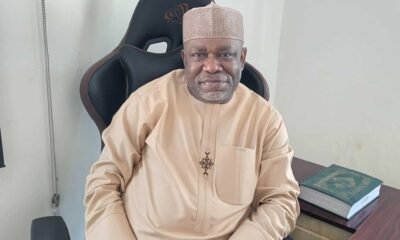
The African Democratic Congress (ADC) in Benue State has moved to strengthen its governorship ticket ahead of the 2027 elections by inaugurating a committee tasked with selecting a deputy governorship candidate.
The party’s governorship flagbearer, Herman Hembe, a former member of the House of Representatives for Konshisha/Vandeikya Federal Constituency, formally requested the committee’s formation. Acting on his correspondence, the state leadership charged the committee with identifying a running mate who embodies integrity, democratic values, and the capacity to boost the party’s popularity.
Committee Inauguration
State party secretary Peter Chirzenden inaugurated the committee on behalf of the chairman. He emphasized that the deputy governorship candidate must not only complement Hembe but also contribute meaningfully to the ADC’s growth and electoral success.
Chirzenden outlined clear criteria: the candidate must demonstrate integrity, a democratic spirit, and the ability to strengthen the party’s appeal across Benue. He stressed that the choice should go beyond political expediency, focusing instead on long-term development and credibility.
Membership and Mandate
The committee comprises respected figures across politics, academia, law, and civil service. Members include Senator Orke Jev, Engr. Okpe Onah, AVM Steve Onuh, Mrs. Rose Ameh, Barr. Ogah Okwu, Prof. David Salifu, Hon. Jack Mulya, Mrs. Abeje Egwa, and Hon. Alex Igwe.
They have been given until June 20 to submit their recommendations. The chairman, Engr. Okpe Onah, assured the party of the committee’s commitment to selecting a candidate who will add value to the ticket and enhance ADC’s chances in the 2027 governorship race.
Strategic Importance
The move signals ADC’s determination to present a strong, credible alternative in Benue politics. By setting transparent criteria and involving seasoned stakeholders, the party aims to avoid internal divisions and ensure that its ticket resonates with voters.
Observers note that Hembe’s candidacy already brings legislative experience and grassroots appeal. The choice of a deputy will be crucial in balancing regional interests, consolidating party structures, and projecting a united front against rivals.
Cover
Abure Warns Dickson: Lessons from Labour Party’s Turmoil
Factional Labour Party chairman Julius Abure has issued a sharp warning to Senator Seriake Dickson, leader of the Nigeria Democratic Congress (NDC), urging him to tread carefully in his alliance with Peter Obi and his supporters.
Abure’s statement followed Obi’s ratification as NDC’s presidential candidate at the party’s national convention in Abuja. He argued that Dickson must avoid repeating the mistakes that plunged the Labour Party into crisis after the 2023 elections.
Lessons from Labour Party’s Experience
Abure recalled how the Labour Party accommodated Obi’s interests ahead of the 2023 polls, granting tickets to many of his supporters, often at no cost. According to him, the party believed it was investing in a new political movement. Instead, he claimed, those elected later turned against the LP leadership.
He accused Obi and Abia State Governor Alex Otti of abandoning the party structure once in office. “We ensured Obi’s interests were taken care of. Most of the tickets were free, but they later struggled with the leadership of the party,” Abure said.
Crisis and Leadership Battles
The Labour Party’s internal turmoil deepened when the Independent National Electoral Commission (INEC) acted on a court ruling that declared the tenure of LP executives expired. This led to the emergence of an interim committee led by Nenadi Usman, further weakening the party’s cohesion.
Abure argued that Dickson must learn from this episode by ensuring his loyalists occupy key positions within the NDC. “He needed to bring his own people so that when the chips are down, he will also have people that will speak and defend him,” he advised.
Warning Against Domination
Abure accused Obi’s supporters of attempting to dominate the NDC, just as they did in the Labour Party. “They trooped into NDC with Obi hoping to occupy every space. No leader of any political party seeing what Obi did to the Labour Party will make that mistake again,” he said.
He described Obi’s followers as opportunistic, warning that they could undermine Dickson’s leadership if given unchecked influence.
Political Strategy Ahead of 2027
The warning reflects broader tensions in Nigeria’s opposition politics as parties prepare for the 2027 elections. Abure’s remarks highlight the struggle between established party leaders and new political movements seeking influence.
For Dickson, the challenge lies in balancing Obi’s national appeal with the need to protect NDC’s internal structure. Abure’s advice underscores the risks of ceding too much ground to external forces, especially in a political environment where loyalty often shifts after electoral victories.
Broader Implications
The episode illustrates the fragility of Nigeria’s party system, where alliances are frequently tested by personal ambition and shifting loyalties. Abure’s intervention is not only a warning to Dickson but also a reminder of how quickly political goodwill can unravel.
As the NDC positions itself for 2027, the party must navigate the delicate balance between embracing Obi’s popularity and safeguarding its leadership integrity. Abure’s cautionary tale from the Labour Party crisis serves as a stark reminder that political partnerships, if not carefully managed, can destabilize even the most promising movements.
Cover
Platini’s Legal Battle Reopens Civil Suits Against FIFA
Michel Platini, once tipped to lead FIFA, has reignited one of football’s most controversial sagas. The former UEFA president has filed both criminal and civil suits in France against FIFA and its current president, Gianni Infantino, claiming corruption allegations destroyed his career and denied him the chance to head world football.
The Lawsuit
Platini, 70, is seeking financial compensation from FIFA while also pursuing criminal complaints against Infantino, former FIFA legal director Marco Villiger, and ex-audit committee chairman Domenico Scala. He argues that coordinated efforts blocked his path to the presidency after corruption allegations surfaced in 2015.
The Payment That Changed Football
At the heart of the dispute lies a payment of two million Swiss francs made to Platini in 2011, approved by then FIFA president Sepp Blatter. The transaction triggered investigations by FIFA’s ethics committee, leading to lengthy bans for both men. Platini was initially suspended for eight years, later reduced to four by the Court of Arbitration for Sport.
The sanctions effectively ended his campaign to succeed Blatter, despite being widely regarded as the frontrunner at the time. Infantino, who had served as UEFA’s general secretary under Platini, eventually rose to the presidency in 2016.
Platini’s Legacy
Before his fall from football politics, Platini was one of the sport’s most celebrated figures. He won the Ballon d’Or three times in succession and captained France to victory at the 1984 European Championship. His transition into administration saw him lead UEFA from 2008 to 2015, where he championed reforms such as Financial Fair Play.
Cleared but Not Restored
In 2025, a Swiss federal criminal appeals court cleared both Platini and Blatter of corruption charges, closing a decade-long legal battle. Yet Platini insists the damage was irreversible. He argues that the allegations and disciplinary actions unjustly prevented him from becoming FIFA president, a role he believes was within reach.
Infantino’s Position
Infantino, now firmly entrenched as FIFA president, has not publicly responded to the lawsuit. His rise from Platini’s deputy at UEFA to the head of FIFA underscores the irony of the case. Platini’s legal action directly challenges Infantino’s legitimacy, reopening questions about how football’s leadership was reshaped during the crisis years.
Implications for FIFA
The lawsuit threatens to drag FIFA back into the spotlight for the wrong reasons. It revives memories of the organisation’s troubled past, when corruption scandals undermined its credibility. For Infantino, the case could place his administration under renewed scrutiny, particularly regarding transparency and governance.
A Fight for Reputation
For Platini, the battle is about more than compensation. It is an attempt to reclaim his reputation and highlight what he sees as injustice. His case underscores the long shadow cast by FIFA’s corruption scandals and the personal toll they inflicted on football’s most influential figures.
Looking Ahead
As proceedings unfold in France, the football world will watch closely. Platini’s lawsuit may not change the past, but it could reshape perceptions of FIFA’s present leadership. More importantly, it reopens a debate about accountability in global football governance—a debate FIFA has long sought to move beyond.
Platini’s fight is not just about lost opportunity; it is about rewriting the narrative of who was denied the chance to lead world football, and why.
Cover
Somali Referee Artan’s World Cup Dream Blocked At US Border
The 2026 FIFA World Cup has already produced its first major controversy, and it has nothing to do with the pitch. Somali referee Omar Artan, selected to officiate at football’s biggest stage, was denied entry into the United States despite holding a valid visa.
A Historic Opportunity Lost
Artan’s inclusion among the 52 referees chosen for the expanded 48-team tournament was celebrated across Africa. At 34, he was poised to become the first Somali referee to officiate at a World Cup match, a milestone for Somali football and a symbol of progress for African officiating. That dream ended abruptly at Miami International Airport.
Immigration Block
According to Somali officials, Artan travelled with all required documentation, including a visa issued specifically for the World Cup. Yet after hours of questioning, US immigration authorities refused him entry, citing vague “vetting concerns.” He was returned to Istanbul, Turkey, leaving FIFA with no option but to remove him from the tournament roster.
FIFA’s Position
FIFA confirmed Artan’s exclusion, stressing that it cannot override immigration decisions made by host countries. The governing body acknowledged the setback but said it had been informed that his status would not change. For FIFA, the incident adds another layer of controversy to a tournament already under scrutiny for logistical and organisational challenges.
Artan’s Reputation
Artan is far from an unknown figure in African football. Since becoming a FIFA-listed referee in 2018, he has officiated at the Africa Cup of Nations and the CAF Champions League. His performances earned him the CAF Men’s Referee of the Year award in 2025, cementing his reputation as one of the continent’s most respected officials. His rise was seen as a beacon of hope for Somalia, a country often overlooked in global football.
Wider Implications
Artan’s case has intensified debate about access and fairness at the World Cup. Iran recently protested over revoked ticket allocations for its supporters, while other officials have reportedly faced entry restrictions. The incident highlights the tension between global sporting events and national immigration policies, raising questions about inclusivity in football’s showcase tournament.
Symbolism Beyond Football
For Somalia, Artan’s exclusion is more than a personal setback. It represents a missed chance to showcase national pride on the world stage. For African referees, it underscores the challenges of breaking barriers in a sport still grappling with issues of representation and equity.
Looking Ahead
As the World Cup kicks off, Artan’s absence will be felt not only by Somali fans but by those who saw his appointment as a step toward greater diversity in football officiating. His story is now part of the broader narrative of a tournament struggling to balance its global ambitions with the realities of politics and border control.
The controversy serves as a reminder that the World Cup, while a celebration of sport, is also shaped by forces far beyond the game. For Omar Artan, the dream of making history has been replaced by a painful lesson in the intersection of football and geopolitics.
-
Cover9 months agoNRC to reposition train services nationwide.. Kayode Opeifa
-
Fashion9 years agoThese ’90s fashion trends are making a comeback in 2017
-
Entertainment9 years agoThe final 6 ‘Game of Thrones’ episodes might feel like a full season
-
Politics2 months agoNNPP Diaspora Stakeholder and Key Kwankwaso Ally, Dr. Usman Tijjani Shehu, Rejoins APC
-
Opinion1 year agoBureaucratic Soldier, Kana Ibrahim heads Ministry of Aviation and Aerospace After Transformative Tenure at Defence
-
Opinion1 year agoHon. Daniel Amos Shatters Records, Surpasses Predecessor’s Achievements in Just Two Years
-
Opinion6 months agoBarrister Somayina Chigbue, Esq: A rising legal leader shaping institutioal excellence in Nigeria
-
News10 months agoNigerian Nafisa defeats 69 Countries at UK Global Final English Competition