

Headlines
Airline operators seek intervention over ticket charge controversy


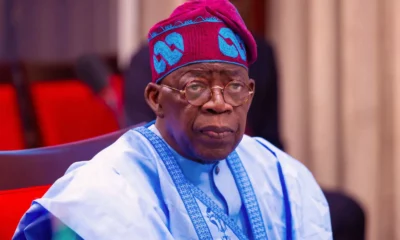
Airline operators have appealed to President Bola Ahmed Tinubu to intervene in the controversy surrounding the five per cent Ticket Sales Charge (TSC), saying the President’s intervention could save the Nigerian aviation industry from further financial distress.
The Chairman and Chief Executive Officer of Air Peace Limited, Dr Allen OnyemaOnyema, who is also Vice President of the Airline Operators of Nigeria (AON), made the appeal while delivering the keynote address at the 30th annual conference of the League of Airport and Aviation Correspondents (LAAC) in Lagos, on Thursday.
The conference, held with the theme, “Towards a Sustainable Aviation Industry: Balancing Government Revenue Demands with Sector Growth,” focused on the challenges confronting the aviation sector, particularly the growing burden of taxes and charges on airlines.
- Kwankwaso calls for probe into killing of social media commentator
- Ballon d’Or 2026: I’ve no doubt – Feyenoord manager picks winner of award
Onyema said the current system under which airlines remit five per cent of the cost of every flight ticket as TSC to the Nigeria Civil Aviation Authority (NCAA) was putting further financial pressure on already distressed operators.
He advocated the replacement of the percentage-based charge with a fixed flat-rate fee attached to each ticket, arguing that such an arrangement would make payment more predictable and reduce the financial burden on airlines.
According to him, a more amicable tax and charges regime would protect airlines, aviation agencies and passengers, while helping to reduce the high mortality rate of Nigerian carriers.
Onyema said the airlines were seeking President Tinubu’s intervention because of his willingness to listen and act when presented with the impact of policies on indigenous businesses.
He recalled that the President had previously exempted airlines from the four per cent Free on Board (FOB) levy introduced by the Nigeria Customs Service after operators raised concerns over its potential impact on their businesses.
“One thing I must say is that I’m certain any day President Bola Ahmed Tinubu sees us, if they allow us to see him, because I know he will not mind to meet with us, that will be the day a new revolution in the airline industry in this country will occur because Mr. President abhors anything capable of affecting indigenous businesses that provide jobs for the people adversely,” he said.
Onyema said the intervention over the Customs levy demonstrated the impact of presidential action when the consequences of a policy were properly explained.
He said Customs Comptroller-General, Adewale Adeniyi, had taken up the airlines’ concerns with the Presidency after he was informed of the effect of the levy on operators.
“I was there in the Presidential Villa with the Customs boss, a fantastic man. This President acted swiftly and waived it for airlines within hours of being made to understand the would-be effects of such a charge on the viability of indigenous Nigerian airlines,” he said.
According to Onyema, the President’s intervention following the FOB levy led him to promise to create 1,000 jobs for Nigerians.
He said about 78,000 Nigerians applied for the positions, from which 1,000 young people were eventually employed.
The Air Peace boss argued that the same approach should be applied to the TSC and other charges confronting airlines.
He said the President had not yet been given the opportunity to hear directly from airline operators about the factors contributing to Nigeria’s unfavourable rating as a difficult environment for airline businesses.
“The problem is that the President has not heard from us on why his country was so described by IATA who equally compared Nigeria to Afghanistan,” he said.
He expressed confidence that the situation would change if the President intervened, adding that a healthier aviation industry would ultimately benefit government agencies, airlines and passengers.
Onyema further warned that Nigerian airlines could not achieve sustainable growth while operating under multiple taxes, levies and charges.
He said the current cost environment was contributing to the difficulties faced by local carriers and undermining their ability to remain competitive and profitable.
He also cited reports indicating that at least 62 commercial airlines had collapsed or gone into default in Nigeria since independence in 1960, with more than 22 airlines shutting down within a recent 24-year period.
According to him, the high tax and charges burden remains one of the major factors threatening the survival of indigenous airlines.
“At several aviation fora, IATA has identified Nigeria as one of the most expensive countries in the world in which to operate an airline, citing high operational costs that continue to challenge the viability and growth of local carriers,” Onyema said.
He added that the high-cost operating environment had made it difficult for Nigerian airlines to remain competitive and profitable, thereby limiting the sector’s ability to reach its full potential.
Onyema said converting the TSC from a percentage of ticket sales to a fixed amount would provide relief to airlines while also ensuring that the NCAA and other aviation agencies continued to receive revenue from the charge.
He maintained that a balanced charges regime was necessary to ensure the sustainability of the aviation industry and prevent further collapse of Nigerian airlines.




Ballon d’Or 2026: ‘He’s one of them’ – What Mbappé said about Harry Kane after England star won award

Man remanded for allegedly impersonating Kwankwasiyya praise singer

Police confirm killing of Katsina cleric

Now Hiring: Academic and Technical Staff at a Leading Private University in Gombe State

LAUTECH 18th Convocation: EEE Class ’05 Alumni Celebrate as Electronic and Electrical Engineering Department Produced the School’s Overall Best Graduating Student

NMS 95 Reunion Ends in Tragedy as 2 Members Die, 3 Injured in Road Crash


