Connect with us

Opinion

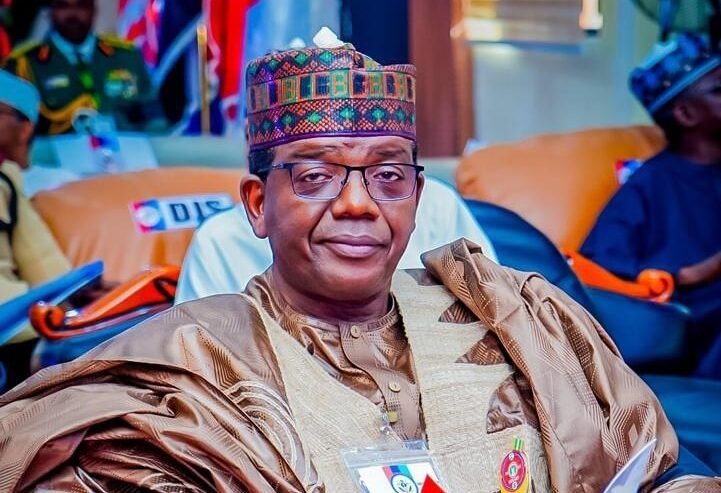
Zamfara peace pact and Matawalle’s selfless political doctrine

Published

on

By Isa Seidu

The peace move gradually emerging from the heart of Zamfara State between the incumbent Governor of the State, Governor Dauda Lawal, and his predecessor, the present Minister of State for Defence, Dr. Bello Matawalle, is a rare demonstration of His Excellency Dr. Bello Matawalle’s political sagacity, peaceful disposition, and preference for the progress and well-being of the people of Zamfara State. It remains a decisive game changer for national politics while reflecting his loyalty and unreserved commitment to President Asiwaju Bola Ahmed Tinubu and the ideals of the Renewed Hope Agenda.

Certainly, Dr. Matawalle has proven through this singular action and his willingness to jettison his gubernatorial ambition for the peace pact that nothing on earth is enough to outweigh his loyalty to President Asiwaju Bola Ahmed Tinubu, whom he holds in the highest esteem and regards not only as a political mentor but also as a father figure worthy of any level of sacrifice.

Recently, Dr. Matawalle, in a show of solidarity and party loyalty, and out of his deep and passionate respect for President Asiwaju, decided to enter into a pact with Governor Dauda Lawal and also publicly dropped his 2027 governorship ambition under the All Progressives Congress (APC).

The move underscores Dr. Matawalle’s unflinching loyalty, love and respect for President Asiwaju, his belief in the All Progressives Congress (APC), and his prioritization of the unity and consolidation of the party above every other consideration.

Dr. Matawalle’s willing acceptance also represents his commitment to the stabilization of the party, the state and the nation, as well as a strategic realignment towards harnessing all that is necessary to consolidate the gains of the present administration and ensure its continuity in power both at the state and national levels ahead of the 2027 elections.

Dr. Matawalle has proven that, unlike many other Nigerian politicians, he possesses a rare quality of political maturity, sagacity, selflessness, and party loyalty. In a country where personal political ambition often overrides national priority, national development, political party structural cohesion and loyalty, Dr. Matawalle has proved beyond all reasonable doubt that there still exist a minority of morally strong and selfless individuals who are willing and ready to make necessary sacrifices for the greater good.

While notable figures within and outside Zamfara State, including the Vice President, Alhaji Kashim Shettima, have lauded the sacrifice of the Honourable Minister of State for Defence as rare, it is believed that this singular action will foster unity both in the state and within the APC, as well as improve grassroots mobilization. Dr. Matawalle has redefined the positive trajectory of the nation’s political space and has deepened political discourse, good governance, and the enhancement of tangible, people-based development and progress in a collaborative atmosphere devoid of rancour and egocentrism.

Already, positive feelers from the state indicate a progressively stable political ambience, improved governance and security, and a positive realignment of viable political forces and stakeholders aimed at ensuring positive outcomes that will lead to the landslide victory of the APC in all elections, not just in Zamfara State but across the entire North West regional bloc.

There is certainly no doubt that Alhaji Matawalle considers this success a greater good than his personal political ambition of becoming governor again, and he is determined and convinced to make all necessary sacrifices towards ensuring that this happens.

Moreover, the prioritization of President Asiwaju’s goals and aspirations, coupled with the strength of a united winning party, surely stands Dr. Matawalle as a grand hero of democracy, an exceptional fellow, a rare democrat, a time-tested and faithful party man, and an unwavering disciple of President Asiwaju Bola Ahmed Tinubu, who is ready to put everything aside for his success.

This recent unification of purpose remains a redefinition of party loyalty and a clear evidence of the demonstration of sincerity of purpose and commitment, as well as proof of single-mindedness and strong belief in President Asiwaju. Indeed, Dr. Bello Matawalle has remained a consistently faithful party man as well as an ardent disciple of President Asiwaju Bola Ahmed Tinubu.

He has remained upbeat and faithful to his conviction of the doctrine of loyalty and selflessness, and a beacon of inspiration to many and a pillar of unbeatable pace for several years of democracy to come.
Dr. Bello Matawalle, through the peace pact, remains an avowal of the cherished spirit of democratic commitment and unwavering faithfulness, further resonating what it means to approach politics selflessly and be willing to make the highest form of sacrifice as a disciple of the political doctrine of selflessness.

Seidu writes from Kaduna

Continue Reading
Click to comment

Leave a Reply

Your email address will not be published. Required fields are marked *

Opinion

Sowore’s Asinine Attack on Journalists and Free Speech

Published

on

The Centre For Public Integrity finds deeply troubling and alarming, a Sunday June 21, 2026, post by online publisher and Action Action Congress (AAC) presidential candidate, Omoyele Sowore, attacking the Nigeria Union of Journalists (NUJ) for the “Man of the Award” it bestowed on the Director General of the Department of State Services (DSS), Mr. Oluwatosin Ajayi.

In a statement by the group’s coordinator, Comrade Job Samuel Danfulani, the Centre views with seriousness the moral, legal and security implications of Sowore’s posts, especially especially the unwarranted and baseless attack on the NUJ.

While we concede that, it is within Sowore’s rights to fault the award, such should however be done with decency and within the ambit of the law.

Last December, the International Press Institute (IPI), a global network of editors, media executives, and top journalists, honoured the DSS DG for his “unmistakable commitment to press freedom and respect for journalists and media organisations.”

Said IPI, “Unlike in previous years when the SSS was notorious for serial harassment, intimidation, and arrests of journalists, the agency under Mr Ajayi’s leadership has shown remarkable restraint, professionalism, and openness to dialogue.”

The Centre For Public Integrity notes that, in April 2025, Mr. Ajayi ordered the removal, from over 30 years of DSS watchlist, of the Executive Director, International Press Centre, Mr. Lanre Arogundade,

In October, following Mr. Ajayi’s intervention, the secret police dropped charges on alleged cyber defamation, conspiracy, and the publication of false information against an online newspaper, Order Paper, and none staff members.

In case Sowore doesn’t know, journalism in Nigeria is made up of those in the print and broadcast media organisations. In April 2026, the umbrella body of broadcast journalists in Nigeria , Broadcasting Organisation of Nigeria (BON), gathered in Abuja and bestowed “Friend of the Media” award on the DSS DG.

We find it curious that, Sowore, who didn’t fuss about the IPI and BON awards on the DSS DG, is now rankled by Friday’s award on the same man by the Nigeria Union of Journalists, the umbrella body of all journalists in Nigeria.

From media reports, at the end of a two-day security summit in Abuja, the NUJ bestowed “Man of the Year” award on Mr. Ajayi for building “partnership, openness and mutual respect between the media and security institutions.” They explained that his “leadership approach values engagement, transparency and partnership” and has been “vital to protecting lives, preserving democratic space and advancing nation-building.”

From all records, Sowore isn’t a journalist. He, therefore, does not and may never understand the ethics of journalism.

Clearly, Sowore doesn’t know that journalists, as members of the Fourth Estate of the realm, can criticize or applaud policy makers so long as the criticism or applause is objectively earned and based on verifiable facts.

It is on this note that The Centre For Public Integrity joins the IPI, BON and the NUJ in celebrating Mr. Tosin Ajayi for breaking with the tradition of self-help and putting the DSS on the path of the rule of law.

We are witnesses to how the DSS has, since Mr. Ajayi became DG, been running to the courts for adjudication of all matters, including when Sowore called President Bola Tinubu a “criminal” and for which he is standing trial. Sowore, who didn’t find anything wrong with the IPI and BON awards on the DSS DG, suddenly is finding everything wrong with the NUJ award simply because a Federal High Court has asked him to open his defence in a case of alleged criminal defamation against President Tinubu filed against him by the DSS.

Aside IPI, BON and the NUJ, journalists, who have practiced under several governments and under several security chiefs, are singling out Mr. Ajayi for praises. About a week ago, veteran journalist and a former Director-General of the Nigerian Television Authority (NTA), Dr. Tonnie Iredia, with far more credible activism credentials than Sowore might ever have, penned a very emotional tribute to Mr. Ajayi’s leadership style. For those who remember, Dr. Iredia anchored Point-blank for several years on the NTA, where he held public officers, including members of the military junta, to account.

We challenge human rights organizations to swiftly condemn this crossing of the lines of decency by Sowore. Just as he has the right to dignity, he should not under any guise attempt to trample on the dignity of others. After all, no dignity is inferior or superior to another. We also expect Nigerian journalists to adequately respond to Sowore’s disrespect for their noble profession.

On a final note, The Centre For Public Integrity appeals to the DSS DG not to allow such reckless provocative actions by Sowore distract or diminish his resolve to continue embracing the rule of law at all times.

Signed:
Comrade Job Samuel Danfulani,
National Coordinator

Continue Reading

Opinion

Gov Otu: Rewriting Cross River’s Healthcare Story With Historic 100% Pay Rise for Doctors

Published

on

By Linus Obogo

In the quiet town of Ogoja, where the red earth stretches endlessly beneath the tropical sun and communities rise each morning to the rhythms of resilience and hope, a weary doctor named Dr. Monjok once wrestled with a difficult question: should he remain in public service or seek greener pastures elsewhere?

For years, his calling had kept him at the bedside of children battling malaria, expectant mothers navigating the uncertainties of childbirth, and elderly patients confronting the frailties of age. Through long nights, limited resources and mounting pressures, he remained steadfast. Yet the burden of inadequate remuneration and persistent manpower shortages often weighed heavily on his spirit. Today, however, Dr. Monjok stands taller, buoyed by renewed optimism, as Governor Bassey Otu’s administration ushers in a new era with a landmark 100 per cent salary increase for doctors across Cross River State.

This historic intervention is far more than a financial adjustment. It is a powerful declaration that those who dedicate their lives to preserving the health and dignity of others deserve to be honoured, valued and rewarded. It is a recognition of countless sacrifices made in consulting rooms, emergency wards and rural health centres where doctors often labour quietly, driven not by wealth but by duty. In one bold stroke, Governor Otu has infused fresh hope into a profession that forms the backbone of every thriving society.

For many healthcare professionals, the announcement represents a turning point, a breath of fresh air. It signals the emergence of a government that understands that healthcare is not merely a social service but a sacred obligation. It is an affirmation that those entrusted with saving lives should not themselves be left to struggle under the weight of neglect. By doubling doctors’ salaries, Governor Otu has not only boosted morale but has also strengthened the state’s capacity to retain talent and attract skilled professionals who might otherwise seek opportunities beyond its borders.

Yet the salary increase is only one chapter in a broader and exhilarating story of transformation unfolding across the health sector. Since assuming office, Governor Otu has increased funding to healthcare by more than 100 per cent, reflecting a deliberate and strategic commitment to rebuilding a sector that lies at the heart of human development.

It is a demonstration of leadership that recognizes that healthy citizens are the foundation upon which prosperous economies and stable societies are built.
This commitment is equally evident in the lifting of the long-standing embargo on employment within the health sector and the approval of the recruitment of 2,000 additional healthcare workers. Across urban centres and rural communities alike, this decision is expected to bridge critical manpower gaps, improve access to medical services and bring relief to overstretched facilities.
For many communities that have long endured shortages of healthcare personnel, the development represents a long-awaited answer to years of yearning.

In the creekside settlements, riverine communities and bustling townships of Cross River, the echoes of this transformation are already reverberating. At General Hospital, Ukem, where years of wear had dulled the promise of quality care, a new chapter is unfolding. The release of funds for its renovation, alongside the rehabilitation of Cottage Hospital, Oban, and the revival of the once-abandoned General Hospital complex in Akpabuyo, reflects a government determined to restore healthcare institutions to their rightful place as sanctuaries of healing and hope.

These projects are more than bricks and mortar. They are monuments to purposeful governance and symbols of a future in which quality healthcare is not a privilege reserved for a few but a right accessible to all. Each renovated ward, restored facility and upgraded theatre represents another step towards a healthier and more resilient Cross River.
Dr. Monjok’s story is mirrored in the experiences of countless citizens whose lives intersect daily with the healthcare system. It is reflected in the expectant mother who no longer has to travel great distances in search of prenatal care. It is evident in the child whose access to treatment is no longer determined by geography. It is seen in families who can now look towards public health facilities with renewed confidence and expectation.
Governor Otu’s reforms have also embraced nurses, pharmacists, laboratory scientists, community health officers and other critical healthcare personnel through enhanced allowances and improved welfare packages.

The establishment of the Cross River State Hospital Management Board further underscores a commitment to accountability, efficiency and institutional excellence. Together, these measures will lay the foundation for a healthcare system that is modern, responsive and sustainable.

As Dr. Monjok now gazes across the rolling landscapes of Cross River, he sees more than familiar hills and valleys. He sees the dawning of a new possibility. What has begun as a bold policy decision will sooner than later, rapidly evolve into a healthcare renaissance capable of touching every corner of the state. In that unfolding story, every doctor is valued, every healthcare worker is empowered and every citizen is placed at the heart of governance.

Indeed, Governor Otu’s historic intervention is much more than increasing salaries; it is about restoring confidence, rekindling aspirations and rewriting the healthcare story of Cross River State with uncommon vision, courage and purpose.

Obogo is Chief Press Secretary and Special Adviser on Media and Publicity to Governor Bassey Otu

Continue Reading

Opinion

General Olufemi Oluyede: The Man Steering Nigeria’s Defence into A New Era

Published

on

By Sambo Sule

In the crucible of a nation forged by resilience, where shadows of uncertainty stretch long across savannah and coast, General Olufemi Olatubosun Oluyede emerges as a beacon of unyielding resolve. Like the ancient warriors of Ekiti soil—steadfast sentinels against tempests—he now stands at the helm of Nigeria’s Armed Forces as Chief of Defence Staff.

His appointment marks not merely a change of guard, but the dawn of a transformative epoch. It is one where discipline meets destiny, strategy dances with synergy, and the military reclaims its sacred covenant to shield the motherland.

Oluyede’s career has been defined by excellence and resilience. Rising through the ranks of the Nigerian Army, he has commanded troops in some of the most difficult operational theatres, earning respect for his tactical ingenuity and his ability to inspire confidence among soldiers and civilians alike.

Since assuming office, General Oluyede has prioritized jointness—the seamless integration of the Army, Navy, and Air Force into a unified fighting force. He believes that Nigeria’s security challenges require synergy, not fragmentation, and under his leadership, joint operations have become the hallmark of military campaigns.

This approach has already yielded results: in May 2026 alone, Nigerian troops neutralized over 317 terrorists, arrested 314 suspects, and rescued 221 kidnapped civilians, while recovering 93 assorted arms and dismantling illegal refining sites. These achievements reflect his insistence on coordination, precision, and professionalism.

Another defining feature of his leadership is the push for indigenous defence production. General Oluyede has championed the revitalization of the Defence Industries Corporation of Nigeria (DICON), ensuring that Nigeria reduces dependence on foreign suppliers and builds local capacity.

The CDS’ vision is to see Nigeria emerge as a regional hub for defence technology, capable of sustaining its own military requirements and contributing to African security. By encouraging local innovation, he is laying the foundation for a self-reliant Armed Forces that can adapt to evolving threats.

Civil-military relations are also central to his philosophy. General Oluyede has consistently emphasized that the Armed Forces exist to protect the people, not to intimidate them.

He has directed troops to uphold professionalism and respect for human rights in all operations, reinforcing trust between the military and civilians. His swift responses to crises—deploying reinforcements, ordering aerial surveillance, and ensuring humanitarian support—demonstrate his people-centric approach.

For him, threats against civilian peace are intolerable affronts to national sovereignty. Beyond operations, General Oluyede has invested in the intellectual and doctrinal development of the Armed Forces.

He has positioned the Joint Doctrine and Warfare Centre (JDWC) as the intellectual hub of Nigeria’s defence establishment, advancing doctrine, innovation, and technology to keep the Armed Forces adaptive to evolving threats. This institution ensures that Nigeria’s military remains aligned with global best practices while developing strategies tailored to local realities.

General Oluyede’s leadership style blends firmness with empathy. He commends troops for gallantry and tactical ingenuity, reinforcing morale across operational theatres.

At the same time, he insists on accountability, ensuring that discipline remains the bedrock of military service. His ability to balance operational demands with welfare considerations has strengthened the Armed Forces as an institution.

General Oluyede’s legacy is already taking shape. He is positioning Nigeria’s Armed Forces as a modern, self-reliant, and highly professional military. His emphasis on jointness, indigenous production, and civilian protection ensures that the Armed Forces remain not only a guarantor of sovereignty but also a trusted institution in the eyes of the people.

The CDS tenure is redefining Nigeria’s defence posture, positioning the country as a regional leader in security and stability. In the broader context of national development, his leadership underscores the critical role of the military in creating an environment of peace and stability.

By securing communities, protecting borders, and dismantling criminal networks, the Armed Forces under his command are enabling economic growth, social development, and national unity. His vision is not limited to the battlefield; it extends to the future of Nigeria as a secure, prosperous, and respected nation.

General Olufemi Oluyede is, indeed, the man steering Nigeria’s defence into a new era. His story is one of discipline, vision, and service—a reminder that leadership in uniform is not about power, but about responsibility, sacrifice, and the unwavering commitment to protect the nation and its people.

Sule is a public affairs analyst writing from Kaduna.

Continue Reading

Trending

Copyright © 2023 - 2025 DailyMirror Nigeria. Design by AspireWeb.ng, powered by WordPress.