Cover
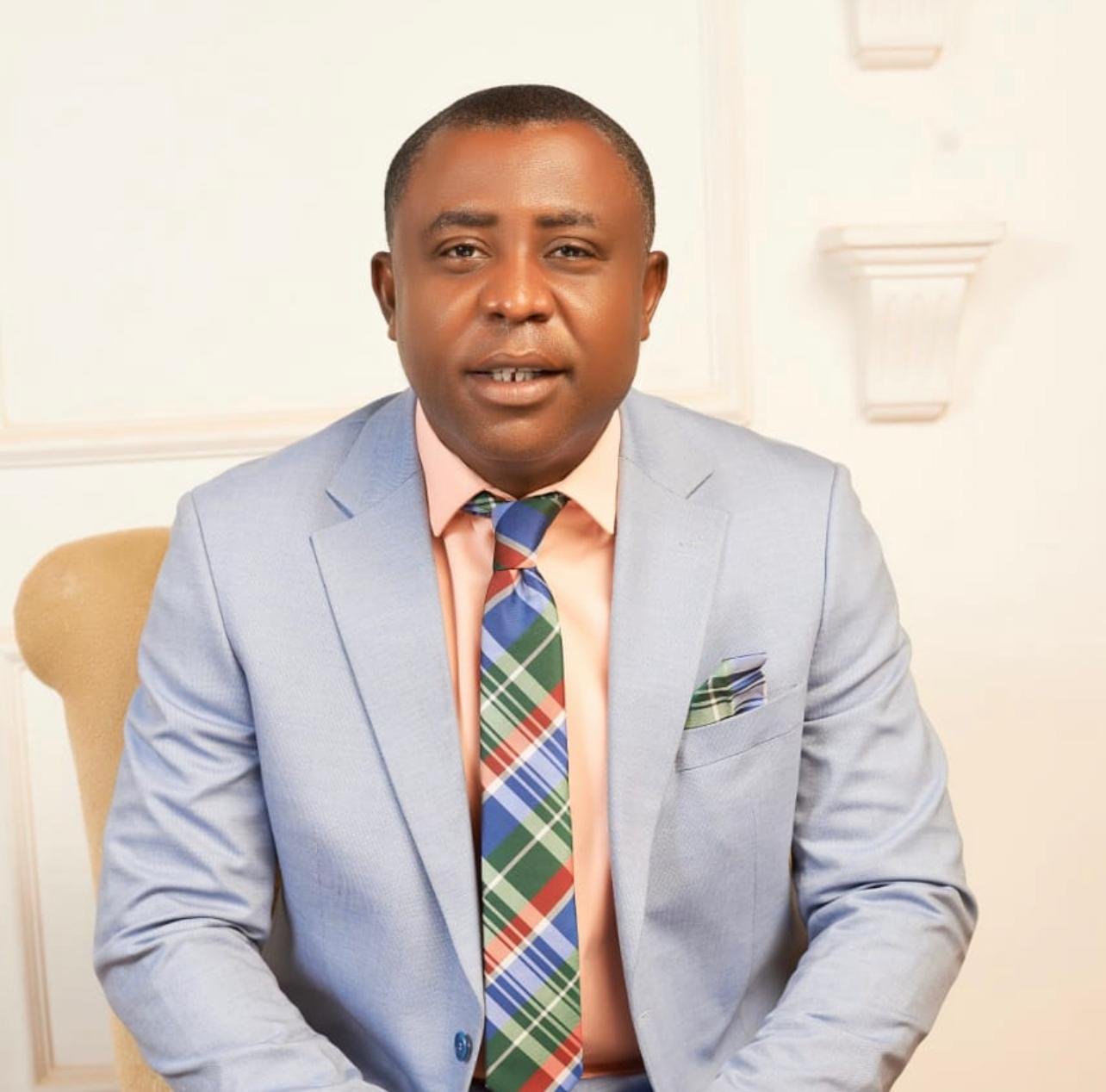
From Newsroom to Policy Circle: NUJ FCT Applauds Ikharo Attah’s Appointment
The Nigeria Union of Journalists (NUJ), FCT Council, has congratulated Ikharo Attah on his appointment as Special Adviser on Media and Communication to the Minister of Education, Dr. Morufu Olatunji Alausa.
In a statement signed by its Chairman, Grace Ike, the council described the appointment as well-deserved, noting Attah’s track record of professionalism and excellence in journalism.
Before his appointment, Attah served as Head of News at Independent Television, where he was recognised for his leadership, commitment to ethical journalism, and contributions to the media industry.
The council said his extensive experience in newsroom management and public communication positions him to effectively enhance the Ministry’s media engagement and public communication of its policies.
According to the NUJ, the appointment reflects Attah’s dedication, competence, and impact within the media space.
The council expressed confidence that he would promote transparent communication, support ongoing educational reforms, and contribute to national development in his new role.
It also urged him to uphold the core values of journalism while strengthening the role of the media in nation-building.
The NUJ FCT Council wished him success in his new assignment.

Branded Content
Senator George Akume and the Test of Party Democracy in Benue
Senator George Akume, CON, represents a rare breed of Nigerian politician. In a political culture often characterised by impatience, self-interest, and inconsistency, he has distinguished himself through patience, loyalty, and an enduring commitment to teamwork.
I have worked closely with him and witnessed his steady rise since 1999, when he became Governor of Benue State. From there, he went on to serve as Senator, Minister of the Federal Republic, and now Secretary to the Government of the Federation (SGF). His trajectory has been defined not by haste, but by discipline and a remarkable ability to work within the system.
These qualities have been severely tested in recent times, particularly in his relationship with Governor Hyacinth Alia. Governor Alia entered the political arena with significant backing despite having limited political experience, modest resources, and no established structure to contend with seasoned figures such as Barnabas Gemade and Steven Lawani. Against these odds, he emerged victorious.
However, from the moment he assumed office, his relationship with Senator Akume deteriorated without any clear provocation. What began as a strained engagement has since evolved into a persistent political rift.
When discussions later emerged about a potential second term for the governor, many of us close to Senator Akume were understandably concerned by what appeared to be the position of the party’s national leadership. Yet, true to his nature, Akume remained calm and aligned himself with the party, even where the circumstances were personally unfavourable.
This included accepting the controversial dissolution of the duly elected state party leadership and the installation of a caretaker committee—decisions he embraced in the interest of party unity. More notably, when he conveyed the directive that political office holders, including the governor, should be returned unopposed, he did so with restraint, placing party cohesion above personal considerations.
At a gathering in Makurdi, he stated:
“All those elected on the platform of the APC, from the State Assembly to the National Assembly, are expected to return automatically… and of course, the Governor is also expected to be returned.”
That position, however, was publicly rejected by Governor Alia, who insisted there would be no automatic tickets, citing the stance of the President and the party’s national leadership. In effect, this signalled a willingness to proceed without regard for the political structure that facilitated his emergence.
For many of us, that moment was decisive.
Senator Akume, despite what can only be described as sustained political provocation, has remained composed—much like the biblical Job—accepting both favourable and difficult circumstances within the party framework.
But this is no longer about personalities.
It is about the survival of political order and internal democracy within the All Progressives Congress (APC) in Benue State.
There is a dangerous assumption at play—that power can be consolidated through imposition, that party structures can be ignored, and that those who built the system can be sidelined without consequence. That assumption is fundamentally flawed.
Those of us who have stood with Senator Akume have exercised restraint out of respect for his disposition. But restraint must not be mistaken for weakness.
The time has come for a necessary shift.
Our leader, Senator George Akume, must now allow his supporters—and indeed all party members—to fully exercise their political rights. Let there be open contest. Let aspirants emerge freely, without intimidation or artificial barriers. Let the people of Benue State decide.
Anything short of this will not only fracture the party; it will erode its credibility beyond repair.
And let no one be under any illusion: if the process is manipulated, if candidates are imposed, if the will of the people is subverted, it will mark the beginning of the end for the APC in Benue State.
As one who has followed Nigerian politics since the 1970s, I say this without hesitation: no political party survives sustained injustice against its own members.
The warning signs are already clear. What happens next will determine whether the party corrects itself—or collapses under the weight of its own contradictions.
A Benue APC chosen by the people, not imposed from above, will not only survive—it will endure and dominate.
Business
CRMI Urges Strategic Repositioning After UAE’s OPEC Exit
The Chartered Risk Management Institute of Nigeria (CRMI) has issued a Policy Advisory in response to the United Arab Emirates’ (UAE) decision to exit the Organization of the Petroleum Exporting Countries (OPEC), effective May 1, 2026.
This is contained in a statement signed by the Registrar /CEO
Chartered Risk Management Institute of Nigeria (CRMI), Mr Victor Olannye.
According to him “ This landmark development signals a significant shift in global oil governance, potentially leading to increased market volatility, geopolitical tensions, and energy supply chain disruptions. CRMI advises corporate members, public sector institutions, financial institutions, and individual risk professionals to reassess their risk management strategies and strengthen institutional resilience.”
Mr Olannye, Ph.D., highlighted Key Risks to include
Structural breakdown of OPEC’s cohesion Oil price volatility
Geopolitical instability
Energy supply chain disruptions Macroeconomic uncertainty
Contagion risk of other member states exiting OPEC
Implications for Nigeria according to the Registrar include Increased production flexibility, potential market share expansion, and enhanced revenue prospects.
On Risks: Exposure to price volatility, reduced supply management protection, heightened competition, and fiscal instability.
He highlighted Policy Directives to Corporate Organizations to ensure they Implement robust risk management frameworks, adopt dynamic hedging strategies, and diversify business portfolios while calling on Financial Institutions and Investors to Reassess energy-related risks, strengthen portfolio diversification, and enhance risk disclosure
He called on Public Sector and Policymakers to Strengthen fiscal buffers, accelerate economic diversification, and promote renewable energy transition
For Individual Risk Professionals, the CRMI is advocating Upskill in geopolitical risk analysis and energy economics, develop expertise in scenario planning and predictive analytics.
CRMI urged stakeholders to proactively reposition their strategies to navigate this evolving geo- economic environment.
“ The Institute anticipates possible scenarios, including fragmentation of global oil governance structures, increased market-driven oil pricing mechanisms, and acceleration of global energy transition initiatives” he added
Cover
Free Speech and the Principle of Defamation: Why Anyone Can Sue and be Sued
By Tony Asuquo
Seeking redress for reputational damage typically involves civil litigation for defamation (libel or slander), seeking damages for harm to reputation and the attendant emotional distress. In certain instances, financial losses are involved. Victims can pursue legal remedies, including monetary compensation and injunctions to stop further publication. In seeking redress, there is one key ingredient that tend to be glossed over: the assumption that the right to seek redress for reputational damage is exclusive to a particular individual or group of persons. The truth is that this right belongs to all- plebians and aristocrats; the poor and the rich. The weak and the powerful. A private citizen can sue a newspaper. A security officer can sue an individual , a group, or a Non Governmental Organisation (NGO). A government official can sue a newspaper or a media house.
The fact that the defendant is a rights organisation, a media outlet, or a civil society group does not automatically make the person seeking redress (plaintiff) wrong neither does it make the defendant right.
When those perceived as powerful in the society seek redress for reputational damage, such action should not and cannot be conceived as an act of intimidation. Victim psychology has no place here.
This principle has, time and again, been tested in courtrooms across the world. The outcomes have been constant. No one, no matter how highly or lowly placed, is above the law. This is what the general public should understand.
New York Times Co. v. Sullivan (1964)
To understand modern defamation law, one must begin in Montgomery, Alabama, United States. In 1964, a full-page advertisement placed in The New York Times by civil rights supporters contained several errors about the conduct of local police during protests.
L.B. Sullivan, the city’s police commissioner, sued the Times for libel, arguing that the errors damaged his reputation as a public official. An Alabama jury awarded him $500,000 in damages. The case reached the United States Supreme Court, which unanimously reversed the verdict in a ruling that fundamentally reshaped the relationship between free speech and defamation law.
Justice William J. Brennan Jr., writing for the Court, held that for a public official to succeed in a defamation claim, they must prove that the statement was made with “actual malice” meaning the publisher either knew the statement was false, or published it with reckless disregard for whether it was true or false. The Court reasoned that robust debate about public officials was essential to democracy, and that the fear of ruinous lawsuits would threaten that debate if the standard were lowered.
Regardless of the Supreme Court ruling, the fact remains that Sullivan was not denied his day in court because he held public office. Although he was held to a higher standard of proof, the ruling did not eliminate the right to seek redress; it calibrated it. The principle that emerged was not “public officials cannot sue” but rather “public officials must prove more.”
FBI Director Kash Patel Vs Atlantic Magazine
More than six decades after Sullivan, a strikingly parallel case emerged in Washington D.C. In April 2026, FBI Director Kash Patel filed a $250 million defamation lawsuit against The Atlantic magazine and reporter Sarah Fitzpatrick, following the publication of an article alleging that he had alarmed colleagues with episodes of excessive drinking and unexplained absences. And that his personal behaviour had become a threat to public safety.
Patel’s lawsuit argues that The Atlantic published the article with actual malice. Crucially, the same legal standard established in Sullivan’s case, having been warned before publication that the central allegations were categorically false, yet published it.
Patel is a public official who believes his reputation was dented by false reporting. Whether he succeeds or not is for the courts to determine. That he has the right to try is not in question.
Nasiru Dani Vs Sahara Reporters
Nigeria already has a settled judicial precedent that speaks directly to this principle, and it deserves far more attention in this conversation than it has received. In October 2024, the Federal Capital Territory High Court in Abuja ruled in favour of businessman and All Progressives Congress (APC) chieftain, Nasiru Danu, in a defamation suit he filed against Sahara Reporters.
The case arose from articles published by Sahara Reporters on 5 and 9 March 2021. The reports alleged that Danu and top officials of the Nigeria Customs Service defrauded the Nigerian government of ₦51 billion meant for the Customs Service. Justice Mohammed Zubairu found that the publication was false, that it referred to the claimant; and that it contained disparaging assertions against him. Above all, that it was communicated to the world via the internet.
The court awarded ₦20 million in damages and an additional ₦15 million in aggravated and exemplary damages and ordered Sahara Reporters to retract the articles and publish an unreserved apology on its website.
The court was pointed in its reasoning, finding that the failure of Sahara Reporters to justify the publication or retract it further proved that malicious intent behind it. It was not merely ruling on whether the publication was false, it was also ruling on the conduct of a media organisation that, confronted with the possibility that its reporting was wrong, chose to maintain it without justification.
The underlying principle the court affirmed is now part of Nigeria’s judicial record: an individual has the right to seek and obtain damages from a media organisation, however prominent, that publishes false and damaging allegations. That right applies regardless of how well-regarded the publication is, and regardless of how consequential its journalism may otherwise be.
DSS Officers vs. SERAP (2024)
In October 2024, two DSS operatives, Sarah John and Gabriel Ogundele filed a ₦5.5 billion defamation suit against the Socio-Economic Rights and Accountability Project (SERAP) after the organisation posted on X that DSS officers were “unlawfully occupying” its Abuja office. SERAP described the visit as harassment and intimidation and called on President Tinubu to intervene.
The officers who said they were on a routine familiarisation visit, signed a visitor’s register, and left before the post was made. The post went viral, attracted international condemnation, and resulted in both officers being suspended, investigated, and brought before a DSS disciplinary panel.
SERAP has characterised the lawsuit as a Strategic Lawsuit Against Public Participation (SLAPP), and Amnesty International called on Nigerian authorities to drop what it described as a “bogus defamation lawsuit.” The FCT High Court has since reserved judgment after both sides adopted their final written addresses on February 19.
Like Sullivan, the case turns on whether a publication that did not name individuals by name can still constitute actionable defamation when the individuals can be identified from the description. And like the Patel case, it asks whether those who work within powerful government structures retain the same fundamental right to protect their reputations as any other citizen.
SERAP’s Deputy Director, Kolawole Oluwadare admitted in court that he was not physically present during the visit and that the officers did not brandish weapons, damage property, assault staff, or force entry.
These cases; Sullivan, in 1960, Patel, in 2026, and DSS-SERAP in 2024, illustrate a principle that democratic societies have, for decades, been working to articulate the right to seek legal redress for reputational harm as universal. However, it is not unconditional, and it must be exercised with proportionality and genuine intent.
The freedom to speak comes with the responsibility to speak truthfully. And where that responsibility is breached and real harm results, courts exist to address it.
What distinguishes a legitimate defamation suit from a SLAPP is not who files it or who is sued. It is the question of purpose and proportionality: is the lawsuit genuinely aimed at obtaining justice for documented harm or otherwise? That question must be answered in every case, whether the plaintiff is a police commissioner in Alabama, an FBI director in Washington, or two security officers in Abuja.
Civil society organisations, human rights groups, and the media play an indispensable role in democratic life. They hold power accountable. They amplify voices that would otherwise go unheard. They expose abuses that institutions would prefer to bury. The credibility that makes this work powerful is built on accuracy, fairness, and a willingness to be held to the same standards demanded of others.
When a rights organisation publishes a statement that is factually wrong and causes real harm to identifiable individuals, those individuals do not forfeit their right to seek redress because their accuser carries a virtuous reputation. The law does not and should not create a privileged class of accusers who are immune from challenge. A government official, a security officer, a corporate executive, and a private citizen all carry the same fundamental right: the right to protect their reputation from destroyed by falsehoods. And the right to seek justice when it occurs.
The courts are not just deciding individual cases. They are drawing the lines of a conversation that every democratic society must have: where does the freedom to speak end, and where does the obligation to speak truthfully begin? The answer, as history has repeatedly shown, is not a line that protects only the powerful or only the seemingly marginalised. Since no one is believed to be above the law, this should be a line that protects everyone equally and holds everyone equally accountable.
Asuquo lives in Uyo
-
Cover8 months agoNRC to reposition train services nationwide.. Kayode Opeifa
-
Fashion9 years agoThese ’90s fashion trends are making a comeback in 2017
-
Entertainment9 years agoThe final 6 ‘Game of Thrones’ episodes might feel like a full season
-
Opinion1 year agoBureaucratic Soldier, Kana Ibrahim heads Ministry of Aviation and Aerospace After Transformative Tenure at Defence
-
Politics4 weeks agoNNPP Diaspora Stakeholder and Key Kwankwaso Ally, Dr. Usman Tijjani Shehu, Rejoins APC
-
Opinion1 year agoHon. Daniel Amos Shatters Records, Surpasses Predecessor’s Achievements in Just Two Years
-
Opinion5 months agoBarrister Somayina Chigbue, Esq: A rising legal leader shaping institutioal excellence in Nigeria
-
News9 months agoNigerian Nafisa defeats 69 Countries at UK Global Final English Competition