Connect with us

Cover

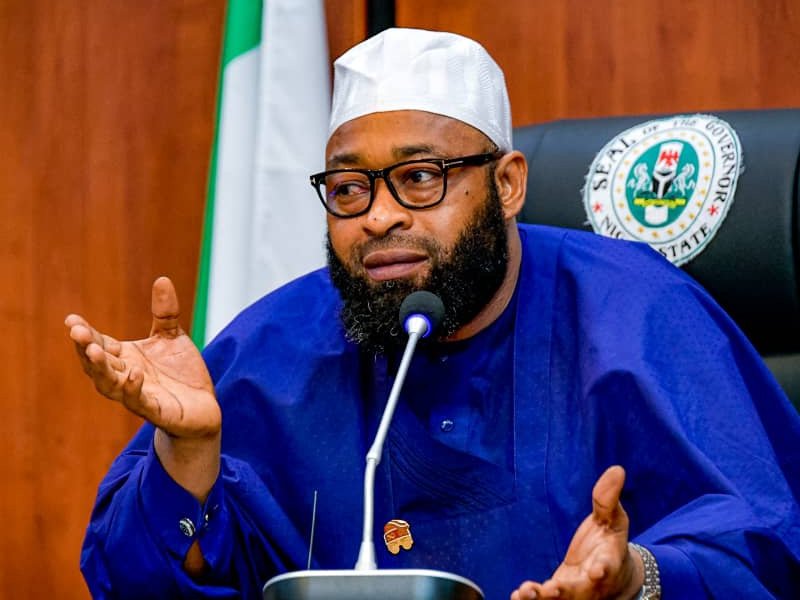
Organic endorsement: Gov Bago’s record and the future of Niger state

Published

on

Umaru Bago has, in recent years, emerged as one of Nigeria’s most closely watched state leaders, building a reputation anchored on results rather than rhetoric.

Since assuming office in May 2023, his administration has steadily attracted attention for its practical approach to governance and its focus on long-term impact.

At a time when public praise is often engineered, much of the recognition surrounding his leadership appears to stem from visible efforts to reposition Niger State for economic growth and stability.

Born on February 22, 1974, in Minna, Bago’s journey into public service reflects a blend of academic preparation and professional experience.

He attended Marafa Primary School and later Federal Government College, Jos, before earning a degree in Political Science from Usman Danfodio University.

Determined to deepen his expertise, he went on to secure multiple postgraduate qualifications, including a diploma from the Federal University of Technology, Minna, an MBA from Ambrose Alli University, and a master’s degree in finance from University of Calabar.

His academic exposure also extended internationally, with executive training at University of Cambridge.

Before venturing fully into politics, Bago built a career in banking, working with institutions such as United Bank for Africa and First City Monument Bank, where he rose to managerial level.

This background has often been cited as influencing his governance style, particularly his emphasis on financial discipline and structured economic planning.

His political journey began in 2007, but it was his election to the House of Representatives in 2011 that marked his rise to national prominence.

Representing Chanchaga Federal Constituency, Bago spent over a decade in the National Assembly, where he chaired key committees and participated actively in legislative debates.

He also contested for the Speakership of the House in the 9th Assembly, finishing behind Femi Gbajabiamila, a move that underscored his growing influence within the political space.

In 2023, Bago clinched the governorship of Niger State under the platform of the All Progressives Congress, defeating his closest rival, Isah Liman Kantigi.

Since then, his administration has focused heavily on transforming the state’s economic base, with agriculture taking centre stage.

His vision to turn Niger into a leading agricultural hub has attracted attention from investors and policymakers, positioning the state as a key player in Nigeria’s food security strategy.

Beyond agriculture, Bago has demonstrated a commitment to infrastructure renewal and continuity in governance.

Rather than abandoning projects initiated by previous administrations, including that of Abubakar Sani Bello, his government has prioritised completing and improving them.

This approach has been widely interpreted as a sign of administrative discipline and a departure from the cycle of waste often associated with political transitions.

His leadership philosophy appears rooted in practical service delivery. Efforts in road construction, urban development, and rural support programmes reflect a focus on improving everyday life for citizens.

At the same time, policies aimed at strengthening security and boosting local enterprise suggest a broader strategy to stabilise and grow the state’s economy. Another defining feature of his administration is the emphasis on teamwork.

With Deputy Governor Yakubu Garba and a team of commissioners and advisers, Bago has built a structure designed to drive coordinated policy implementation.

This collaborative approach reinforces the idea that governance is most effective when supported by capable hands across different sectors.

Outside formal governance, Bago has also maintained a record of philanthropy, including educational support initiatives such as sponsoring examination forms for students and providing relief materials during difficult periods like the COVID-19 pandemic.

These actions have contributed to his image as a leader attentive to grassroots needs. Politically, he has cultivated a style that balances ambition with restraint, favouring initiatives with long-term value over short-term applause.

For many observers, this consistency is what defines his leadership. Rather than relying on grand declarations, his administration has focused on aligning promises with tangible outcomes.

As his tenure continues, supporters argue that Bago represents a model of leadership centred on continuity, economic vision, and people-focused governance.

In a political climate often dominated by optics, his approach offers a contrasting narrative, one that prioritises substance, efficiency, and measurable progress.

Continue Reading
Click to comment

Leave a Reply

Your email address will not be published. Required fields are marked *

Cover

Czechia’s Return to World Cup Ends in Defeat to South Korea

Published

on

Czechia’s long-awaited return to the FIFA World Cup ended in heartbreak yesterday as South Korea fought back to secure a 2-1 victory in Guadalajara. The Group A opener delivered drama, intensity, and a reminder of how unforgiving the global stage can be.

The match began with Czechia showing intent. Their midfield pressed high, forcing South Korea into early defensive errors. The European side’s energy paid off in the 59th minute when Ladislav Krejčí rose above his marker to head home the opener. It was a moment of joy for Czechia, back in the World Cup after a 20-year absence.

But the lead did not last. South Korea, known for resilience, responded swiftly. Just eight minutes later, Hwang In-beom struck from the edge of the box, curling a precise shot past the Czech goalkeeper. The equaliser shifted momentum, silencing Czechia’s supporters and igniting the Korean contingent inside the stadium.

The decisive blow came in the 80th minute. Substitute Oh Hyeon-gyu capitalised on a defensive lapse, slotting calmly into the net to complete the turnaround. His goal sealed South Korea’s victory and underlined their reputation as a team that thrives under pressure.

Czechia tried to rally in the closing stages, but their attacks lacked sharpness. South Korea’s disciplined defence absorbed the pressure, ensuring the scoreline remained unchanged until the final whistle.

The statistics told the story of South Korea’s dominance. They controlled 61.5 percent of possession, completed more passes, and created twice as many chances. Czechia, despite their spirited start, struggled to maintain rhythm once South Korea found their stride.

For Czechia, the defeat was a bitter reminder of the challenges of competing at the highest level. Their return to the World Cup was supposed to signal a new era, but the loss leaves them with work to do if they hope to progress from Group A.

South Korea, meanwhile, celebrated a crucial win. With Mexico also victorious in their opener, the Koreans know every point matters in a tightly contested group. Their comeback showcased tactical patience and mental strength, qualities that could carry them deep into the tournament.

The atmosphere in Guadalajara was electric. Nearly 45,000 fans filled the stadium, creating a vibrant backdrop for the clash. South Korea’s supporters erupted in joy at the final whistle, while Czechia’s fans left subdued, reflecting on what might have been.

Looking ahead, Czechia face South Africa in Atlanta on June 18. It is a must-win fixture if they hope to keep their campaign alive. South Korea will meet hosts Mexico the same day in Zapopan, a match that promises fireworks given both sides’ winning starts.

This result sets the tone for Group A. South Korea have announced themselves as serious contenders, while Czechia must regroup quickly. The World Cup is unforgiving, and yesterday’s match proved that momentum can shift in an instant.

For Nigerian fans following the tournament, the lesson is clear: resilience often defines success at the World Cup. South Korea’s comeback was not just about skill but about belief, a quality every team must carry into the knockout rounds.

As the tournament unfolds, Czechia’s story will be one to watch. Will they recover from this setback, or will their return end in disappointment? For now, South Korea stand tall, their victory a statement of intent in Mexico.

Continue Reading

Cover

Group Lauds House of Reps, Pondi Over Bill to Improve Funding for SSDC

Published

on

*Calls legislation a historic moment for rapid development in the South South

The Amalgamated Coalition of Activists in Nigeria and Diaspora (ACAND) has commended the House of Representatives for passing for second reading a bill seeking to strengthen the funding framework of the South South Development Commission (SSDC).

The group also praised the sponsor of the bill, Hon. Julius Pondi representing Burutu Federal Constituency of Delta State in the House, describing the proposed legislation as a bold and timely intervention by the lawmaker that could accelerate development across the South South region.

In a statement issued on Thursday by its President Lucky Efe, ACAND said the move to provide additional funding for the SSDC represents a historic moment in the quest to address longstanding infrastructural deficits and socio-economic challenges confronting communities in the region.

According to the group, improved funding would enhance the commission’s capacity to execute critical development projects in areas such as roads, education, healthcare, youth empowerment, environmental remediation and economic growth.

“Today marks a significant milestone in the development trajectory of the South South region. The passage of this bill for second reading demonstrates the commitment of the House of Representatives to ensuring that the SSDC is adequately equipped to fulfil its mandate,” the statement said.

The coalition particularly commended Hon. Pondi for championing the amendment, noting that the lawmaker had shown foresight and dedication to the welfare and development of the people of the South South.

It said the region, despite its immense contribution to the nation’s economy, continues to grapple with infrastructure gaps and developmental challenges that require sustained intervention and adequate funding.

“By seeking to expand the funding base of the commission, Hon. Julius Pondi has taken a strategic step towards ensuring that the SSDC can deliver impactful projects that will improve the lives of millions of people across the South South,” the group added.

ACAND urged lawmakers in both chambers of the National Assembly to support the bill through subsequent legislative stages to facilitate its eventual passage and implementation for the development of the region.

The coalition expressed optimism that the proposed amendment would provide the commission with the financial strength needed to accelerate development, create jobs, improve public infrastructure and promote sustainable growth across the region.

It further called on stakeholders, traditional institutions, civil society organisations and community leaders to rally support for the initiative, describing it as a critical investment in the future of the South South.

The House of Representatives had on Wednesday passed for second reading a bill seeking to amend the South South Development Commission Act, 2025, to provide additional funding for the commission.

Leading the debate on the bill, its sponsor, Hon. Julius Pondi, said the amendment was aimed at strengthening the commission’s financial base to enable it undertake more developmental projects and effectively tackle infrastructural challenges in the South South region.

Continue Reading

Cover

State Police: Group Lauds Speaker Abbas, Reps Over Passage of Historic Security Reform Bill

Published

on

The Parliament Support Network (PSN) has commended the Speaker of the House of Representatives, Rt. Hon. Abbas Tajudeen, and members of the 10th House for passing the constitutional amendment bill seeking to establish state police across the country, describing the move as a bold step towards addressing Nigeria’s persistent security challenges.

The group said the passage of the bill marked a historic milestone in the nation’s efforts to reform its security architecture and improve the protection of lives and property.

The House of Representatives on Thursday overwhelmingly passed the State Police Bill, with 288 lawmakers voting in support and only four opposing it. The bill seeks to amend the 1999 Constitution to provide a legal framework for the establishment of state police alongside the existing federal police structure. It is part of broader constitutional amendment proposals being considered by the National Assembly.

Reacting to the development in a statement issued in Abuja, Executive Director of the Parliament Support Network, Dr. Moses Onoja, said the House had demonstrated courage and patriotism by advancing a reform many Nigerians have long advocated.

According to him, the decision reflects the commitment of the Speaker and members of the House to finding lasting solutions to the country’s growing insecurity.

“The passage of the State Police Bill is a landmark achievement that underscores the responsiveness of the 10th House of Representatives to the yearnings of Nigerians. It is a bold and visionary step towards strengthening security governance and improving public safety across the federation,” Onoja said.

He noted that Nigeria’s centralised policing system has faced increasing pressure in recent years due to the rise in terrorism, banditry, kidnapping, communal conflicts and other violent crimes across different regions of the country.

Onoja argued that state police would improve intelligence gathering, enhance rapid response to security threats and provide law enforcement agencies with a better understanding of local communities and peculiar security challenges.

He particularly praised Speaker Abbas for providing leadership throughout the constitutional amendment process and for creating the environment that enabled lawmakers to deliberate on critical national issues.

“The Speaker has shown exemplary leadership in driving reforms that have direct relevance to the security and welfare of Nigerians. The House deserves commendation for placing national interest above partisan considerations in the consideration of this important bill,” he said.

The PSN executive director also acknowledged the extensive consultations, stakeholder engagements and public hearings conducted by the House Committee on Constitution Review before the passage of the bill.

He urged the Senate, state Houses of Assembly and other stakeholders to support the proposal to ensure its eventual adoption into the Constitution.

Under the proposed amendment, states would be empowered to establish and operate their own police services subject to national standards and oversight mechanisms. The bill must still secure concurrence from the Senate and be approved by at least two-thirds of the 36 state Houses of Assembly before it can be transmitted to the President for assent.

Onoja expressed confidence that the proposed reform would strengthen grassroots security, deepen federalism and contribute significantly to the fight against insecurity.

He called on Nigerians to support the initiative, saying the country’s security challenges require innovative and decentralised solutions.

“The establishment of state police will not solve every security problem overnight, but it represents a major structural reform that can significantly improve the country’s capacity to prevent and respond to crime. This is a legacy initiative that deserves the support of all well-meaning Nigerians,” he added.

Continue Reading

Trending

Copyright © 2023 - 2025 DailyMirror Nigeria. Design by AspireWeb.ng, powered by WordPress.