Connect with us

Cover

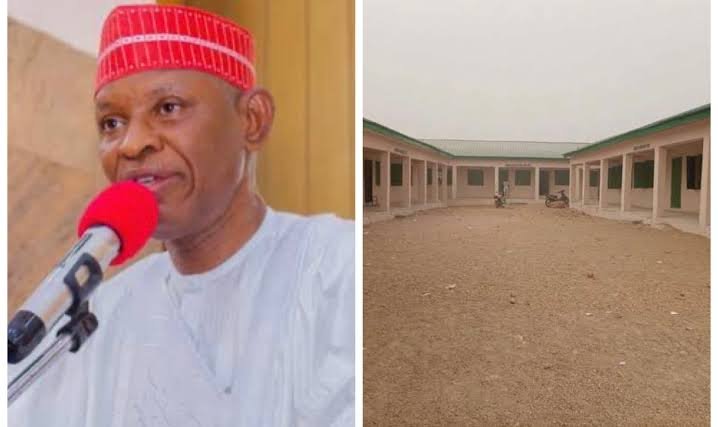
Kano Govt. renovates 1,200 schools in 2 years

Published

on

The Kano state government says it has renovated over 1,200 schools in the last two years.

Dr Ali Makoda, Commissioner for Education, said this at a one-day quality assurance workshop for staff of the ministry and education stakeholders, on Monday in Kano.

He said the administration of Gov. Abba Kabir-Yusuf also approved N484 million for the renovation of schools across the 484 wards in the state.

“The present administration has renovated over 1,200 schools across the 44 LGAs.

“In addition, we engaged elected councillors to supervise the renovation of schools in all the 484 wards, with N484 million set aside for the project. This is the first of its kind in the state,” he said.

According to Makoda, the declaration of a state of emergency on education in May 2024, demonstrates the governor’s commitment to restoring the sector to its former glory.

He said the State Executive Council (SEC), also approved N3 billion for the renovation of 13 boarding girls’ schools shut down by the previous administration.

The commissioner said the state has more than 30,000 schools the highest number in the country, stressing that the government was determined to improve access to quality education at all levels.

Makoda described the workshop as timely, as the state pursued the full implementation of its free and compulsory basic and secondary education policy.

“Without trained quality assurance personnel, efforts on enrolment, infrastructure and teacher recruitment may not yield the desired outcomes.

“The aim of this engagement is to equip quality assurance officers, directors and school heads with the necessary skills and tools to effectively monitor, evaluate and report on teaching and learning activities,” he said.

Makoda highlighted that a strengthened quality assurance system would enable the ministry to identify challenges, implement improvements and promote accountability.

“This workshop is not just a routine exercise but a strategic intervention to drive excellence and quality in education..

The commissioner tasked the participants to be fully engaged and committed to cascading the knowledge acquired to their respective zones and schools.

Also, Bashir Baffa, Permanent Secretary in the ministry, said the participants were drawn from agencies under the ministry, including chief executives and key stakeholders. 

Continue Reading
Click to comment

Leave a Reply

Your email address will not be published. Required fields are marked *

Cover

League of Bauchi Professionals Backs Tuggar for Governor, Cites “Integrity, Global Experience”

Published

on

…Group says state needs “leadership grounded in empathy,” urges fiscal discipline, security

The League of Bauchi Professionals has called on residents of Bauchi State to back the governorship bid of Yusuf Maitama Tuggar, saying he is “best positioned to unlock the state’s vast potential.”

In a press statement issued by its Secretary, Ibrahim Yusuf, following Tuggar’s official declaration and grand homecoming in Bauchi on Saturday, 25th April 2026, the League said Ambassador Tuggar “embodies the kind of leadership required to inspire progress and deliver results.”

“According to the statement, ‘Bauchi needs leadership that motivates through action and example—leadership grounded in empathy, inclusivity, and a clear vision. Ambassador Tuggar represents the type of leader capable of helping the people shape their collective destiny.’”

While commending the success of the declaration event, the League urged supporters “not to relent but to intensify efforts toward securing victory at the polls.” The group reiterated that the state “requires leadership anchored on service, integrity, and measurable progress.”

The League further emphasized that Tuggar’s track record in public service “demonstrates a consistent commitment to the security, prosperity, and well-being of the people.”

“He understands that leadership is not a matter of convenience, but a solemn responsibility to serve with dedication, accountability, and transparency,” the statement added.

Highlighting the basis of its endorsement, the League pointed to Tuggar’s “core values of trust, truth, consistency, and a strong sense of duty.” It noted that “his tenure as Nigeria’s Foreign Minister reflected a deep moral obligation to national service, adding that Bauchi stands to benefit from his blend of global experience and local understanding.”

The statement also stressed “the urgent need for prudent financial management in the state, calling for leadership that will sanitise public finances, eliminate waste, and enforce fiscal discipline.”

“Bauchi’s resources must work for the many, not the few. Ambassador Tuggar possesses the experience and vision to drive sustainable solutions and attract genuine investment,” the group stated.

Reinforcing its position, the League cited Tuggar’s “commitment to ensuring safety and economic stability across the state.”

“Farmers must be able to access their farmlands without fear, traders must move freely, and every child must feel safe going to school,” it said.

The group further underscored “the importance of transparency and inclusive development, insisting that all wards across the 20 Local Government Areas must be fully informed and involved in how public resources are allocated.”

“Anything less would amount to repeating past mistakes,” the statement warned.

Describing Tuggar as “a proud son of Gamawa and a seasoned statesman with proven integrity on the global stage,” the League argued that “he is uniquely qualified to lead Bauchi into a new era of prosperity.”

It also noted “the need for equitable leadership opportunities across the state, pointing out that since the return of democracy in 1999, certain zones have yet to produce a governor.”

“Ambassador Tuggar’s extensive experience across multiple sectors, combined with his reform-driven governance philosophy—particularly in public procurement and accountability—places him far ahead of other contenders,” the statement added.

The League concluded by reaffirming its belief that “Bauchi’s future depends on leadership capable of understanding its challenges and delivering practical, sustainable solutions.”

“Bauchi requires focused, principled, and forward-thinking leadership. We firmly believe that Ambassador Yusuf Maitama Tuggar is the man for the job.”

Continue Reading

Cover

Advocates Slam Atiku’s Criticism of Tinubu’s Economy as ‘Cheap Politics and Propaganda’

Published

on

The Advocates for Economic and Political Advancement on Tuesday described recent criticisms of the Nigerian economy by former Vice President Atiku Abubakar as “cheap politics dressed up as concern” and pure propaganda.

Speaking at a press conference on Tuesday, the group said Atiku’s comments were not rooted in genuine economic analysis but driven by bitterness after multiple unsuccessful attempts to lead the country.

In his address, Dr Opialu Fabian dismissed Atiku’s reference to Nigeria’s external reserves of about $48.45 billion as evidence of failure.

He noted that the same economic framework projects the reserves to rise above $51 billion within the year, describing the situation as a managed adjustment within an ongoing reform cycle rather than a decline.

The group argued that reserves are influenced by several factors, including exchange rate management, capital flows, and liquidity interventions by the Central Bank, and should not be viewed in isolation or used for political effect.

“Select a number. Strip it of context. Amplify it for political effect. That is not economic analysis. That is political theatre,” the group stated.

The Advocates highlighted what they described as significant macroeconomic improvements under President Bola Ahmed Tinubu’s Renewed Hope Agenda.

They pointed to projected economic growth of 4.49 percent, a sharp drop in inflation from over 34 percent to about 14.5 percent — with expectations of further decline to around 12.94 percent — as well as a balance of payments surplus and gradual return of investor confidence.

The group praised the appointment of Taiwo Oyedele as Minister of Finance and Coordinating Minister of the Economy, saying it signals a new era of policy coherence, structured tax reforms, improved revenue generation, and better utilisation of idle funds and public assets.

They noted that over $20 billion currently sits idle in the banking system under reserve requirements, while many public assets worth tens of trillions of naira remain underutilised, adding that addressing these inefficiencies forms a core part of the ongoing reforms.

While acknowledging that Nigeria is still in a transition phase with attendant challenges, the group maintained that the bold decisions taken by the Tinubu administration, particularly the removal of fuel subsidies and unification of the foreign exchange market, were necessary and are beginning to produce positive results, including increased disbursements to states for development projects.

The Advocates urged Nigerians to focus on the broader picture of structural reforms rather than short-term fluctuations, calling on political actors, especially Atiku Abubakar, to engage honestly with facts instead of recycling talking points that ignore visible progress.

“The economy is stabilising. The reforms are taking hold. The direction is clear. No amount of political noise can change that reality,” the group concluded.

Continue Reading

Branded Content

Senator George Akume and the Test of Party Democracy in Benue

Published

on

Senator George Akume, CON, represents a rare breed of Nigerian politician. In a political culture often characterised by impatience, self-interest, and inconsistency, he has distinguished himself through patience, loyalty, and an enduring commitment to teamwork.

I have worked closely with him and witnessed his steady rise since 1999, when he became Governor of Benue State. From there, he went on to serve as Senator, Minister of the Federal Republic, and now Secretary to the Government of the Federation (SGF). His trajectory has been defined not by haste, but by discipline and a remarkable ability to work within the system.

These qualities have been severely tested in recent times, particularly in his relationship with Governor Hyacinth Alia. Governor Alia entered the political arena with significant backing despite having limited political experience, modest resources, and no established structure to contend with seasoned figures such as Barnabas Gemade and Steven Lawani. Against these odds, he emerged victorious.

However, from the moment he assumed office, his relationship with Senator Akume deteriorated without any clear provocation. What began as a strained engagement has since evolved into a persistent political rift.

When discussions later emerged about a potential second term for the governor, many of us close to Senator Akume were understandably concerned by what appeared to be the position of the party’s national leadership. Yet, true to his nature, Akume remained calm and aligned himself with the party, even where the circumstances were personally unfavourable.

This included accepting the controversial dissolution of the duly elected state party leadership and the installation of a caretaker committee—decisions he embraced in the interest of party unity. More notably, when he conveyed the directive that political office holders, including the governor, should be returned unopposed, he did so with restraint, placing party cohesion above personal considerations.

At a gathering in Makurdi, he stated:

“All those elected on the platform of the APC, from the State Assembly to the National Assembly, are expected to return automatically… and of course, the Governor is also expected to be returned.

That position, however, was publicly rejected by Governor Alia, who insisted there would be no automatic tickets, citing the stance of the President and the party’s national leadership. In effect, this signalled a willingness to proceed without regard for the political structure that facilitated his emergence.

For many of us, that moment was decisive.

Senator Akume, despite what can only be described as sustained political provocation, has remained composed—much like the biblical Job—accepting both favourable and difficult circumstances within the party framework.

But this is no longer about personalities.

It is about the survival of political order and internal democracy within the All Progressives Congress (APC) in Benue State.

There is a dangerous assumption at play—that power can be consolidated through imposition, that party structures can be ignored, and that those who built the system can be sidelined without consequence. That assumption is fundamentally flawed.

Those of us who have stood with Senator Akume have exercised restraint out of respect for his disposition. But restraint must not be mistaken for weakness.

The time has come for a necessary shift.

Our leader, Senator George Akume, must now allow his supporters—and indeed all party members—to fully exercise their political rights. Let there be open contest. Let aspirants emerge freely, without intimidation or artificial barriers. Let the people of Benue State decide.

Anything short of this will not only fracture the party; it will erode its credibility beyond repair.

And let no one be under any illusion: if the process is manipulated, if candidates are imposed, if the will of the people is subverted, it will mark the beginning of the end for the APC in Benue State.

As one who has followed Nigerian politics since the 1970s, I say this without hesitation: no political party survives sustained injustice against its own members.

The warning signs are already clear. What happens next will determine whether the party corrects itself—or collapses under the weight of its own contradictions.

A Benue APC chosen by the people, not imposed from above, will not only survive—it will endure and dominate.

Continue Reading

Trending

Copyright © 2023 - 2025 DailyMirror Nigeria. Design by AspireWeb.ng, powered by WordPress.