Connect with us

Opinion

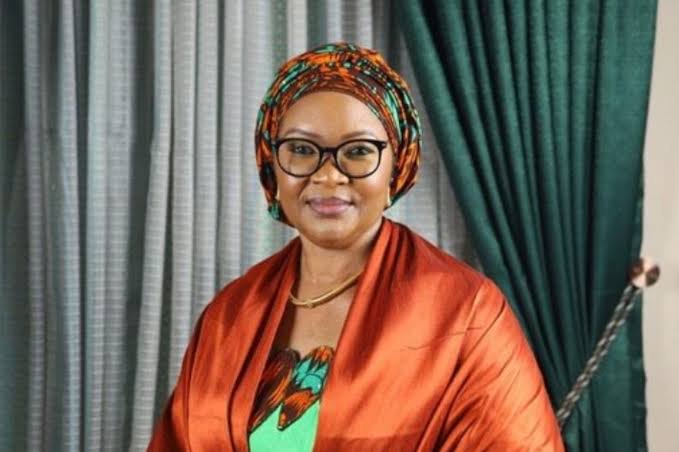
NENADI USMAN: AN EPITOME OF COURAGE IN PARTY LEADERSHIP

Published

on

By William Ochonu 

In global history, there are women who have made indelible marks of grace on the solid rock of time. If they were from the Bible, they are qualified as virtuous women, whose values are more than rubies.

Politically, they are Amazons, whose qualities transcend their feminine attributes and melt the iron pillars of opposition, leading heroically where even men and sometimes angels fear to tread. Women like Lee Kuan Yew of Singapore, Ruth Bader Ginsburg of the USA, Angela Merkel of Germany, Jacinda Ardern of New Zealand, Margaret Thatcher of the UK, and Nenadi Usman of Nigeria.

Women who have distinguished themselves as rare epitomes of strategic prioritization, courage, resilience, visionary thinking and leadership. Indeed, Senator Nenadi Usman is actively working to transform the Labour Party into a party that will serve Nigerians and lead them into tangible prosperity through its economic policies and strategic planning.

A woman of deep empathy and social activism, she is touched by the plight of refugees and the thousands of displaced persons, and is willing to lead her party into taking tough decisions on the refugees and displaced persons crisis in Nigeria.
Her level of transparency is clearly communicated on key national issues, and her compassionate, motherly but frank responses resonate in the hearts of citizens and connect directly with their concerns.

A virtuous woman, her prudent management of funds is exemplary, winning the hearts and minds of all members of the party. As the Interim National Chairperson of the Labour Party, she is decisively engaged in ensuring that her party reclaims its position in Nigerian politics ahead of the 2027 election, and retrieves it from hawkers and desperados like Julius Abure and his co-travellers.

Given her deep experience and focused nature as former Minister of Finance, her sterling leadership qualities have been brought to bear on her daily undertakings. The reinforcement of her position by the court ruling recognising her as the legitimate Leader of the party, and the further acknowledgment by the Independent National Electoral Commission (INEC), did not puff her up, neither did it make her lose track of her service to the party and the citizens of the country.

Rather, she sees it as a call to duty, committing herself head-on to party unity, stability and rebuilding.
A strategic planner, she is poised with the agenda to rebuild and rebrand the party, realigning its values to meet core societal needs, and creatively enhancing its appeal to younger voters.

She has also prioritised internal democracy within the Labour Party, ensuring that under her watch, party members are loyal, disciplined and transparently accountable both as members and leaders, and that elections into all offices are conducted transparently with inclusive decision-making processes. Acknowledging the strength of the people in all democracies, Senator Nenadi has deployed strategy into grassroots mobilisation, targeting an ambitious 10 million new members.

A positive communicator who believes in more actions than words, she has promised to entrench transparent party congresses from the ward, local government, and state levels, ensuring leadership renewal that will bring about a formidable, time-tested and credible national convention which will elect substantive leaders of the party.
Focused on these agendas, her efforts at strengthening the party are all targeted at a strategy that will foster grassroots lobbying and mobilisation through strengthening local structures by engaging with communities and addressing their concerns.

She has also decided to ensure a clear Manifesto that is dynamic and people-centric, accommodating the key issues of economy, security, and governance, for according to her, “the people have to know and be certain of the value they stand to derive in exchange for their votes”. Senator Usman believes that only with strong leadership, chosen out of broad appeal, integrity, and a clear vision can the party emerge victorious and regain the confidence of Nigerians.

A realist, the Interim National Leader strongly believes in the effectiveness of collaborative effort and coalition building, and has therefore entrenched it as a doctrine as the party forms alliances with like-minded opposition parties or groups to increase its influence.
Acknowledging the strength and imperatives of youths in nation building, Senator Nenadi has prioritised engagement with youths, especially leveraging social media, and fostering the involvement of young leaders in decision-making.

Over time, Senator Usman has consistently maintained a life of accountability and service, demonstrating transparency, accountability, and responsiveness to citizens’ needs. Senator Nenadi’s proficiency in party management is attested by many. The innovative Labour Party’s focus on grassroots mobilisation and membership drive, and her drive for strategic alliances and inclusive leadership is adjudged the best practice in global democracy, fostering peace and effective collective governance.

Her commitment to ensuring that the party is realigned has led to several reforms which have resulted in increased member engagement and ownership, a more robust representative leadership, reduced internal conflicts, and enhanced credibility and public trust, attracting several converts, including notable and time-tested members of the National Assembly. There is no doubt that with Senator Usman’s drive and strategic commitment, the Labour Party will soon break barriers, challenge norms, and inspire future generations, leaving a credible and indelible mark on the world political landscape.

Such as was left by Sirimavo Bandaranaike, who was the world’s first female Prime Minister, leading Sri Lanka through turbulent times and focusing on socialist economic reforms. She implemented policies like nationalising key industries, promoting Buddhism, and introducing Sinhalese as the official language.

Also, Indira Gandhi, India’s first and only female Prime Minister, who implemented significant economic and social reforms, including the Green Revolution, and led India through the 1971 war with Pakistan, playing a crucial role in Bangladesh’s independence. Need we mention Angela Merkel, the German Chancellor from 2005 to 2021, known for her pragmatic leadership and significant influence on European politics.

She was able to navigate crises like the 2008 financial crash, the 2015 migrant crisis, and the COVID-19 pandemic.
Not forgetting Jacinda Ardern, the Prime Minister of New Zealand, who ruled from 2017 to 2023, and was laudably recognised for her compassionate response to crises like the Christchurch mosque shootings and the COVID-19 pandemic. It is necessary to mention also Ellen Johnson Sirleaf, Africa’s first elected female head of state, leading Liberia from 2006 to 2018 and promoting women’s rights and economic growth, and Margaret Thatcher, the UK’s first female Prime Minister, serving from 1979 to 1990, who implemented radical economic changes.

Surely, Senator Nenadi Usman is certainly becoming Nigeria’s courageous Golda Meir, who was Israel’s first and only female Prime Minister, leading the country from 1969 to 1974 and playing a key role in international diplomacy — only this time, winning the hearts and conscience of Nigerians and extricating the Labour Party from the iron grips of Julius Abure and his co-travellers.

Ochonu is a member of the Labour Party writing from Makurdi, Benue State.

Continue Reading
Click to comment

Leave a Reply

Your email address will not be published. Required fields are marked *

Opinion

Sowore’s Asinine Attack on Journalists and Free Speech

Published

on

The Centre For Public Integrity finds deeply troubling and alarming, a Sunday June 21, 2026, post by online publisher and Action Action Congress (AAC) presidential candidate, Omoyele Sowore, attacking the Nigeria Union of Journalists (NUJ) for the “Man of the Award” it bestowed on the Director General of the Department of State Services (DSS), Mr. Oluwatosin Ajayi.

In a statement by the group’s coordinator, Comrade Job Samuel Danfulani, the Centre views with seriousness the moral, legal and security implications of Sowore’s posts, especially especially the unwarranted and baseless attack on the NUJ.

While we concede that, it is within Sowore’s rights to fault the award, such should however be done with decency and within the ambit of the law.

Last December, the International Press Institute (IPI), a global network of editors, media executives, and top journalists, honoured the DSS DG for his “unmistakable commitment to press freedom and respect for journalists and media organisations.”

Said IPI, “Unlike in previous years when the SSS was notorious for serial harassment, intimidation, and arrests of journalists, the agency under Mr Ajayi’s leadership has shown remarkable restraint, professionalism, and openness to dialogue.”

The Centre For Public Integrity notes that, in April 2025, Mr. Ajayi ordered the removal, from over 30 years of DSS watchlist, of the Executive Director, International Press Centre, Mr. Lanre Arogundade,

In October, following Mr. Ajayi’s intervention, the secret police dropped charges on alleged cyber defamation, conspiracy, and the publication of false information against an online newspaper, Order Paper, and none staff members.

In case Sowore doesn’t know, journalism in Nigeria is made up of those in the print and broadcast media organisations. In April 2026, the umbrella body of broadcast journalists in Nigeria , Broadcasting Organisation of Nigeria (BON), gathered in Abuja and bestowed “Friend of the Media” award on the DSS DG.

We find it curious that, Sowore, who didn’t fuss about the IPI and BON awards on the DSS DG, is now rankled by Friday’s award on the same man by the Nigeria Union of Journalists, the umbrella body of all journalists in Nigeria.

From media reports, at the end of a two-day security summit in Abuja, the NUJ bestowed “Man of the Year” award on Mr. Ajayi for building “partnership, openness and mutual respect between the media and security institutions.” They explained that his “leadership approach values engagement, transparency and partnership” and has been “vital to protecting lives, preserving democratic space and advancing nation-building.”

From all records, Sowore isn’t a journalist. He, therefore, does not and may never understand the ethics of journalism.

Clearly, Sowore doesn’t know that journalists, as members of the Fourth Estate of the realm, can criticize or applaud policy makers so long as the criticism or applause is objectively earned and based on verifiable facts.

It is on this note that The Centre For Public Integrity joins the IPI, BON and the NUJ in celebrating Mr. Tosin Ajayi for breaking with the tradition of self-help and putting the DSS on the path of the rule of law.

We are witnesses to how the DSS has, since Mr. Ajayi became DG, been running to the courts for adjudication of all matters, including when Sowore called President Bola Tinubu a “criminal” and for which he is standing trial. Sowore, who didn’t find anything wrong with the IPI and BON awards on the DSS DG, suddenly is finding everything wrong with the NUJ award simply because a Federal High Court has asked him to open his defence in a case of alleged criminal defamation against President Tinubu filed against him by the DSS.

Aside IPI, BON and the NUJ, journalists, who have practiced under several governments and under several security chiefs, are singling out Mr. Ajayi for praises. About a week ago, veteran journalist and a former Director-General of the Nigerian Television Authority (NTA), Dr. Tonnie Iredia, with far more credible activism credentials than Sowore might ever have, penned a very emotional tribute to Mr. Ajayi’s leadership style. For those who remember, Dr. Iredia anchored Point-blank for several years on the NTA, where he held public officers, including members of the military junta, to account.

We challenge human rights organizations to swiftly condemn this crossing of the lines of decency by Sowore. Just as he has the right to dignity, he should not under any guise attempt to trample on the dignity of others. After all, no dignity is inferior or superior to another. We also expect Nigerian journalists to adequately respond to Sowore’s disrespect for their noble profession.

On a final note, The Centre For Public Integrity appeals to the DSS DG not to allow such reckless provocative actions by Sowore distract or diminish his resolve to continue embracing the rule of law at all times.

Signed:
Comrade Job Samuel Danfulani,
National Coordinator

Continue Reading

Opinion

Gov Otu: Rewriting Cross River’s Healthcare Story With Historic 100% Pay Rise for Doctors

Published

on

By Linus Obogo

In the quiet town of Ogoja, where the red earth stretches endlessly beneath the tropical sun and communities rise each morning to the rhythms of resilience and hope, a weary doctor named Dr. Monjok once wrestled with a difficult question: should he remain in public service or seek greener pastures elsewhere?

For years, his calling had kept him at the bedside of children battling malaria, expectant mothers navigating the uncertainties of childbirth, and elderly patients confronting the frailties of age. Through long nights, limited resources and mounting pressures, he remained steadfast. Yet the burden of inadequate remuneration and persistent manpower shortages often weighed heavily on his spirit. Today, however, Dr. Monjok stands taller, buoyed by renewed optimism, as Governor Bassey Otu’s administration ushers in a new era with a landmark 100 per cent salary increase for doctors across Cross River State.

This historic intervention is far more than a financial adjustment. It is a powerful declaration that those who dedicate their lives to preserving the health and dignity of others deserve to be honoured, valued and rewarded. It is a recognition of countless sacrifices made in consulting rooms, emergency wards and rural health centres where doctors often labour quietly, driven not by wealth but by duty. In one bold stroke, Governor Otu has infused fresh hope into a profession that forms the backbone of every thriving society.

For many healthcare professionals, the announcement represents a turning point, a breath of fresh air. It signals the emergence of a government that understands that healthcare is not merely a social service but a sacred obligation. It is an affirmation that those entrusted with saving lives should not themselves be left to struggle under the weight of neglect. By doubling doctors’ salaries, Governor Otu has not only boosted morale but has also strengthened the state’s capacity to retain talent and attract skilled professionals who might otherwise seek opportunities beyond its borders.

Yet the salary increase is only one chapter in a broader and exhilarating story of transformation unfolding across the health sector. Since assuming office, Governor Otu has increased funding to healthcare by more than 100 per cent, reflecting a deliberate and strategic commitment to rebuilding a sector that lies at the heart of human development.

It is a demonstration of leadership that recognizes that healthy citizens are the foundation upon which prosperous economies and stable societies are built.
This commitment is equally evident in the lifting of the long-standing embargo on employment within the health sector and the approval of the recruitment of 2,000 additional healthcare workers. Across urban centres and rural communities alike, this decision is expected to bridge critical manpower gaps, improve access to medical services and bring relief to overstretched facilities.
For many communities that have long endured shortages of healthcare personnel, the development represents a long-awaited answer to years of yearning.

In the creekside settlements, riverine communities and bustling townships of Cross River, the echoes of this transformation are already reverberating. At General Hospital, Ukem, where years of wear had dulled the promise of quality care, a new chapter is unfolding. The release of funds for its renovation, alongside the rehabilitation of Cottage Hospital, Oban, and the revival of the once-abandoned General Hospital complex in Akpabuyo, reflects a government determined to restore healthcare institutions to their rightful place as sanctuaries of healing and hope.

These projects are more than bricks and mortar. They are monuments to purposeful governance and symbols of a future in which quality healthcare is not a privilege reserved for a few but a right accessible to all. Each renovated ward, restored facility and upgraded theatre represents another step towards a healthier and more resilient Cross River.
Dr. Monjok’s story is mirrored in the experiences of countless citizens whose lives intersect daily with the healthcare system. It is reflected in the expectant mother who no longer has to travel great distances in search of prenatal care. It is evident in the child whose access to treatment is no longer determined by geography. It is seen in families who can now look towards public health facilities with renewed confidence and expectation.
Governor Otu’s reforms have also embraced nurses, pharmacists, laboratory scientists, community health officers and other critical healthcare personnel through enhanced allowances and improved welfare packages.

The establishment of the Cross River State Hospital Management Board further underscores a commitment to accountability, efficiency and institutional excellence. Together, these measures will lay the foundation for a healthcare system that is modern, responsive and sustainable.

As Dr. Monjok now gazes across the rolling landscapes of Cross River, he sees more than familiar hills and valleys. He sees the dawning of a new possibility. What has begun as a bold policy decision will sooner than later, rapidly evolve into a healthcare renaissance capable of touching every corner of the state. In that unfolding story, every doctor is valued, every healthcare worker is empowered and every citizen is placed at the heart of governance.

Indeed, Governor Otu’s historic intervention is much more than increasing salaries; it is about restoring confidence, rekindling aspirations and rewriting the healthcare story of Cross River State with uncommon vision, courage and purpose.

Obogo is Chief Press Secretary and Special Adviser on Media and Publicity to Governor Bassey Otu

Continue Reading

Opinion

General Olufemi Oluyede: The Man Steering Nigeria’s Defence into A New Era

Published

on

By Sambo Sule

In the crucible of a nation forged by resilience, where shadows of uncertainty stretch long across savannah and coast, General Olufemi Olatubosun Oluyede emerges as a beacon of unyielding resolve. Like the ancient warriors of Ekiti soil—steadfast sentinels against tempests—he now stands at the helm of Nigeria’s Armed Forces as Chief of Defence Staff.

His appointment marks not merely a change of guard, but the dawn of a transformative epoch. It is one where discipline meets destiny, strategy dances with synergy, and the military reclaims its sacred covenant to shield the motherland.

Oluyede’s career has been defined by excellence and resilience. Rising through the ranks of the Nigerian Army, he has commanded troops in some of the most difficult operational theatres, earning respect for his tactical ingenuity and his ability to inspire confidence among soldiers and civilians alike.

Since assuming office, General Oluyede has prioritized jointness—the seamless integration of the Army, Navy, and Air Force into a unified fighting force. He believes that Nigeria’s security challenges require synergy, not fragmentation, and under his leadership, joint operations have become the hallmark of military campaigns.

This approach has already yielded results: in May 2026 alone, Nigerian troops neutralized over 317 terrorists, arrested 314 suspects, and rescued 221 kidnapped civilians, while recovering 93 assorted arms and dismantling illegal refining sites. These achievements reflect his insistence on coordination, precision, and professionalism.

Another defining feature of his leadership is the push for indigenous defence production. General Oluyede has championed the revitalization of the Defence Industries Corporation of Nigeria (DICON), ensuring that Nigeria reduces dependence on foreign suppliers and builds local capacity.

The CDS’ vision is to see Nigeria emerge as a regional hub for defence technology, capable of sustaining its own military requirements and contributing to African security. By encouraging local innovation, he is laying the foundation for a self-reliant Armed Forces that can adapt to evolving threats.

Civil-military relations are also central to his philosophy. General Oluyede has consistently emphasized that the Armed Forces exist to protect the people, not to intimidate them.

He has directed troops to uphold professionalism and respect for human rights in all operations, reinforcing trust between the military and civilians. His swift responses to crises—deploying reinforcements, ordering aerial surveillance, and ensuring humanitarian support—demonstrate his people-centric approach.

For him, threats against civilian peace are intolerable affronts to national sovereignty. Beyond operations, General Oluyede has invested in the intellectual and doctrinal development of the Armed Forces.

He has positioned the Joint Doctrine and Warfare Centre (JDWC) as the intellectual hub of Nigeria’s defence establishment, advancing doctrine, innovation, and technology to keep the Armed Forces adaptive to evolving threats. This institution ensures that Nigeria’s military remains aligned with global best practices while developing strategies tailored to local realities.

General Oluyede’s leadership style blends firmness with empathy. He commends troops for gallantry and tactical ingenuity, reinforcing morale across operational theatres.

At the same time, he insists on accountability, ensuring that discipline remains the bedrock of military service. His ability to balance operational demands with welfare considerations has strengthened the Armed Forces as an institution.

General Oluyede’s legacy is already taking shape. He is positioning Nigeria’s Armed Forces as a modern, self-reliant, and highly professional military. His emphasis on jointness, indigenous production, and civilian protection ensures that the Armed Forces remain not only a guarantor of sovereignty but also a trusted institution in the eyes of the people.

The CDS tenure is redefining Nigeria’s defence posture, positioning the country as a regional leader in security and stability. In the broader context of national development, his leadership underscores the critical role of the military in creating an environment of peace and stability.

By securing communities, protecting borders, and dismantling criminal networks, the Armed Forces under his command are enabling economic growth, social development, and national unity. His vision is not limited to the battlefield; it extends to the future of Nigeria as a secure, prosperous, and respected nation.

General Olufemi Oluyede is, indeed, the man steering Nigeria’s defence into a new era. His story is one of discipline, vision, and service—a reminder that leadership in uniform is not about power, but about responsibility, sacrifice, and the unwavering commitment to protect the nation and its people.

Sule is a public affairs analyst writing from Kaduna.

Continue Reading

Trending

Copyright © 2023 - 2025 DailyMirror Nigeria. Design by AspireWeb.ng, powered by WordPress.