Connect with us

Branded Content

Regulation by Sunlight: How Transparency Is Changing Nigeria’s Telecoms Sector

Published

on

Bad behaviour does not fare well under exposure. People, institutions, and systems tend to be at their best when the spotlight is on them. A United States Supreme Court Justice, Louis Brandeis, captured the power of transparency aptly when he observed in a 1913 article that “sunlight is said to be the best disinfectant; electric light the most efficient policeman.”

Transparency, like sunlight, exposes. Bad behaviour that prefers to remain unseen either falls in line or risks public embarrassment. Information, when placed in the hands of the public, empowers them. For businesses, it deters them from conduct that is unbecoming, because few welcome sustained scrutiny that ultimately damages their reputation.

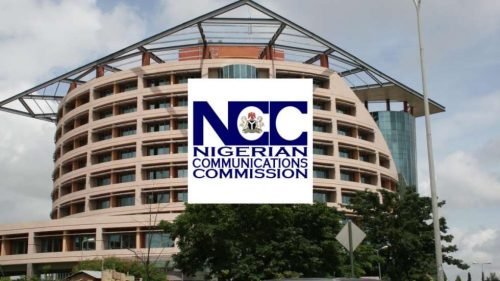
The telecommunications industry is no exception. The regulatory approach adopted by the Nigerian Communications Commission (NCC) to proactively disclose information—bringing clear and easy-to-understand information to the public domain—is reshaping how consumers, operators, and investors perceive the sector.

Traditionally, regulation in the industry leaned heavily on a punitive, command-and-control model. The regulator made the rules, enforced them, and wielded the whip to keep operators in line. But with well over a thousand licensed operators, the whips were never going to go around. One must also pose the question: do whips truly inspire better behaviour? But that is a subject for another conversation.

In a competitive environment as we have in telecommunications, operators are driven by the need to outperform one another. They compete for subscribers, promote attractive bonuses, and roll out sleek tariff offerings. When this competition plays out in an open and transparent field—where accurate, timely, and comparable information is available—consumers ultimately benefit, and operators are incentivised to improve.

Take an example from late 2024, when the NCC concluded an audit of the national telecoms subscriber database following the implementation of the Federal Government’s NIN–SIM linkage policy. Over 60 million lines were removed from the system. The regulator did not attempt to massage the numbers or obscure the reality. The facts, though stark, were presented plainly. Operators were confronted with their true subscriber figures, and the signal was unmistakable: it was time to sit up. Operators immediately began to develop and deploy strategies to get more subscribers—both lost and new ones—to their network.

Sunlight, indeed, does two things—it brightens, and it heats. Both can be uncomfortable if they hit you unprepared.

The NCC’s directive mandating mobile network operators and major Internet service providers to notify consumers of significant service disruptions and planned maintenance aligns squarely with this transparency and accountability ethos. In the same vein, the NCC last year launched a Major Network Outage Incident Reporting Portal on its website. On this platform, operators now report major outages they face, their causes, affected areas, and restoration timelines.

Sometime in 2025, the NCC introduced its Guidelines on Corporate Governance for the telecommunications industry. The framework mandates operators in the sector to have stronger board composition and effectiveness. It enhances compliance and ethical standards and demands more robust risk management and audit practices in the sector. Crucially, it advances transparency and accountability across the sector. Operators are now required to submit mid-year and annual compliance reports detailing adherence to governance standards, ethical obligations, and risk management practices. The Guidelines strengthen public trust, bolster investor confidence, and preserves the integrity of the industry.

Further deepening this transparency drive, the NCC, in partnership with Ookla, began publishing quarterly operators’ network performance reports in October 2025. These reports benchmark quality of service and quality of experience across operators. They also provide insights into network capacity, 5G opportunities, and device performance.

Similarly, the NCC has launched its National Coverage Maps. The maps allow consumers to visualise network coverage, speeds, and service availability across the country.

Taken together, these measures place the industry in the public glare—open to scrutiny and assessment. For consumers, they are enabled to make more informed choices about networks and tariffs. For operators, transparency in the industry imposes a new era where performance is visible, shortcomings are exposed, and accountability is no longer abstract. To protect their brands and market positions, operators must now resolve network challenges more quickly, communicate more honestly, and deliver better service.

Investors take transparency in Nigeria’s telecommunications industry seriously. For them, it signals regulatory predictability and reduced uncertainty—conditions that give investors the confidence to commit capital to the sector.

Perhaps most importantly, this openness helps rebuild public trust in Nigeria’s telecommunications sector.

It is unsurprising that the Presidential Enabling Business Environment Council (PEBEC) ranked the NCC among the top five Federal Government agencies for transparency and efficiency in 2025. The ranking affirmed that the Commission’s effort to place the industry under public scrutiny was being felt—and seen.

The Executive Vice Chairman and Chief Executive Officer of the NCC, Dr. Aminu Maida, captured the moment succinctly: “This recognition is an affirmation of the values that guide our work: transparency, accountability, and an unwavering commitment to regulatory excellence. It signals that the reforms we have pursued, the systems we have strengthened, and the decisions we have taken are yielding the right results.”

There are still gaps the industry must close. Yet this approach—proactive disclosure, borderless transparency, and consistent accountability—clearly places the NCC on the right path to addressing both long-standing and emerging challenges in the telecommunications sector.

Darkness preserves the status quo. Turning on the light sets reform in motion. By ensuring tariff clarity, publishing real-time coverage maps, making network performance and operator ratings public, and enforcing a corporate governance framework rooted in accountability, the NCC is cultivating a culture in which the lights remain on. Competition is sharpened, performance becomes non-negotiable, and underperformance has nowhere to hide.

Johannes Wojuola, is the Special Adviser to the EVC/CEO, NCC, on Communication and Media. He writes from Abuja.

Continue Reading
Click to comment

Leave a Reply

Your email address will not be published. Required fields are marked *

Branded Content

Senator George Akume and the Test of Party Democracy in Benue

Published

on

Senator George Akume, CON, represents a rare breed of Nigerian politician. In a political culture often characterised by impatience, self-interest, and inconsistency, he has distinguished himself through patience, loyalty, and an enduring commitment to teamwork.

I have worked closely with him and witnessed his steady rise since 1999, when he became Governor of Benue State. From there, he went on to serve as Senator, Minister of the Federal Republic, and now Secretary to the Government of the Federation (SGF). His trajectory has been defined not by haste, but by discipline and a remarkable ability to work within the system.

These qualities have been severely tested in recent times, particularly in his relationship with Governor Hyacinth Alia. Governor Alia entered the political arena with significant backing despite having limited political experience, modest resources, and no established structure to contend with seasoned figures such as Barnabas Gemade and Steven Lawani. Against these odds, he emerged victorious.

However, from the moment he assumed office, his relationship with Senator Akume deteriorated without any clear provocation. What began as a strained engagement has since evolved into a persistent political rift.

When discussions later emerged about a potential second term for the governor, many of us close to Senator Akume were understandably concerned by what appeared to be the position of the party’s national leadership. Yet, true to his nature, Akume remained calm and aligned himself with the party, even where the circumstances were personally unfavourable.

This included accepting the controversial dissolution of the duly elected state party leadership and the installation of a caretaker committee—decisions he embraced in the interest of party unity. More notably, when he conveyed the directive that political office holders, including the governor, should be returned unopposed, he did so with restraint, placing party cohesion above personal considerations.

At a gathering in Makurdi, he stated:

“All those elected on the platform of the APC, from the State Assembly to the National Assembly, are expected to return automatically… and of course, the Governor is also expected to be returned.

That position, however, was publicly rejected by Governor Alia, who insisted there would be no automatic tickets, citing the stance of the President and the party’s national leadership. In effect, this signalled a willingness to proceed without regard for the political structure that facilitated his emergence.

For many of us, that moment was decisive.

Senator Akume, despite what can only be described as sustained political provocation, has remained composed—much like the biblical Job—accepting both favourable and difficult circumstances within the party framework.

But this is no longer about personalities.

It is about the survival of political order and internal democracy within the All Progressives Congress (APC) in Benue State.

There is a dangerous assumption at play—that power can be consolidated through imposition, that party structures can be ignored, and that those who built the system can be sidelined without consequence. That assumption is fundamentally flawed.

Those of us who have stood with Senator Akume have exercised restraint out of respect for his disposition. But restraint must not be mistaken for weakness.

The time has come for a necessary shift.

Our leader, Senator George Akume, must now allow his supporters—and indeed all party members—to fully exercise their political rights. Let there be open contest. Let aspirants emerge freely, without intimidation or artificial barriers. Let the people of Benue State decide.

Anything short of this will not only fracture the party; it will erode its credibility beyond repair.

And let no one be under any illusion: if the process is manipulated, if candidates are imposed, if the will of the people is subverted, it will mark the beginning of the end for the APC in Benue State.

As one who has followed Nigerian politics since the 1970s, I say this without hesitation: no political party survives sustained injustice against its own members.

The warning signs are already clear. What happens next will determine whether the party corrects itself—or collapses under the weight of its own contradictions.

A Benue APC chosen by the people, not imposed from above, will not only survive—it will endure and dominate.

Continue Reading

Branded Content

Infinix NOTE 60 Ultra Signals a New Era for Premium Smartphones in Nigeria

Published

on

Crank, Head of Auto, 234 Drive; Izzie Boye, Tech Expert; Nnamdi Ezeigbo, CEO, SLOT Nigeria; Yefui Nui, Marketing Manager, Infinix Nigeria; Olusegun Adebayo, CEO Harmony Stores with others at the Infinix Note 60 Ultra launch event

Infinix has officially launched the NOTE 60 Ultra in Nigeria, reinforcing its strategic push into the premium smartphone segment through a series of high-impact partnerships spanning design, technology, and retail. The launch event brought together key stakeholders, industry leaders, media, and consumers to experience the device firsthand, highlighting the brand’s commitment to delivering world-class innovation tailored to the Nigerian market.

The Infinix NOTE 60 Ultra on display at its official launch event in Nigeria

The Infinix NOTE 60 Ultra on display at its official launch event in Nigeria


Providing a unique perspective on the device’s design, Crank, Head of Auto at 234 Drive, highlighted the supercar-inspired elements that define the NOTE 60 Ultra. Drawing parallels between high-performance automobiles and the smartphone, he pointed to the sleek unibody structure, aerodynamic finish, and precision detailing as key features that echo the craftsmanship of luxury vehicles. He noted that the collaboration behind the device reflects a growing convergence between automotive design principles and consumer technology, resulting in a product that is as much about aesthetics and emotion as it is about performance.

Retail partners also played a central role at the event, with the CEOs SLOT Systems and Harmony Stores present to show their support for the launch. In their remarks, they spoke about the increasing demand within the Nigerian market for devices that combine power, durability, and premium design. They expressed strong confidence in the NOTE 60 Ultra’s market potential, citing its standout features including the Satellite Call and Messaging capability, 200MP camera with Samsung imaging system, 7000 mAh battery, and overall build quality as key factors that will resonate with consumers. They also reaffirmed their commitment to ensuring the product is readily available across their retail channels, making it easier for customers nationwide to access the device.

Head of Auto, 234Drive, speaking on the Infinix Note 60 Ultra Supercar DNA

Head of Auto, 234Drive, speaking on the Infinix Note 60 Ultra Supercar DNA

Adding to the strategic outlook, Yefui Nui, Marketing Manager at Infinix Nigeria, spoke extensively about the brand’s expansion plans and long-term vision. She emphasized that the launch of the NOTE 60 Ultra represents more than just a product introduction; it signals a deliberate move to strengthen Infinix’s presence in the premium category while continuing to innovate across all segments. She highlighted ongoing investments in partnerships, product development, and customer engagement, all aimed at reinforcing Infinix’s position as a forward-thinking brand that understands and evolves with its audience. She further reiterated the company’s commitment to Nigeria as a key growth market, underscoring efforts to continuously deliver products that meet the aspirations of modern consumers.

Following this, Oluwayemisi Ode, PR Manager at Infinix Nigeria, addressed the brand’s pricing strategy, emphasizing a careful balance between premium innovation and accessibility. She noted that while the NOTE 60 Ultra introduces flagship-level features and design, it has been thoughtfully priced to remain competitive and attainable for Nigerian consumers. According to her, this approach reflects Infinix’s long-standing commitment to democratizing advanced technology, ensuring that more users can access cutting-edge experiences without compromising on quality or performance.

Shine Rosman at the Infinix Note 60 Ultra launch event

Shine Rosman at the Infinix Note 60 Ultra launch event


The event also attracted a vibrant mix of cultural and tech influencers, adding to the excitement around the launch. Notable personalities such as Shine Rosman, Elozonam, Saga, and Neo Akpofure were in attendance, alongside respected tech expert Izzi Boye. Their presence underscored the growing intersection between technology, lifestyle, and entertainment, reflecting the NOTE 60 Ultra’s positioning as a device designed for today’s dynamic and style-conscious users.

Originally unveiled at Mobile World Congress 2026, the NOTE 60 Ultra brings together a powerful combination of innovation and performance. From its 200MP imaging system and advanced zoom capabilities to satellite connectivity, fast-charging technology, and a long-lasting battery, the device is engineered to deliver a comprehensive flagship experience.

With the NOTE 60 Ultra now available at the Infinix Flagship Store in Abuja, and across SLOT, Pointek, Harmony Stores, 3CHUB, Royalline nationwide, Infinix is setting a new tone for its brand in Nigeria one that confidently bridges accessibility with premium aspiration, while continuing to push the boundaries of what consumers can expect from a smartphone.


Continue Reading

Branded Content

NDLEA Officers Nass Course II 2011 Intake Petition/Complaint Of Irregularities, Fairness, And Injustice In Promotion

Published

on

NDLEA Officers Nass Course II 2011 Intake Petition/Complaint Of Irregularities, Fairness, And Injustice In Promotion

We, the officers of NASS Course 11, 2011 intake, of the National Drug Law Enforcement Agency (NDLEA), wish to petition and lodge a complaint to the president and commander in chief of the Federal Republic of Nigeria and to the National Assembly, in the person of President Bola Ahmed Tinubu, regarding the irregularities observed in the assignment of promotion and effective dates of promotion and proper placement as was used in the last two recruitments of the 2021/2023 intake.

It is our understanding that promotion effective dates within the agency are guided by established rules and regulations, including seniority dates of enlistment and eligibility. However, we have observed that our effective date of promotion has been assigned in a manner that does not reflect the principles.

We are particularly concerned that some of our colleagues, who were enlisted in the agency at the same time as us, have been assigned effective promotion dates that are one year and seven months earlier than ours.

It has also been observed that joining the service as a junior cadre, efforts have been put in place to further education by a lot of officers of the agency, and a result was sent to the agency for recognition and proper placement. Up until now, nothing has been done over that.

This issue has arisen during the last two recruitments conducted by the current chairman and chief executive officer, Brig. Gen. Buba Marwa. As of the time of the recruitment offer, it was offered to each cadre, respectively; some others applied as senior cadre, while others applied as junior cadre. At the point of the screening of the junior cadre, they then applied as NASS3– NASS2–NSSS1–NA–SNA –CNA respectively.

And the chairman opened the field for those who apply as junior officers to forward their additional qualifications without considering the officers who are in the service for more than 12-25 years.

According to the agency condition of service chapter 2 section 19 under guidelines for promotion, it was revealed that promotion shall be determined strictly on the basis of competition and merit amongst all eligible candidates, and it shall depend on the existence of a vacancy, and it was further stipulated in section 9(d) that staff are eligible for promotion within the specified minimum period of two years; it also said COMPASS 3-6 have a minimum period of two years for promotion, while COMPASS 7-14 have a minimum period of three years, and COMPASS 15 have a minimum period of four years for promotion.

This discrepancy has adversely affected our seniority, financial entitlements and career progression, and we consider this development to be inconsistent with the principle of fairness, equity and due process expected within the agency.

If such irregularities doesn’t address it will undermine confidence in the promotion system.

The most unfortunate thing, some of the officers of NASS course ll 2011 intake despite they spent 15 years in the service of their fatherland but irregularities hindered their promotion as they are still on 𝐍𝐀, 𝐒𝐍𝐀, 𝐂𝐍𝐀 rank respectively.

Continue Reading

Trending

Copyright © 2023 - 2025 DailyMirror Nigeria. Design by AspireWeb.ng, powered by WordPress.